


Bozüyük mercimekli mantısı
Lentil-filled dumplings
Egg dough filled with green lentils, browned in the oven, simmered and served with yogurt and butter.
Marmara Region
In Bilecik, each district brings its own recipe to the table. Bozüyük mercimekli mantısı pairs an egg dough filled with green lentils with yogurt and butter. Those same green lentils turn up in Bilecik ekşili kesme çorba, served hot and taking its sourness from dried sour plums and cornelian cherries. In Pazaryeri, tahini and sugar become a fibrous halva in small copper kettles, with no flour or semolina, while the district's fermented boza, made from millet, maize and wheat flour, is served cold with cinnamon and roasted chickpeas. In Osmaneli, the district's quince is turned into quince lokum, cut into cubes and rolled in grated coconut. The pantry also holds Çukurören biberi, a red pepper strung on thread and dried in the sun, with some of it ground into flakes. From the lentils of Bozüyük to the halva of Pazaryeri, and from the quince of Osmaneli to the pepper of Çukurören, taste your way through Bilecik one district at a time.
Last updated:
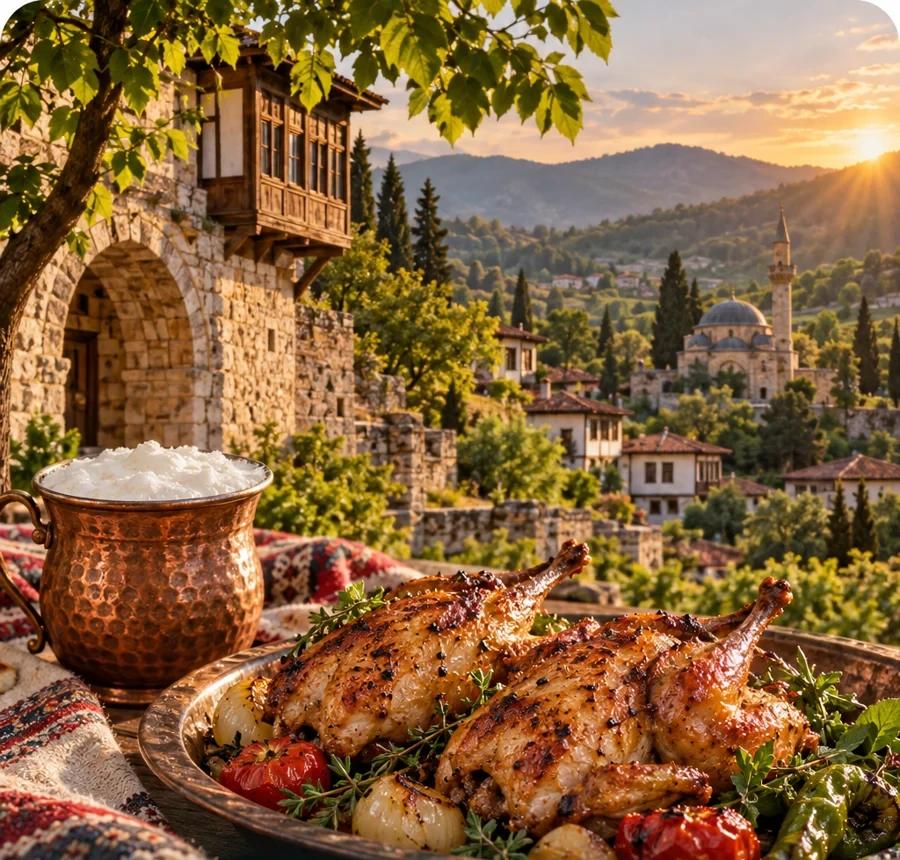
River valleys, orchards and a table of helva and boza.
Explore a lentil-filled dough parcel alongside the distinct food names of neighbouring districts.
Lentil-filled dumplings
Egg dough filled with green lentils, browned in the oven, simmered and served with yogurt and butter.
Oven-baked beef
Beef leg meat cooked with onion and village bread, cut into thin strips, baked in its own broth and topped with thyme.
Quail and vegetable casserole
Boiled quail coated in pepper and tomato paste, baked in a casserole with eggplant, potato, peppers, tomato and onion, seasoned with thyme.
Sour lentil and noodle soup
Green lentils and cut noodles in a soup soured with dried sour plums and cornelian cherries, served hot.
Lamb and vegetable casserole
Lamb with fried potato and eggplant, tomato and green pepper, baked in an earthenware dish under béchamel and kaşar cheese.
Tahini halva
Tahini and sugar cooked in small copper kettles, without flour or semolina, into a fibrous halva.
Quince Turkish delight
Quince purée cooked with sugar and starch, cut into cubes and rolled in grated coconut.
Fermented millet drink
Millet, maize and wheat flour boiled, sweetened and left to ferment; served cold with cinnamon and roasted chickpeas.
Walnut and molasses griddle cakes
Thin griddle cakes stacked with crushed walnuts and finished with warm molasses.
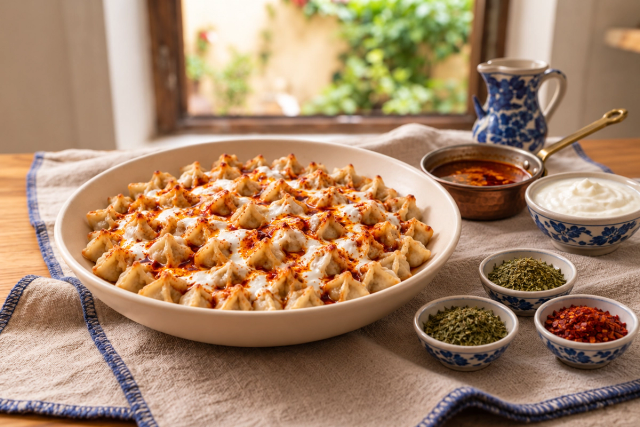
Small, closed lentil dumplings baked first until golden, then finished in hot water. Serve with garlic yogurt and red-pepper butter, with extra yogurt and herbs on the side.
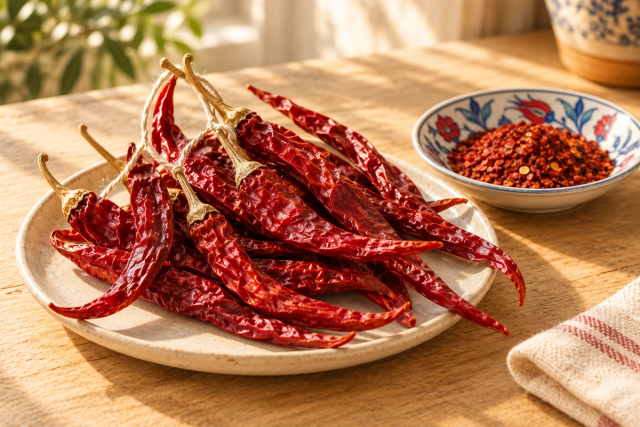
Bilecik’s red peppers, dried whole on strings or ground into flakes.
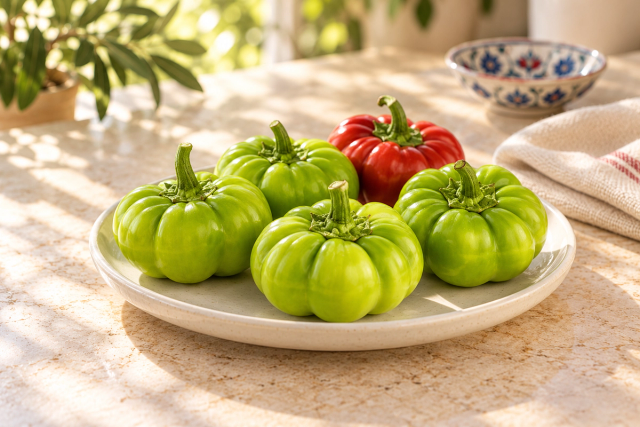
A round, flattened eggplant relative locally called Kamber or Gavata pepper.
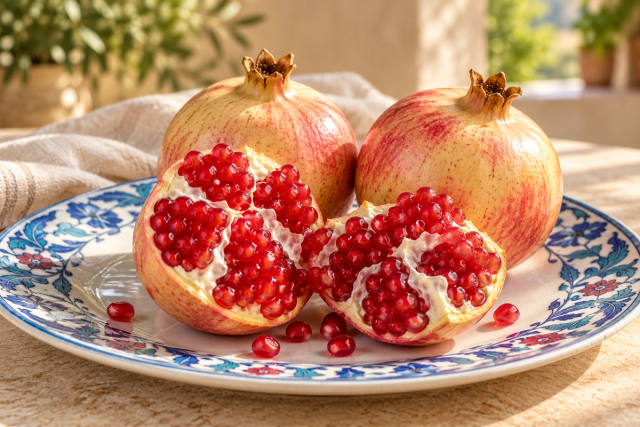
Thin-skinned, large-ariled pomegranates associated with İnhisar’s deve dişi crop.
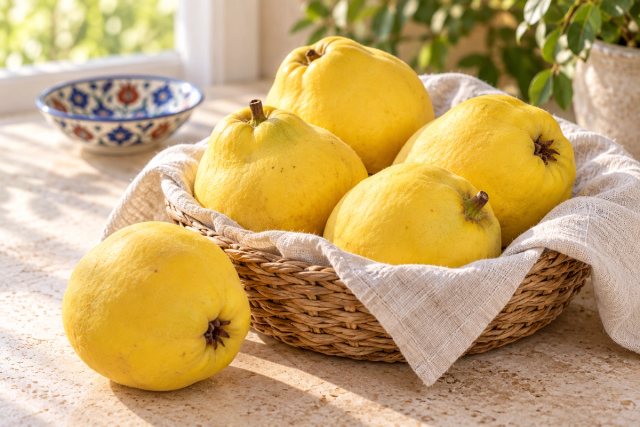
Aromatic yellow quince from Osmaneli, also used in the district’s quince lokum.
Kınık village in Pazaryeri is associated with pottery. The Ministry’s craft account describes local red clay being prepared, shaped by hand and fired, with skills passed between generations. Kitchen vessels connect this craft directly with daily domestic life. Pottery, grain-based foods and preserving provide useful themes for reading the province without treating all its towns as interchangeable. District names remain important clues to where a particular practice is documented.
Pazaryeri gives its halva and boza, and Osmaneli its quince delight.
Green lentils fill Bozüyük’s mantı and Bilecik’s sour noodle soup.
Bilecik’s history is closely bound up with the founding of the Ottoman state. In the city center, Orhan Gazi Mosque stands on steep rocks near the Tomb of Şeyh Edebali. Its most distinctive feature is its minaret, which rises separately from the main building on a natural rock. Şeyh Edebali, a 13th-century scholar, is described as the spiritual founder of the Ottoman Empire. In Küre village, in the Söğüt district, stands the tomb of Dursun Fakih, Edebali’s student and the state’s first qadi, or judge.
Osmaneli tells a different story. During the Ottoman era, nearly every household in the town was engaged in silkworm breeding. That work shaped the houses themselves: their windowless ground floors were used to store the mulberry leaves that fed the silkworms. Turks and Anatolian Greeks lived together in the town until the War of Independence, and the Hagios Georgios (Aya Yorgi) Church is the only structure in Osmaneli left by its Greek community.


