


Kütahya kızılcık tarhanası
Cornelian cherry tarhana soup
Cornelian cherry purée cooked, kneaded with flour and salt and dried, then simmered with fried onion as a sour soup.
Aegean Region
In Kütahya, the story of the sweets begins in copper cauldrons. Köpük helvası takes its white, airy form when sugar syrup boiled in copper kettles is whipped with soapwort root extract. Paşa helvası, cooked with tahini and sesame, is known for its small sesame-coated cubes. Sourness comes from the cornelian cherry. Kızılcık tarhanası, simmered with fried onion, becomes a pink, sour soup. On the savory side, two plates stand out. Cimcik brings tiny pieces of dough together with butter and garlic yogurt. Kütahya güveci is lamb shank cooked slowly in a clay pot in the oven until browned on top. The copper thread runs on into Tavşanlı leblebisi, chickpeas roasted in copper pans over a wood fire. On the uplands of Şaphane, Pazarlar, Simav and the central district grows the heart-shaped, dark red Şaphane sour cherry. To get to know a table that stretches from copper cauldron to clay pot, follow the districts themselves, from Tavşanlı to Şaphane.
Last updated:
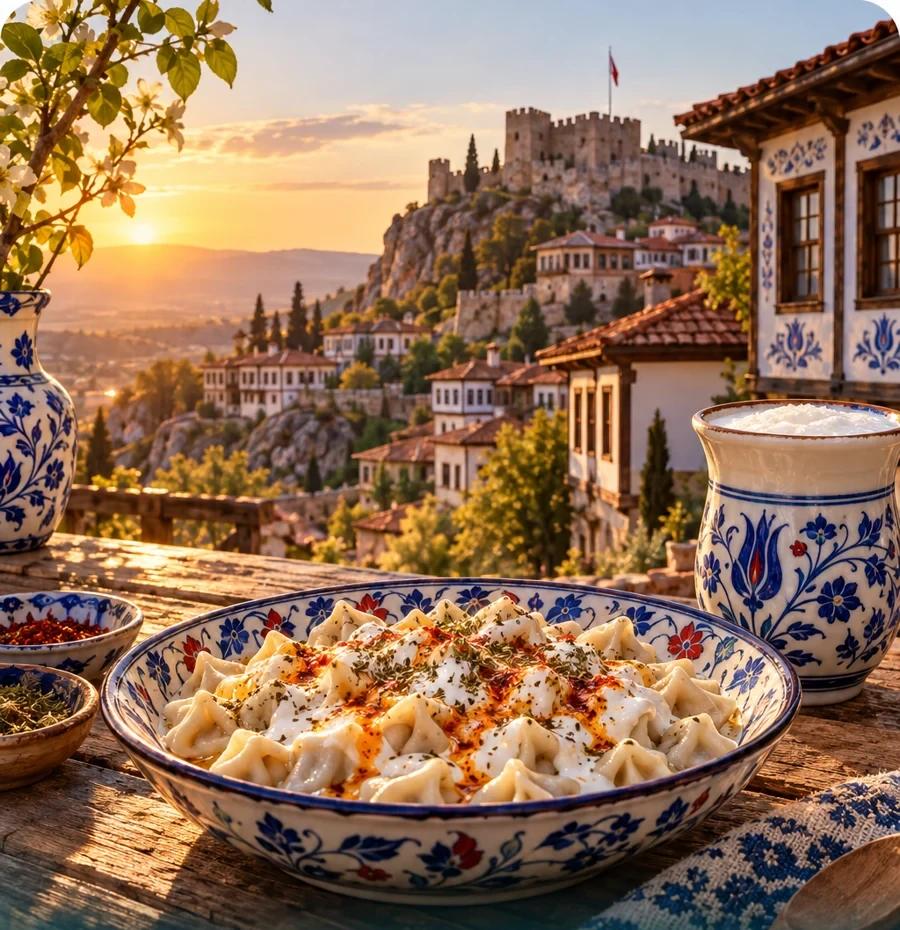
Kütahya’s old quarter, tile workshops and a bowl of kızılcık tarhanası.
Explore roasted chickpeas, hand-shaped dough and contrasting sweet and sour preparations.
Cornelian cherry tarhana soup
Cornelian cherry purée cooked, kneaded with flour and salt and dried, then simmered with fried onion as a sour soup.
Tiny dumplings with yogurt
Tiny pieces of dough made with flour, egg and salt, served with butter and garlic yogurt.
Bulgur dumpling soup
Hand-squeezed pieces of fine bulgur cooked in meat broth with tarhana, tomato paste and yogurt.
Lamb shank in a clay pot
Lamb shank with tomato paste, onion, peppers and tomatoes, baked slowly in a clay pot until browned on top.
Poppy seed flatbread
Flatbread filled with poppy seeds and cooked on a sac griddle.
Tray-baked mantı
Dumplings filled with lentils or minced meat, baked in a round metal tray and served with garlic yogurt.
Whipped sugar and soapwort halva
Sugar syrup boiled in copper kettles and whipped with soapwort root extract into a white, airy halva.
Tahini and sesame sweet
Sugar syrup cooked with tahini and sesame, pressed into trays, rested, cut into small cubes and coated in sesame.
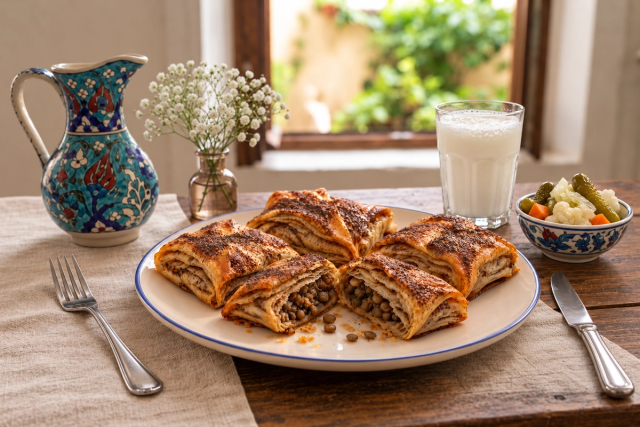
Kütahya-style folded pastries with a cooked green-lentil and onion filling. Plain poppy paste and sunflower oil form the thin dough layers.
Chickpeas tempered in stages and roasted in copper pans over a wood fire, sold plain or flavored.
Guide not written yetA heart-shaped, dark red sour cherry grown on the uplands of Şaphane, Pazarlar, Simav and the central district.
Guide not written yetA plum that is dried and cooked into hoşaf, a sweet compote.
Guide not written yetUNESCO recognises Kütahya in the Creative Cities Network for Crafts and Folk Art. Ceramic and çini traditions connect the city’s artistic identity with makers, training and the transmission of skills. The craft is visible in public buildings as well as individual objects. Workshops and cultural institutions help carry its techniques into new generations.
Köpük helvası and paşa helvası both start with sugar syrup cooked in copper cauldrons.
Cornelian cherries give Kütahya’s tarhana its pink color and sour taste.
Kütahya’s history is best approached from the mountainous triangle formed by Kütahya, Afyonkarahisar and Eskişehir. Today the area is known as the Phrygian Valley. Its plateaus are covered in tuff, a porous volcanic rock from Türkmen Mountain, an old volcano east of Kütahya. The Phrygians who lived on these plateaus left open-air temples, altars and rock tombs dedicated to the Mother Goddess Cybele. The Romans and Byzantines who later settled in the region added madder-dyed crosses and frescoes of their own.
In the Çavdarhisar district, the ancient city of Aizanoi lies beside the Kocaçay, also known as the Penkalas. The front gallery walls of its Temple of Zeus carry inscriptions praising Emperor Hadrian. The ancient site and the city are linked in another way, too: the large columns inside Kütahya’s Grand Mosque were brought from Aizanoi. The Byzantines strengthened the walls of Kütahya Castle in the 5th century. The Seljuks, Germiyanids and Ottomans later reinforced the castle with repairs and additions. Germiyan and Ahierbasan streets stand out for their 19th-century wooden Kütahya houses.


