


The Turkish pantry
Osmaneli quince
Osmaneli quince has a place both in the fruit bowl and in the cooking pot. Its firm flesh and aroma are valued in local preserves, desserts and the district’s well-known quince lokum.
Last updated:
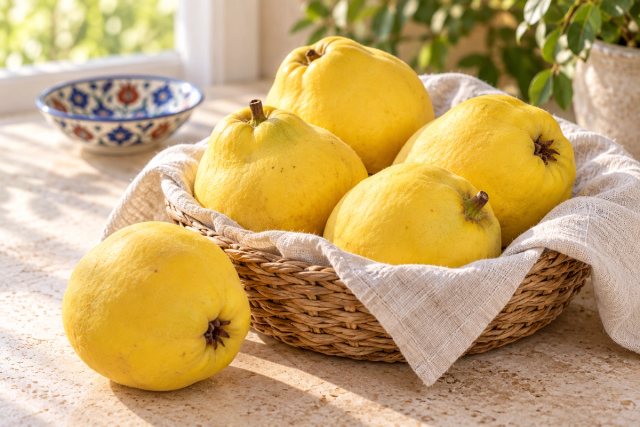
Osmaneli quince is quince grown in the Osmaneli district of Bilecik, including orchards along the Sakarya River basin. This guide covers the fresh fruit, not Osmaneli quince lokum. The local name describes origin rather than a single cultivar identified here; do not automatically equate it with Eşme or another named quince. Yellow skin, an aromatic scent and firm flesh are useful buying cues, not proof of geographic origin.
Types & forms
Whole fresh quince
A firm yellow fruit with a core and seeds. Shape and surface fuzz vary; the fruit should feel sound rather than soft or waterlogged.
Prepared cooking pieces
Peeled or unpeeled pieces, depending on the recipe, with the tough core removed. Cooked desserts, jam and lokum are separate finished foods, not the raw ingredient.
What to look for when buying
- Ask for Osmaneli-grown fruit and traceable grower information when origin matters.
- Choose fragrant, firm fruit without mold, leaking areas or deep bruising. A little natural surface fuzz is not the same as mold.
- Do not assume the fresh fruit carries the registration associated with Osmaneli quince lokum.
Prepare & cook
- Wash under plain running water and rub away surface fuzz before cutting.
- Use a stable board and a sharp knife for the firm flesh; quarter carefully and remove the tough core and seeds.
- Slice or dice as the recipe requires. Gentle cooking softens the flesh for quince dessert, jam or a savory dish; use the recipe’s doneness cues rather than expecting every quince to soften at the same time.
Store it well
- Keep whole fruit cool and dry, protected from bruising; use refrigeration for longer keeping.
- Keep cut fruit covered in the refrigerator at 40°F or below. Follow separate storage directions for cooked quince or bought preserves.
Substitutions depend on the dish
Another cooking quince
Usually the closest practical substitute, with possible differences in aroma, firmness and the time needed to soften. It does not establish Osmaneli origin.
Apples or pears
Can work in a recipe designed for them, but soften differently and do not reproduce quince’s aroma and firm texture.
Nutrition
Nutrition specific to this local fresh-fruit crop is not given here. Cooked quince, jam and lokum have different values, especially when sugar is added; use the label for a packaged product.
At the Turkish table
Osmaneli’s quince-growing tradition feeds fresh markets and local kitchens. The municipality’s quince-lokum production is one way the fruit is transformed; the raw quince and the confection should remain distinct identities.