


Islama köfte
Meatballs on broth-soaked bread
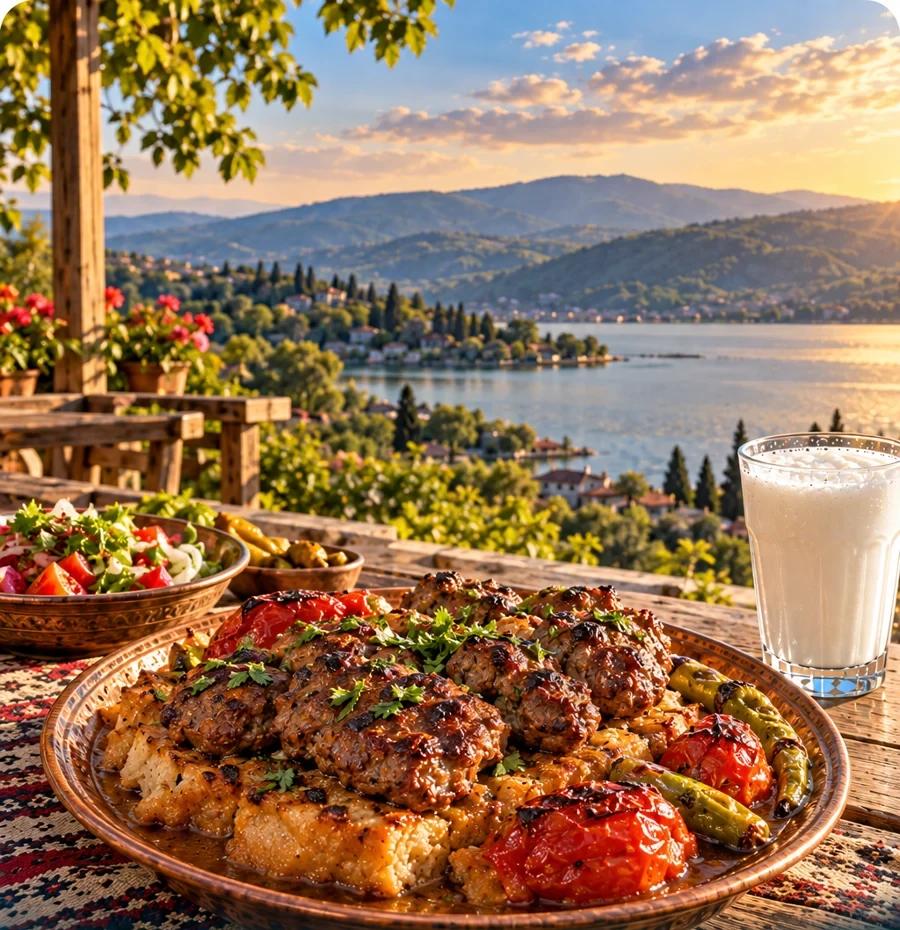
Grilled beef köfte served on bread soaked in a bone broth with red pepper, with grilled tomato and pepper.
Marmara Region
In Sakarya, bread, broth and squash keep turning up side by side on the table. Islama köfte sets grilled beef köfte on bread soaked in a bone broth with red pepper, with grilled tomato and pepper alongside. Dartılı keşkek brings wheat cooked in chicken broth together with shredded chicken, topped with butter, red pepper and dartı, which comes from the fatty layer of rested milk. Squash, meanwhile, becomes dessert. The white chestnut squash of the Sakarya plain, with its gray-white ribbed skin and orange flesh, is simmered with cloves and served with tahini and walnuts as Adapazarı kabak tatlısı. Üre tatlısı is known for its stone-milled millet and milk, finished with beet molasses poured over the top. From the same landscape comes Geyve ayvası, a large, bright yellow quince with firm, juicy flesh, grown on the alluvial plain of the Sakarya River. Get to know Sakarya along a route that runs from the broth-soaked bread of ıslama köfte to the squash of the plain and the quinces of Geyve.
Last updated:
A river plain of squash fields and quince orchards.
Start with broth-dipped bread and grilled köfte, then explore fruit, dairy and grain dishes.
Meatballs on broth-soaked bread
Grilled beef köfte served on bread soaked in a bone broth with red pepper, with grilled tomato and pepper.
Charcoal-grilled beef köfte
Hand-shaped beef köfte with stale bread, cumin and peppers, grilled over charcoal and often eaten with buffalo yogurt.
Chicken keşkek with dartı
Wheat cooked in chicken broth with the shredded chicken, pounded smooth and topped with butter, dartı and red pepper.
White squash in syrup
White chestnut squash rested in sugar and simmered with cloves, served with tahini and walnuts.
Millet milk pudding
Stone-milled millet and sugar stirred into boiling milk, chilled in bowls and served with beet molasses on top.
Sprouted-wheat sweet
Sprouted wheat crushed in stone mortars, its juice boiled with a little flour in copper pans until thick, made for Hıdırellez, weddings and feasts.
Red pepper and walnut paste
Boiled, puréed red peppers pounded with garlic, salt, coriander, basil and thyme, with walnuts in the breakfast version.
Recipes from this city are coming soon.
A large, bright yellow quince with firm, juicy flesh, grown on the alluvial plain of the Sakarya River.
Guide not written yetA large winter squash with gray-white ribbed skin and orange flesh.
Guide not written yetA fibrous cheese aged for two months, sometimes flavored with nigella seeds or thyme.
Guide not written yetThe fatty layer of rested milk cooked slowly until reddish, used as a sauce for keşkek.
Guide not written yetThe food sources describe Balkan and Caucasian connections, including Circassian and Abkhaz preparations. These traditions should retain their names and community context instead of being flattened into one supposedly uniform local cuisine. The Ministry of Culture links ıslama köfte tentatively to migration from the Balkans. That account is presented as an association, not a proven exact invention date or an exclusive origin claim.
Islama köfte sits on bread soaked in bone broth, and dartılı keşkek is pounded in chicken broth.
The gray-skinned white chestnut squash of the Sakarya plain becomes Adapazarı kabak tatlısı.
One way to read Sakarya’s history is to follow its water. On the Çark River, which carries the waters of Sapanca Lake into the Sakarya River, stands a stone bridge built by the Byzantine emperor Justinian. An Early Byzantine structure, it is known locally as Beş Köprü, or Five Bridges, a name with a curious history. It was once simply called “pons,” Latin for “bridge,” but people who did not know the meaning took the word for a proper name. Over time that misunderstanding turned into “Five Bridges,” even though the bridge has neither five sections nor five arches.
Adapazarı’s commercial past gathers around the Orhan Mosque. Built by Konuralp Bey in the name of Orhan Gazi, it was completely renovated during the reign of Sultan Abdülhamid II. Right beside it, Uzun Çarşı is a bazaar from the Ottoman period and remains the city’s main commercial center. Spanning the Sakarya River, the Sakarya Bridge was built on the direct orders of Mustafa Kemal Atatürk and has become one of the city’s defining landmarks.


