


Çibörek
Fried half-moon meat pastry
Thin dough folded into a half moon around minced meat, onion and spices and fried in oil.
Central Anatolia
One branch of Eskişehir's kitchen goes back to the Crimean Tatar cooking of the city's settlers. The first stop on that road is çibörek, a fried half moon of thin dough filled with minced meat, onion and spices. Balaban brings together pide soaked in hot broth, yogurt, tomato sauce, grilled balaban meatballs and skewers, all finished with hot butter. Sivrihisar's winter table has arabaşı, a thick dough cut into diamonds and served around a bowl of chicken or turkey broth with dried chilli and lemon. On the sweet side waits met helvası, small cocoa and vanilla pieces named after the game of met. Beside it is halkalı şeker, hot sugar pulled by hand on a wall hook and decorated with colored strips, once handed out to announce an engagement. Sivrihisar's dövme sucuk, made from the pounded meat of cattle raised there, and the late-season cherries of Mihalıççık join the spread. Beginning with Tatar pastries and carrying on to an engagement sweet, this table invites you to travel the city district by district, from Sivrihisar's winter dishes to Mihalıççık's cherries.
Last updated:
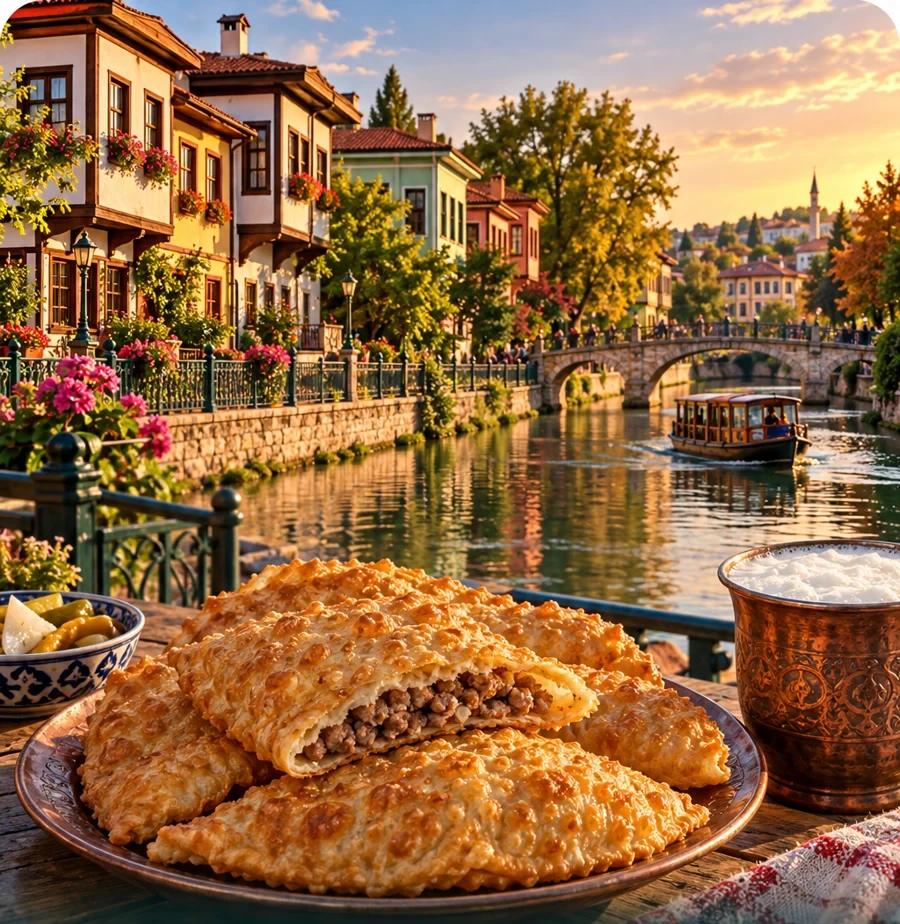
Odunpazarı houses and a plate of golden çibörek.
Thin fried dough is one starting point for a city table shaped by movement and exchange.
Fried half-moon meat pastry
Thin dough folded into a half moon around minced meat, onion and spices and fried in oil.
Meatballs on broth-soaked pide
Chopped pide soaked in hot broth, topped with yogurt, tomato sauce, grilled balaban meatballs and skewers, and finished with hot butter.
Cocoa and vanilla flour halva
Flour halva made with oil, sugar, lemon and water, cut into small cocoa and vanilla pieces and named after the game of met.
Chicken broth with set dough
Thick flour-and-water dough set in a tray and cut into diamonds, served around a bowl of clear chicken or turkey broth with dried chilli and lemon.
Triangular stuffed cabbage
Cabbage leaves wrapped in triangles around beef mince, bulgur and cracked wheat, cooked in plain water.
Triangular baklava
Triangular baklava with its filling layered between thin sheets of pastry and finished with syrup.
Warm butter-and-flour dessert
A warm dessert based on flour roasted in butter, with a soft texture between halva and pudding.
Pulled sugar ring candy
Hot sugar pulled by hand on a wall hook, whitened and decorated with colored strips, once handed out to announce an engagement.
Recipes from this city are coming soon.
Sucuk from cattle raised around Sivrihisar, made from meat pounded by hand.
Guide not written yetLate-season cherries from Mihalıççık.
Guide not written yetPoppy seeds used in poppy and walnut bread and haşhaşlı bükme.
Guide not written yetMeerschaum, or lületaşı, is carved while workable into pipes and decorative objects. The Ministry’s account describes the material and craft as part of Eskişehir’s identity. It is the skill of shaping the material, not a claim of global exclusivity, that matters here. Migration provides another important context. The official food guide acknowledges Crimean Tatar, Balkan and Caucasian connections, helping explain why different pastry and meat traditions coexist in the city.
Çibörek and balaban come from the Crimean Tatar cooking of the city’s settlers.
Arabaşı is drunk on winter nights, and kelem dolması is wrapped in small triangles.
Looking at Eskişehir’s past from Odunpazarı means stepping into the city’s first Turkish residential area. The district’s earliest building is the Alaeddin Mosque, which dates to the second half of the 13th century under the Anatolian Seljuk State. After fires broke out in the city’s bazaar area, commercial and public buildings began shifting to Odunpazarı. The houses lining its narrow streets were designed around both family life and the household’s economic activity. The kitchen, barn, laundry room or storeroom was usually downstairs, while the family lived on the upper floors.
The 16th-century Ottoman Kurşunlu Complex adds another period to this setting, with a mosque, a fountain, a dervish lodge, an imaret and two caravanserais. Atlıhan was built to lodge traders, travellers and villagers from surrounding villages, towns and cities, together with their animals. It is also known for the production and sale of meerschaum. The Porsuk River runs through the city. In the province’s Han district, among the mountainous Phrygian valleys, stands the Midas Monument (Yazılıkaya), known for its Phrygian inscriptions.


