


İskender kebap
Döner on pide with tomato sauce
Thinly sliced döner laid on pide and served with tomato sauce and yogurt.
Marmara Region
In Bursa, pide is often the plate itself. In İskender kebap, thinly sliced döner settles onto pide with tomato sauce and yogurt. Bursa pideli köfte has lightly spiced meatballs sharing the same pide with yogurt, tomato and peppers, with butter poured over the top. İnegöl köfte takes a simpler path. Beef and lamb mince meets nothing but onion and salt, becomes small flat patties on the grill, and contains no egg or bread. Pide shows up at breakfast too: tahinli pide comes out of a stone oven spread with tahini, molasses and sugar. For anyone who wants to end the day on something sweet, there is kestane şekeri, made from Uludağ chestnuts. Look at the province’s products and two stand out: black table olives of the Gemlik variety, and the firm, fiber-free artichokes of Hasanağa. A day in Bursa that starts with tahinli pide at breakfast can easily stretch all the way to İnegöl’s köfte and Hasanağa’s artichokes.
Last updated:
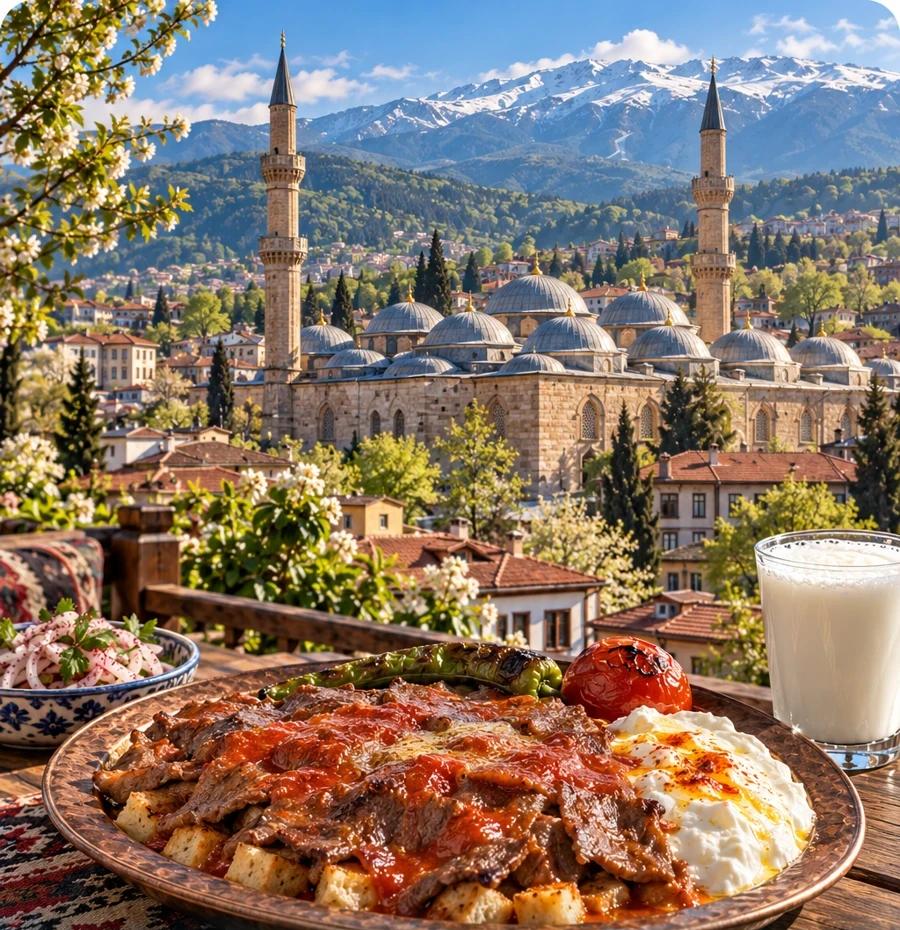
Uludağ’s slopes, a green plain and kebab finished with butter.
A plate of İskender is a beginning. Follow it with the city’s bakery traditions and chestnut sweets, then look beyond the table to its markets and crafts.
Döner on pide with tomato sauce
Thinly sliced döner laid on pide and served with tomato sauce and yogurt.
Meatballs on pide with butter
Lightly spiced meatballs on pide with yogurt, tomato and peppers, finished with butter.
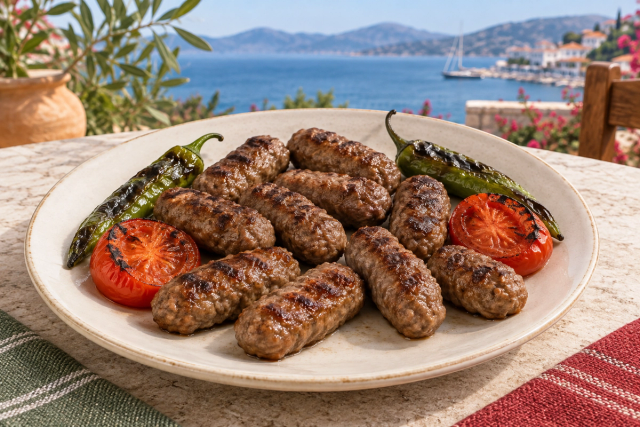
Mild beef-and-lamb meatballs, chilled before shaping into small fingers and grilling.
Small open meat pide
Leavened dough shaped into a small round with raised edges, filled with minced or diced meat and baked in a stone oven.
Sweet tahini flatbread
Yeast dough spread with tahini, molasses and sugar, baked in a stone oven and eaten at breakfast.
Pleated meat dumplings
Thin dough filled with seasoned minced meat and closed with thirteen pleats, a dish of the Ahıska Turks of Zeyniler.
Baked milk halva
Flour roasted in butter and cooked with milk and sugar, then baked until golden on top and served warm.
Cheese dumplings in syrup
Small domes of fresh unsalted cheese, semolina, flour and egg, baked and then soaked in syrup.
Candied chestnuts
Uludağ chestnuts, shelled, wrapped in cheesecloth and boiled, then cooked in syrup.
Raisin drink
A non-alcoholic drink made from seeded black raisins and water, served chilled alongside döner.
A fig with deep purple skin and honey-like sweetness.
Guide not written yetBlack table olives of the Gemlik variety.
Guide not written yetPeaches grown around Bursa.
Guide not written yetFirm, fiber-free artichokes from Hasanağa.
Guide not written yetCrisp Santa Maria pears grown around Bursa.
Guide not written yetSummer savory, dried and ground for meat dishes, soups and pastries.
Guide not written yetSilk is one route into Bursa’s living craft culture. UNESCO highlights Koza Han and the city’s silk-related institutions alongside weaving, needle lace, cutlery and Karagöz shadow puppetry. Bursa joined the Creative Cities Network in 2021 for Crafts and Folk Art, a different designation from its World Heritage listing. Food and craft make useful companion themes for exploring the city: pay attention to the work of bakers and cooks as well as textiles and other handmade objects. Neither a craft designation nor a historic setting establishes the provenance of an individual item for sale.
Kebab and köfte are laid on pide and finished with hot butter.
Figs, peaches, pears and chestnuts grow on the plain and slopes, and olives around Gemlik.
Bursa lies on the slopes of Uludağ in the southern Marmara region. In the early 14th century it became the first capital of the Ottoman state. The city grew around külliye complexes that five sultans founded, mostly on hills. Each complex brought together mosques, madrasas, hamams, imarets and tombs, and together these complexes determined the boundaries of the city. Houses were then built near them, and over time neighbourhoods formed around each complex.
Commerce took shape at the heart of the city. Bayezid II commissioned Koza Han to generate income for his mosque and madrasa in İstanbul. It was established on a wide area between the Orhan Mosque and the Ulu Mosque, and it is Bursa’s silk and trade center today, just as it used to be. The system also reached beyond the city. Outside the historic center, the nearby village of Cumalıkızık was a waqf village, and its purpose was to provide income for the Orhan Ghazi külliye.


