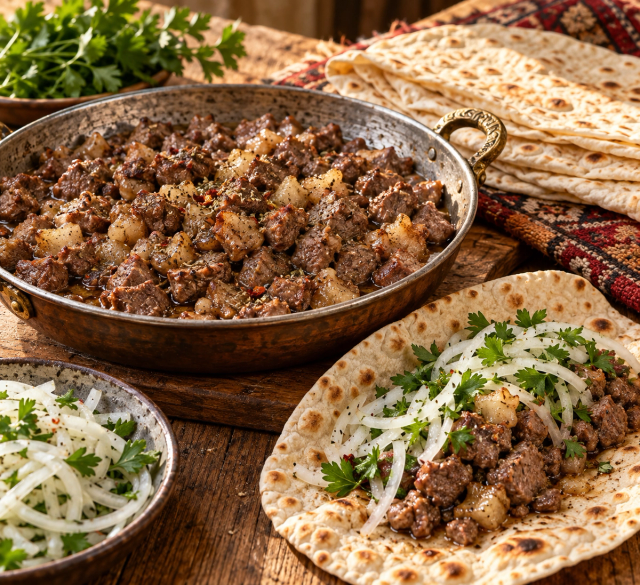
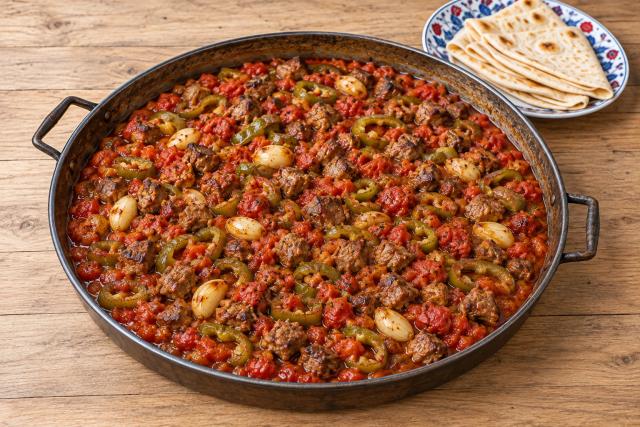
Use a home oven, a heavy metal baking tray large enough for the short breads, safe transfer surface and oven gloves, and a thin-tip food thermometer suitable for shallow foods.
Method
Combine the flour, instant yeast and dough salt. Add the water and mix until no dry flour remains. Knead for 8 minutes until smooth and elastic. Cover and leave at room temperature for 1 hour, until visibly expanded and relaxed; allow longer in a cool room.
During the dough rise, heat the oven to 480°F conventional, or the highest temperature permitted by your oven and bakeware up to that point. Place a heavy metal baking tray inside to heat. Prepare a second tray or a flat peel to transfer the breads safely. Do not use baking paper unless rated for the chosen temperature.
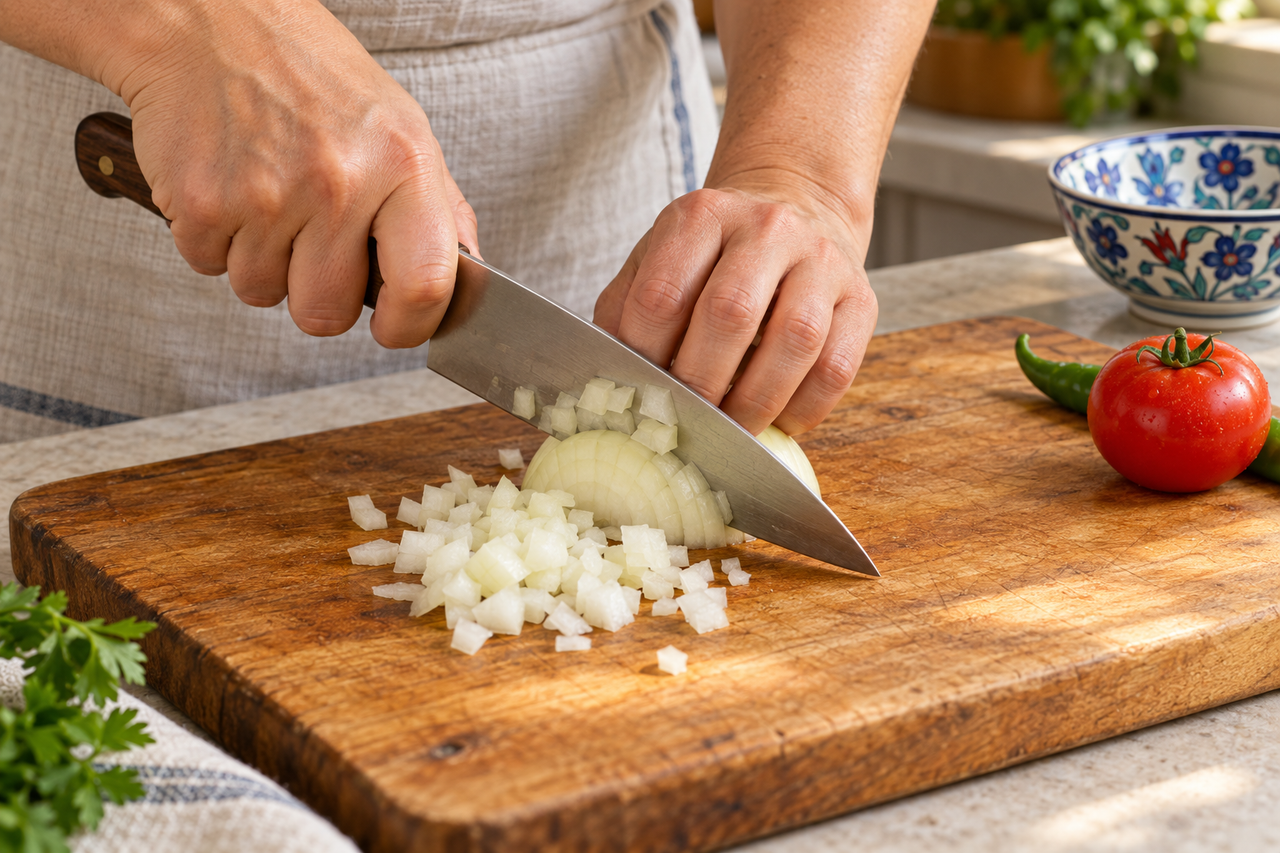
Mix the cold ground beef with the finely chopped tomato, green pepper, onion, parsley and topping salt. The mixture should spread evenly without large lumps. Cover and refrigerate while you shape the dough; do not taste it raw. Clean hands, boards and utensils after handling it.
Keep small vegetable pieces distinct instead of turning them into a watery paste.
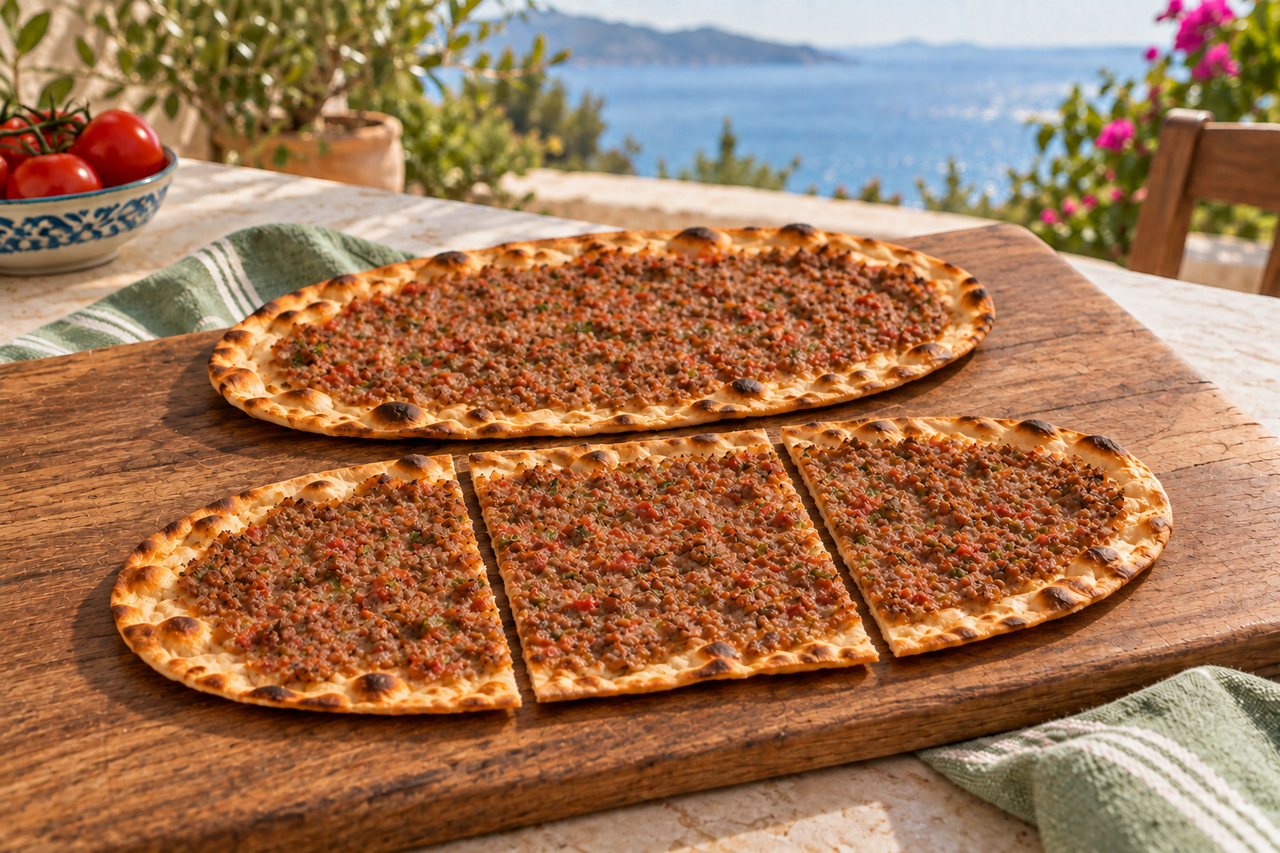
Divide the dough into equal portions, one bread per selected serving. On a lightly floured surface, stretch or roll each into a thin oval 12 × 4 ½ inches, small enough for your tray. Keep the unused portions covered. Divide the topping equally between the breads and spread each share, almost to the edge, in a thin even layer. Leave the edges open and flat; do not fold them into a raised rim. Shape and top only the breads that will fit in the next batch.
Carefully transfer two breads, or as many as fit without crowding, to the hot tray. Bake for 10–12 minutes, checking from 8 minutes. The base should be cooked and crisp and the edge browned. Use a thin-tip thermometer held sideways within the thickest part of the meat topping, without touching the tray, to check it reaches 160°F. Continue cooking if needed; reduce the heat if the bread darkens too quickly. Repeat with the remaining portions.
Crisp, cooked base; browned edges; meat topping measured at 160°F or above.
Move the breads to a clean board and cut across into manageable pieces. Serve hot as each batch comes out; do not stack uncooked topped breads while waiting.
Cooking guidance
Keep the topping very fine and spread it thinly. Large vegetable chunks and a thick layer of meat delay cooking and soften the bread.
Use the dough expansion cue rather than the clock alone. Keep the same bread dimensions when increasing servings and bake more batches.
This recipe contains wheat. The topping has no cheese or egg; do not add either merely because other pide styles use them.
Storage & serving
Keep the raw beef topping refrigerated at 40°F or below and use within 1–2 days. Chill cooked leftovers promptly and use within 3–4 days; reheat to 165°F. Store toppings and uncooked dough separately until baking.
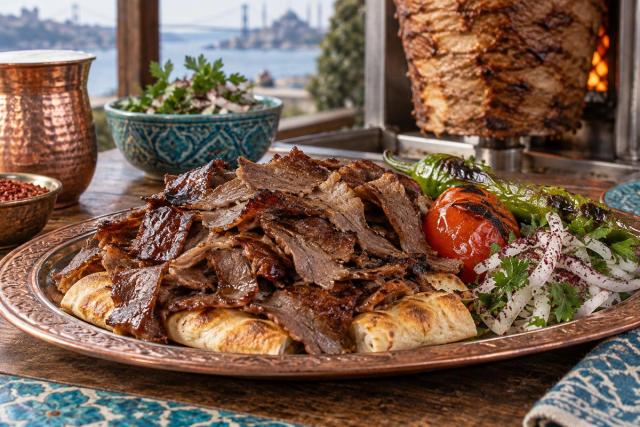
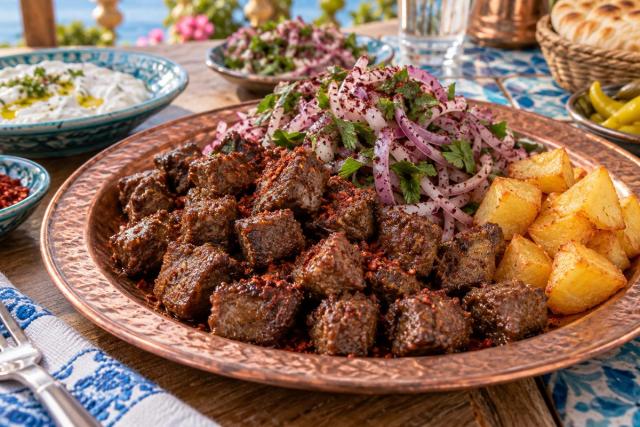
Thin layers of seasoned beef and mince, chilled into a roll, sliced and quickly browned in a skillet. This is a skillet adaptation of layered döner. A restaurant spit uses a different cooking process. Slice only when the roll is firm but safely cuttable; never force a knife through a solid frozen block.
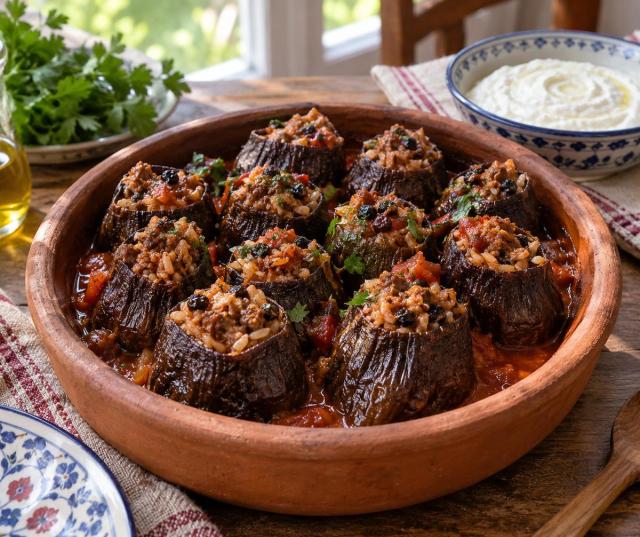
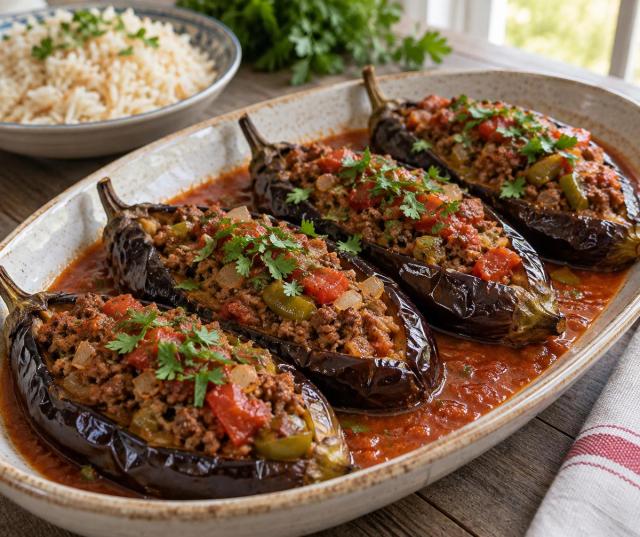
Dried eggplant shells filled with beef, rice and currants, gently cooked in a tomato-and-pepper sauce. Currant-filled dried eggplant is associated with Denizli. This home version uses onion, herbs and mixed tomato and pepper pastes; local variations exist.
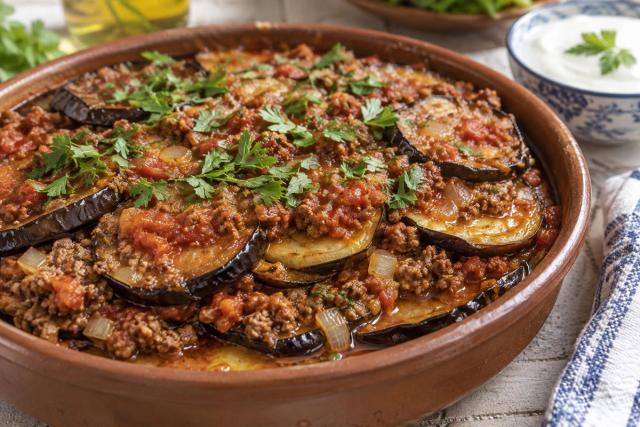
Roasted eggplant layered with minced beef and tomato, with an optional chickpea variation. The optional chickpeas reflect a documented Afyonkarahisar variation. This oven adaptation roasts the eggplant instead of frying it and has no béchamel topping.