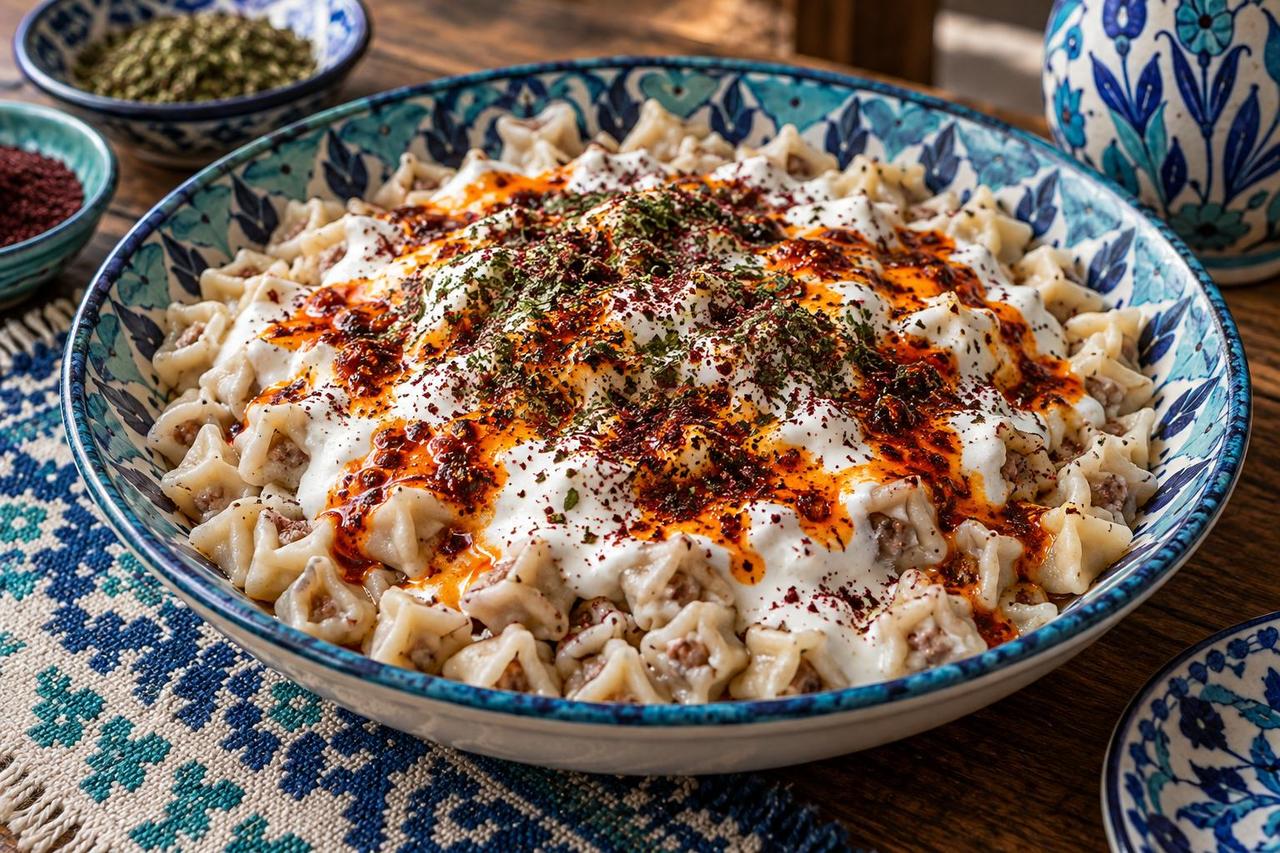
Knead the flour, egg and half the salt, adding the measured ½ cup water gradually until the dough is firm and smooth; add extra water only if needed. Cover and rest for 30 minutes.
Mix beef, onion, pepper and remaining salt. Roll dough thinly, cut into ¾–1 ¼-inch squares, place a tiny dab of filling in each and pinch all seams shut. Keep finished parcels and unused filling cold.
Boil dumplings in batches in plenty of water, stirring gently, for 10–15 minutes until the dough is tender. Check the meat in a larger test parcel is fully cooked.
Check the center reaches at least 160°F; color alone does not establish doneness.
Mix yogurt with garlic. Melt butter, stir in tomato paste and pul biber for 30 seconds, then loosen with a spoonful of cooking water.
Drain dumplings, spoon yogurt and pepper butter over them, then sprinkle with mint and sumac. Refrigerate leftovers promptly in shallow containers within 2 hours, or 1 hour above 90°F. Keep at 40°F or below and reheat cooked leftovers to 165°F.
Cooking guidance
Size varies in home kitchens. Keep the filling small enough for the parcels to seal, and refrigerate uncooked meat-filled dumplings while preparing later batches.
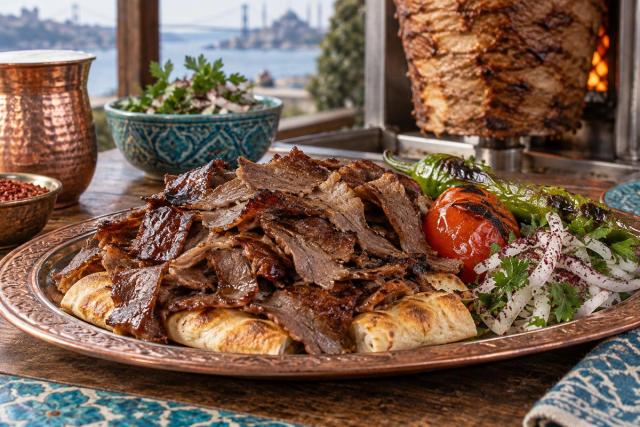
Thin layers of seasoned beef and mince, chilled into a roll, sliced and quickly browned in a skillet. This is a skillet adaptation of layered döner. A restaurant spit uses a different cooking process. Slice only when the roll is firm but safely cuttable; never force a knife through a solid frozen block.
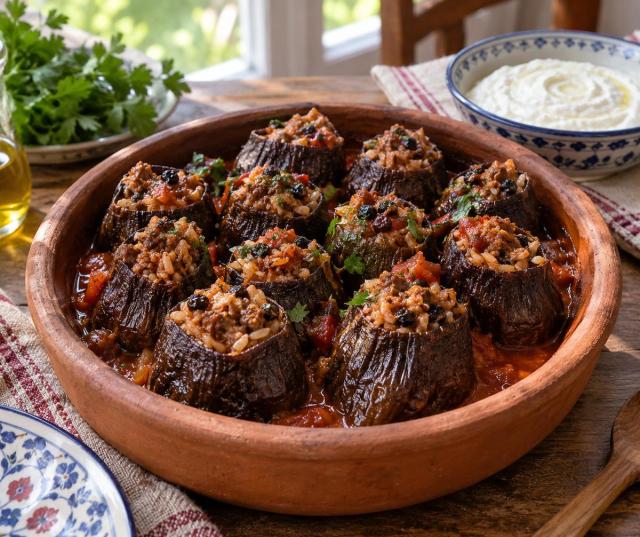
Dried eggplant shells filled with beef, rice and currants, gently cooked in a tomato-and-pepper sauce. Currant-filled dried eggplant is associated with Denizli. This home version uses onion, herbs and mixed tomato and pepper pastes; local variations exist.
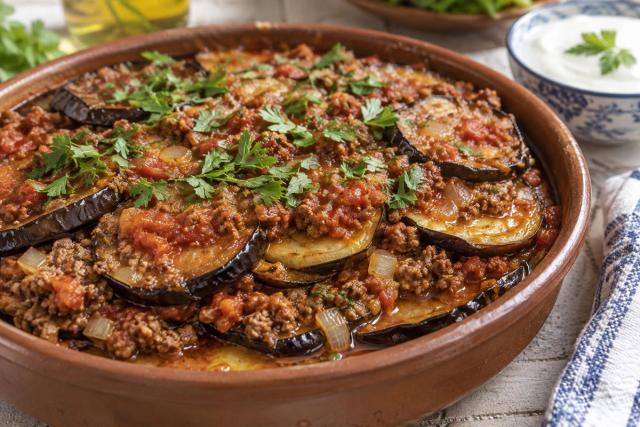
Roasted eggplant layered with minced beef and tomato, with an optional chickpea variation. The optional chickpeas reflect a documented Afyonkarahisar variation. This oven adaptation roasts the eggplant instead of frying it and has no béchamel topping.