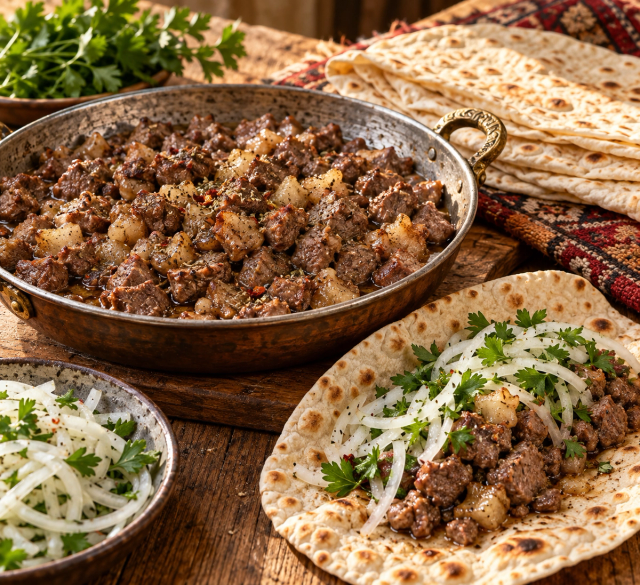
Rub sliced onion with a small pinch of the salt. Toss with parsley and sumac and set aside.
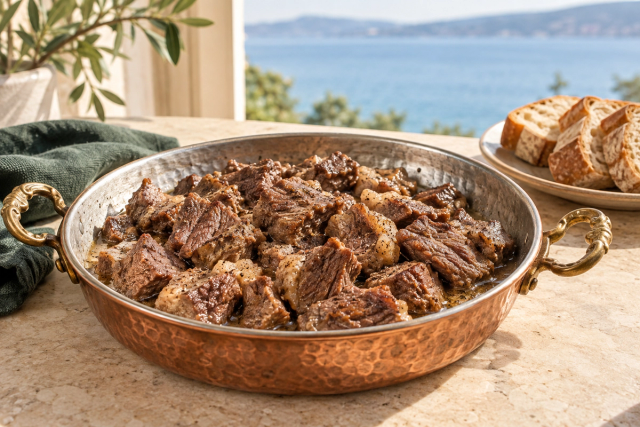
Dry the potato cubes thoroughly. Heat oil to 340°F in a deep heavy pan with generous headroom. Fry potatoes in batches for 10–15 minutes until tender inside and golden. Drain onto a rack.
Pat liver dry. Toss a batch in flour and shake off excess just before it goes into the oil.
Bring oil to 350°F. Fry liver in small batches, turning for even cooking, 3–5 minutes depending on cube size. Use a thin-probe thermometer in the center of several larger cubes and continue if needed.
Calf liver must reach 160°F; do not use a pink center or a two-minute timer as the safety check.
Drain liver, then season with the remaining salt to taste and pul biber. Serve hot with potatoes and the sumac-onion salad. Refrigerate leftovers in shallow containers within 2 hours, or 1 hour above 90°F. Keep at 40°F or below, use within 3–4 days and reheat cooked leftovers to 165°F.
Cooking guidance
Ask the butcher to remove tough membranes and ducts from the calf liver. Pat it dry and coat only just before frying. The temperature check matters more than a fixed short frying time.
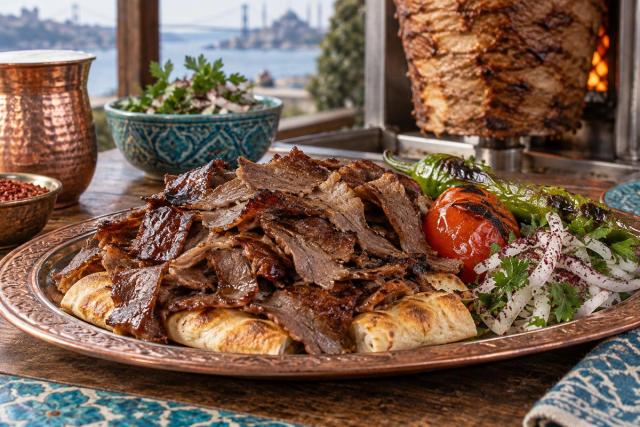
Thin layers of seasoned beef and mince, chilled into a roll, sliced and quickly browned in a skillet. This is a skillet adaptation of layered döner. A restaurant spit uses a different cooking process. Slice only when the roll is firm but safely cuttable; never force a knife through a solid frozen block.
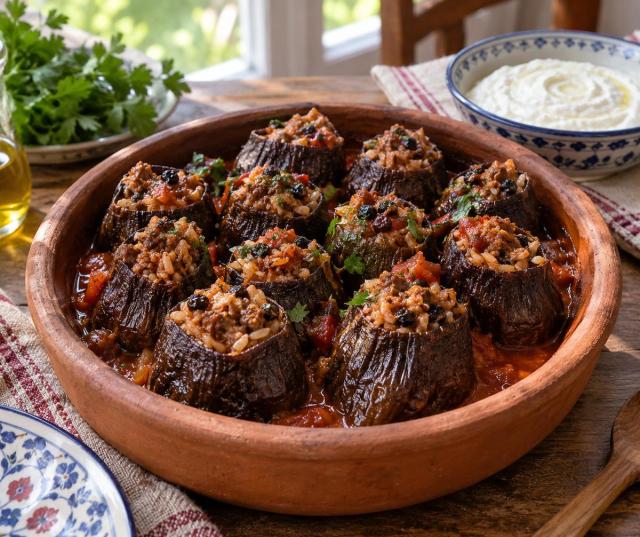
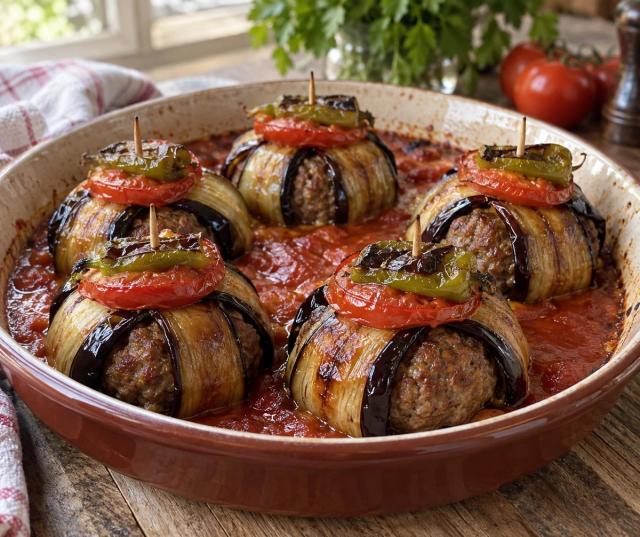
Dried eggplant shells filled with beef, rice and currants, gently cooked in a tomato-and-pepper sauce. Currant-filled dried eggplant is associated with Denizli. This home version uses onion, herbs and mixed tomato and pepper pastes; local variations exist.
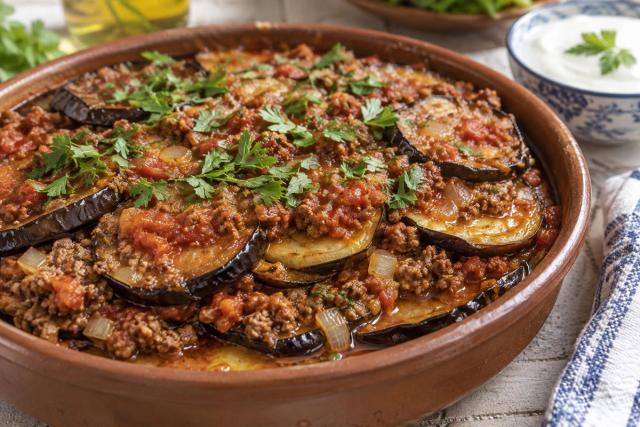
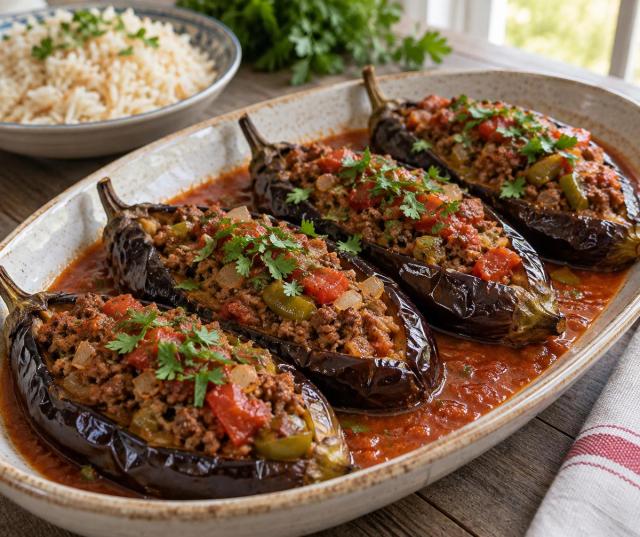
Roasted eggplant layered with minced beef and tomato, with an optional chickpea variation. The optional chickpeas reflect a documented Afyonkarahisar variation. This oven adaptation roasts the eggplant instead of frying it and has no béchamel topping.