


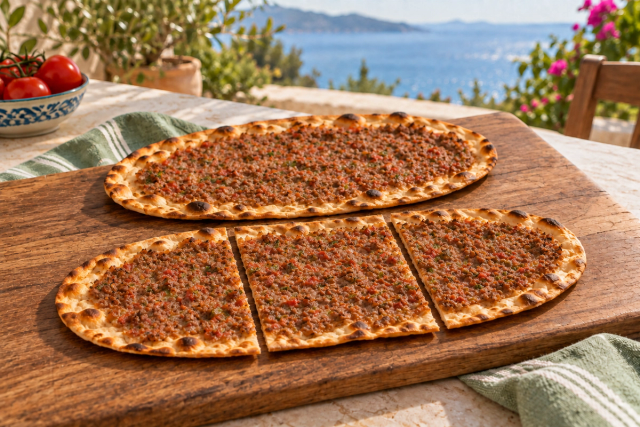
Konya-Style Flatbread with Meat
Thin, open flatbread topped with finely minced beef, tomato, green pepper, onion and parsley, adapted for a home oven.
Central Anatolia
The wood-fired oven is a good doorway into Konya’s cooking. Etliekmek, very thin hand-rolled dough topped with minced beef, tomato, green pepper, onion and parsley and baked long and narrow, is that oven’s most familiar face. In a wood-fired oven too, lamb or mutton seasoned only with salt becomes fırın kebabı, served hot on pide with chopped onion. Tirit brings tandır bread, garlic yogurt and boiled lamb together in layers, finished with broth, sumac, mint and parsley. Weddings here follow a set order at the table. Bamya çorbası, made with dried flower okra, lamb and tail fat, arrives after the dessert and before the second course, a sequence worth knowing before you sit down to a Konya wedding meal. Peynir şekeri, a hard white candy cooked in copper cauldrons, dissolves easily in the mouth. After the ovens, the next stop could be the province’s produce: Çumra’s sweet, juicy melons and the late-ripening Akşehir cherries, picked from late June into July.
Last updated:
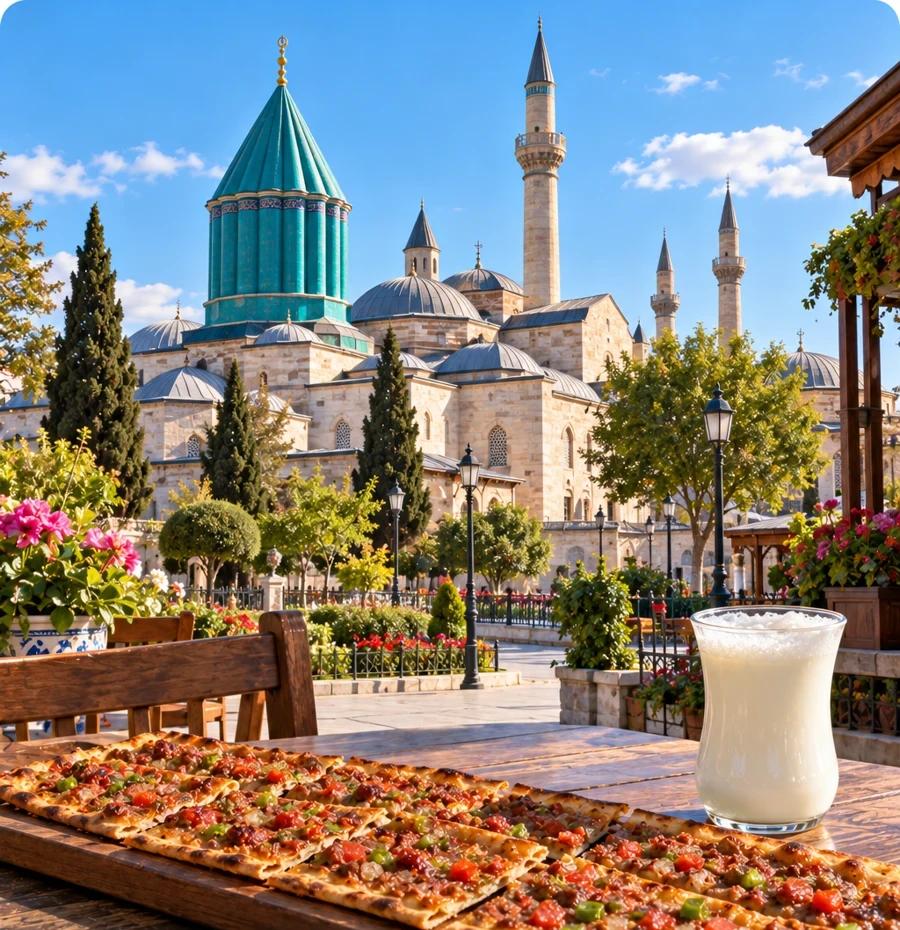
Long etliekmek from the wood oven on a plateau table.
Begin with etliekmek from the bread oven, then meet fırın kebabı, okra soup and the rice-and-meat dishes of celebration tables.
Thin, open flatbread topped with finely minced beef, tomato, green pepper, onion and parsley, adapted for a home oven.
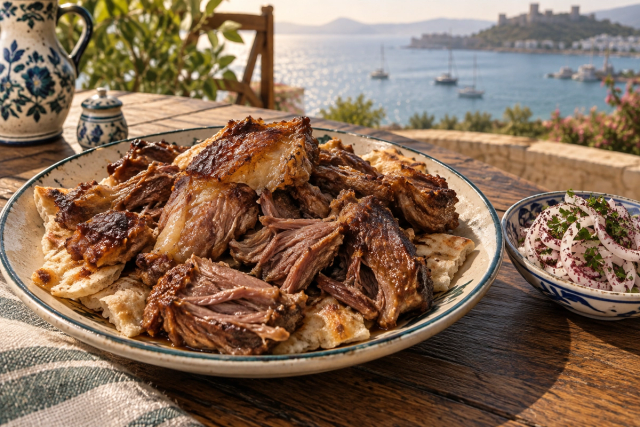
Simply seasoned lamb slowly roasted until tender, served on pide with its cooking juices. A covered home oven followed by uncovered browning adapts the long bakery-oven preparation.
Wedding rice with meat
Rice cooked in butter and bone broth and covered with beef cooked in its own fat, served to guests at weddings and celebrations.
Lamb and yogurt over bread
Pieces of tandır bread layered with onion, garlic yogurt, tomato, green pepper and boiled lamb, moistened with broth and finished with sumac, mint and parsley.
Lamb and dried okra soup
Dried flower okra cooked with lamb, tail fat, onion and a little tomato paste, served at weddings after the dessert and before the next course.
Small meat-filled vine leaves
Vine leaves rolled very small around minced meat, fine bulgur and rice, then cooked in stock with lemon juice and butter.
Mutton and turnip stew
Mutton and turnip cooked with onion browned in butter and tail fat, served hot.
Boiled then fried mutton
A mutton shoulder, leg or rib piece boiled until tender, rested in milk and fried, served as the main course for honoured guests.
Almond and flour halva
Flour and blanched almonds roasted in butter, cooked with sugar syrup and finished with rose water, served hot.
Melt-in-the-mouth sugar candy
A hard white sugar candy cooked in copper cauldrons, aerated and shaped, that dissolves easily in the mouth.
A late-ripening cherry from Akşehir, picked from late June into July.
Guide not written yetA Hıdır-type melon grown on the alluvial soils of Çumra, with sweet, juicy flesh.
Guide not written yetFirm, medium-to-large strawberries grown in the Hüyük district.
Guide not written yetA dark carrot from Ereğli, used mainly to make şalgam juice.
Guide not written yetKonya’s Mevlevi heritage remains visible in its museums and commemorations of Mevlana Celaleddin Rumi. It is a religious and cultural tradition with its own meaning, not merely a decorative backdrop for food. Hospitality also has a place at the table. The destination food guide describes etliekmek served to guests and meat pilaf prepared in large vessels for wedding meals. Bamya çorbası, an okra soup, is another documented celebration food. These examples do not prescribe a fixed menu for every Konya family.
Etliekmek bakes in a wood-fired oven, and fırın kebabı roasts in one too, preferably on a copper tray.
Konya wedding meals bring meat pilaf, semolina halva and okra soup to the table in a set order.
Known in antiquity as Iconium, Konya owes much of its urban character to the Seljuk period. After the First Crusade, the capital of the Anatolian Seljuk State moved from İznik to Konya. The city served as the Seljuk capital in the twelfth and thirteenth centuries, and many public buildings were raised during that time as examples of Seljuk stone carving. The Alaaddin Mosque, the Sırçalı Madrasa and the city’s outer fortress are among the examples of this architectural heritage in Konya.
Konya’s trading history runs alongside its architectural heritage. Konya lay on the caravan route known as the Silk Road and saw intense commercial activity in both the Seljuk and Ottoman periods. After the Seljuks, the city came under Karamanid rule, and it passed to the Ottomans when Fatih Sultan Mehmet put an end to the Karamanid dynasty. The province reaches well beyond the city itself. The Neolithic settlement of Çatalhöyük lies within its borders.


