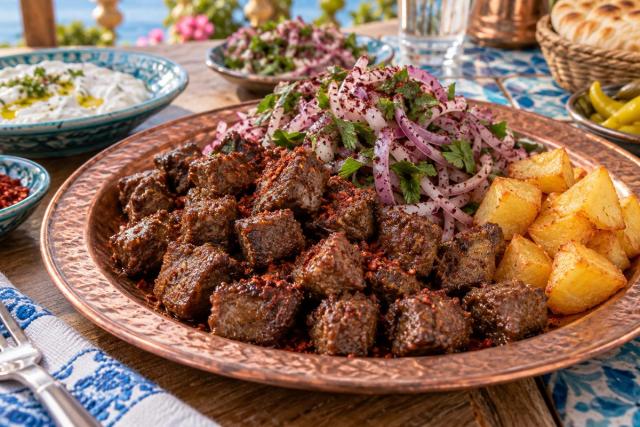
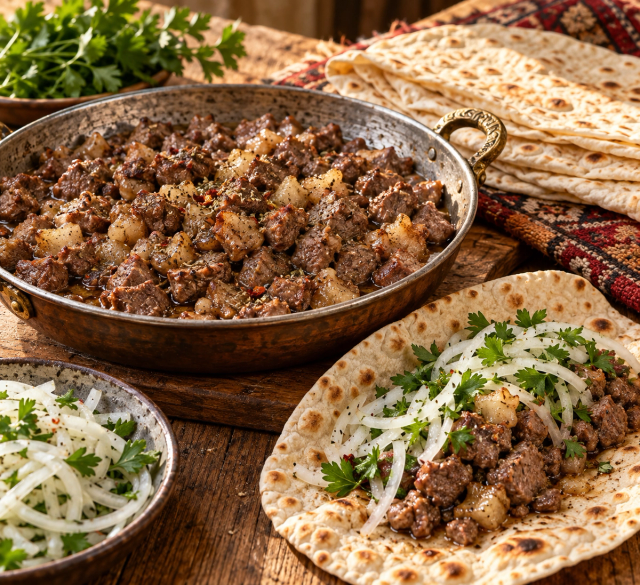
Place the beef in a heavy covered pot over medium heat. Stir until it releases some juices; lower the heat before the pan dries.
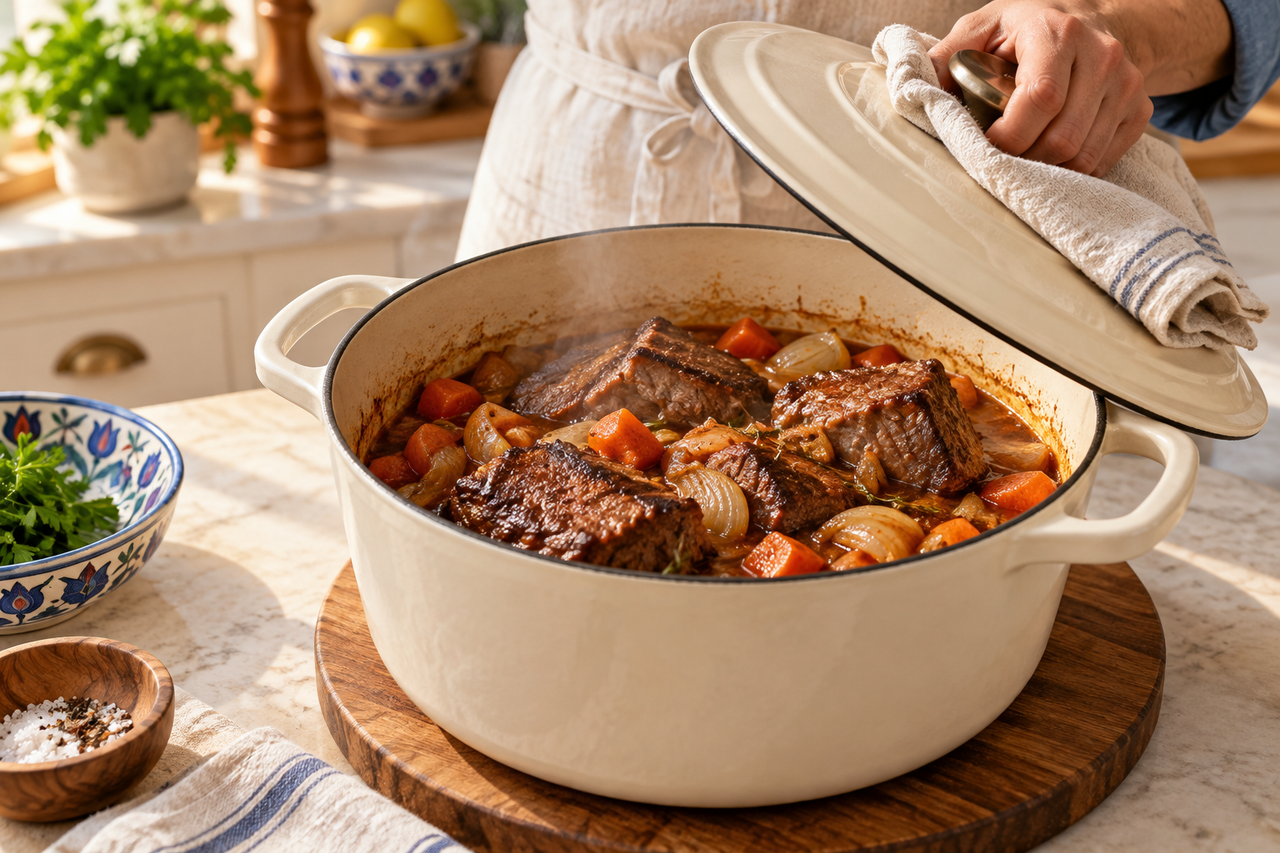
Cover and simmer very gently in the released juices for 60–75 minutes. Check periodically and add a small splash of hot water if the pan dries before the meat is tender.
Adjust the heat by watching the liquid, rather than relying only on the stove setting.
A fork enters the meat easily. Chuck varies; continue gently and add small splashes of water if needed.
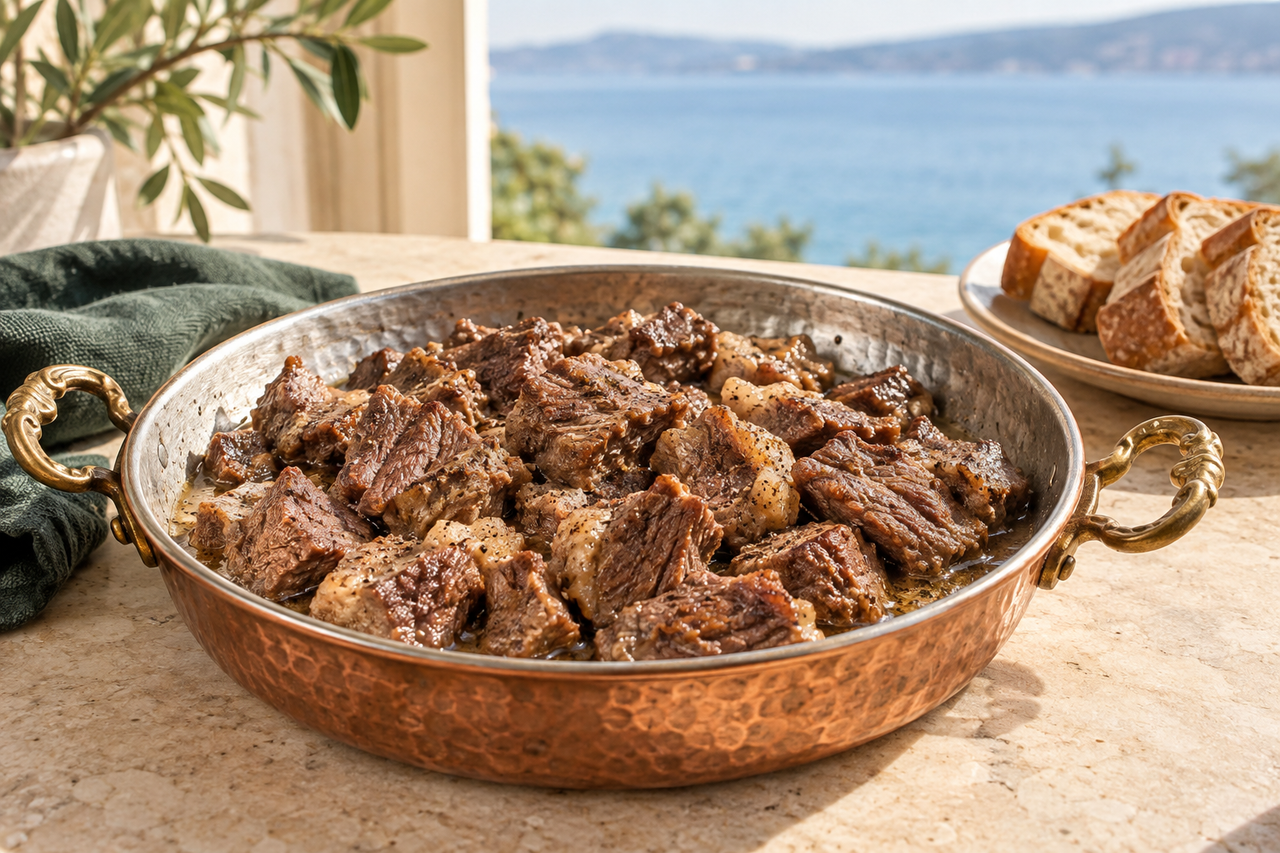
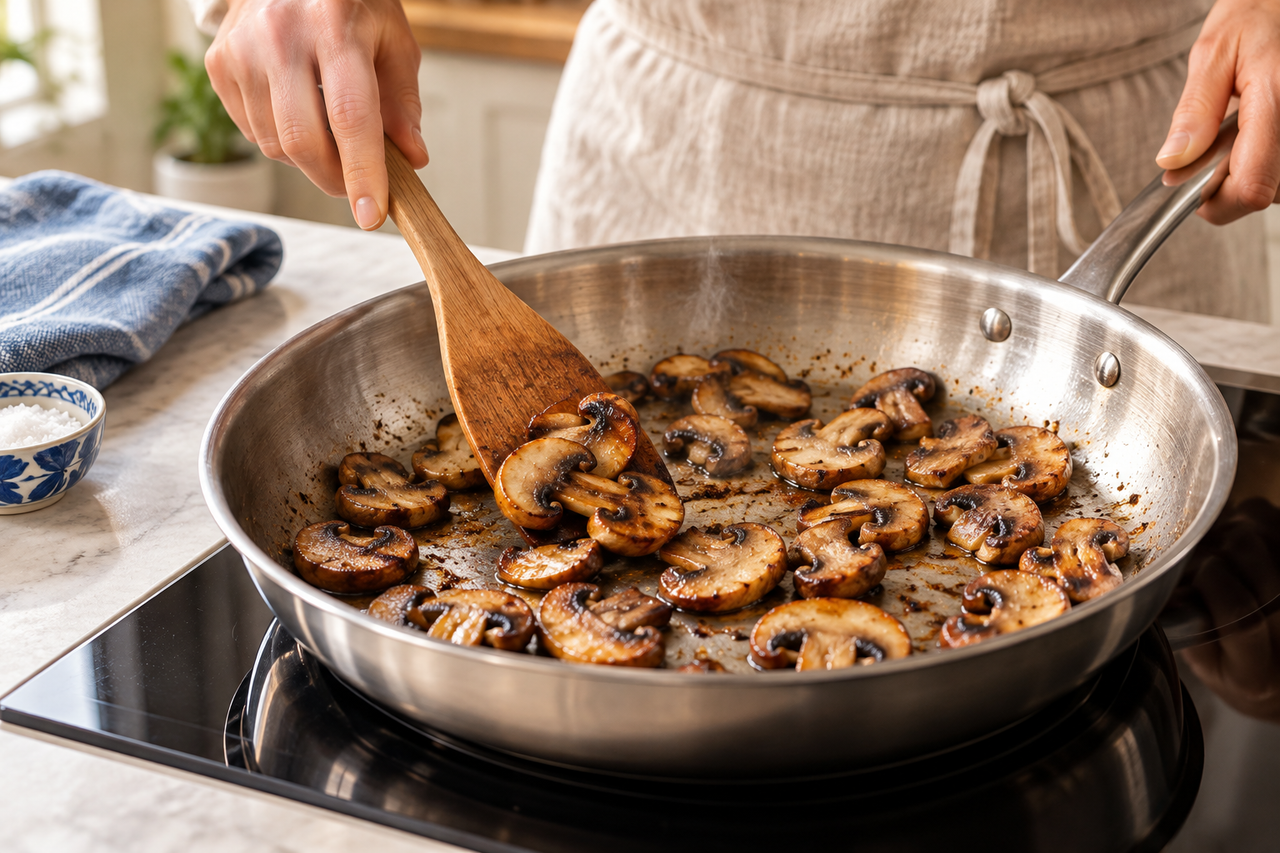
Uncover and let excess liquid evaporate. Add the butter and salt, then brown over medium heat for 5–10 minutes, stirring. Add green peppers during the final few minutes if using.
Recognize the difference between food releasing liquid and food beginning to brown.
Finish with black pepper and serve hot with bread. Refrigerate leftovers promptly in shallow containers; reheat to 165°F.
Cooking guidance
This version uses beef chuck and butter from the original alternatives. Keep a close eye on the pot as the juices evaporate; the meat should become tender before the final browning.
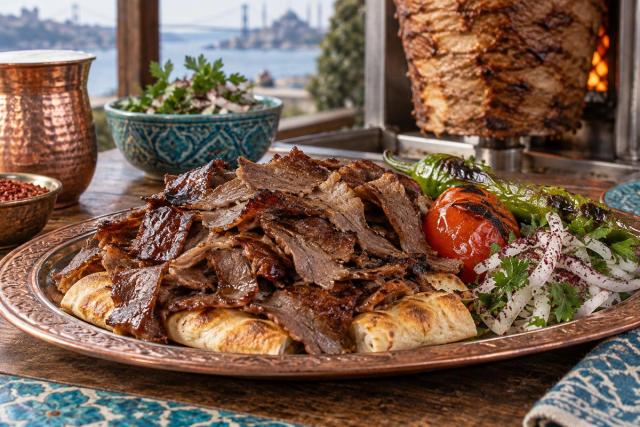
Thin layers of seasoned beef and mince, chilled into a roll, sliced and quickly browned in a skillet. This is a skillet adaptation of layered döner. A restaurant spit uses a different cooking process. Slice only when the roll is firm but safely cuttable; never force a knife through a solid frozen block.
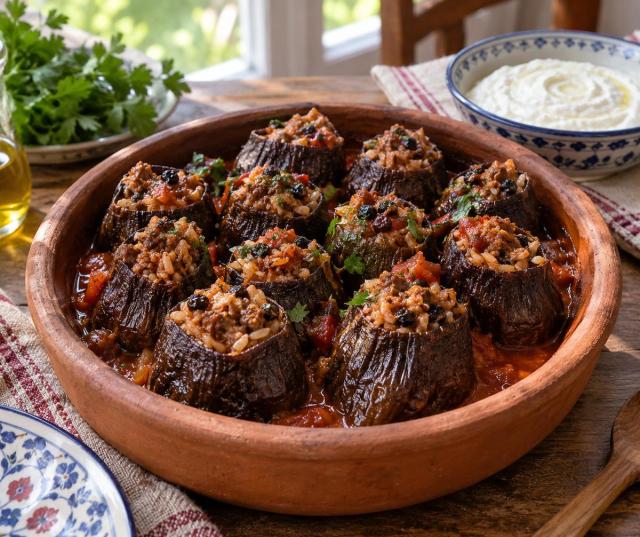
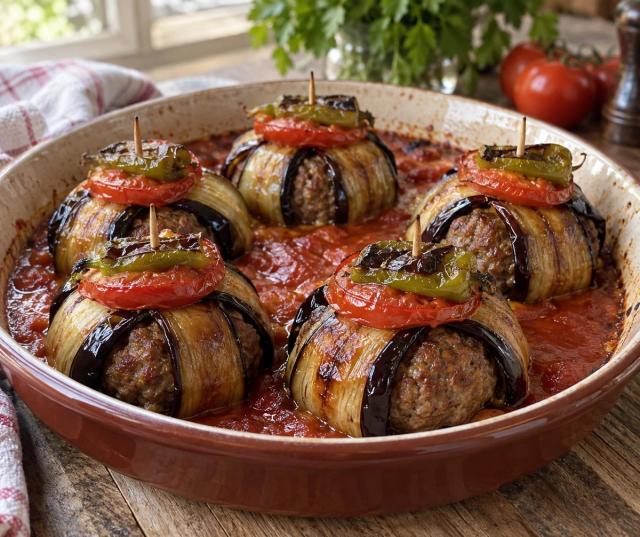
Dried eggplant shells filled with beef, rice and currants, gently cooked in a tomato-and-pepper sauce. Currant-filled dried eggplant is associated with Denizli. This home version uses onion, herbs and mixed tomato and pepper pastes; local variations exist.
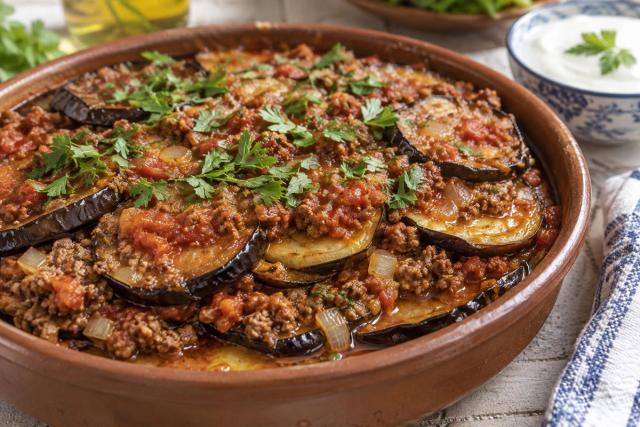
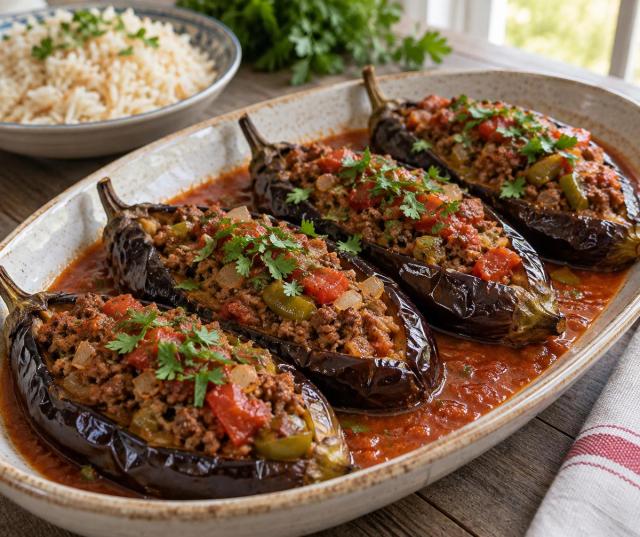
Roasted eggplant layered with minced beef and tomato, with an optional chickpea variation. The optional chickpeas reflect a documented Afyonkarahisar variation. This oven adaptation roasts the eggplant instead of frying it and has no béchamel topping.