



Fine chopping by hand
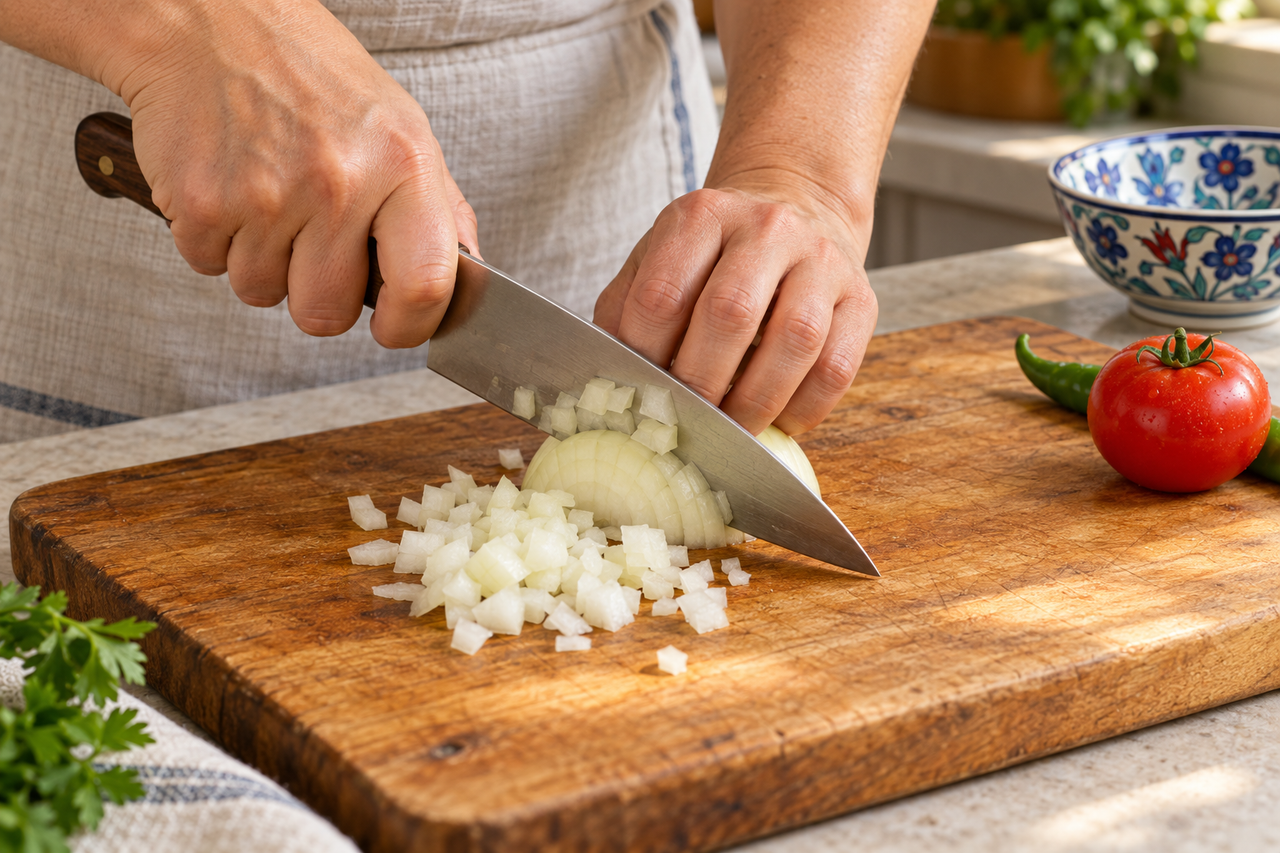
Keep small vegetable pieces distinct instead of turning them into a watery paste.
What this skill is for
Use fine chopping when vegetables or herbs should blend through a mixture while keeping some texture. It is useful for salads, relishes and fillings; the recipe decides how fine the pieces should be.
Chopping, dicing and mincing are related but different cuts. Chopping makes smaller pieces without requiring precise cubes; mincing makes much finer pieces. The garlic and parsley examples below show how the same skill adapts to different ingredients.
How to do it
- Steady the board on a non-slip mat or damp towel. Use a sharp knife with a dry handle. Curl your guiding fingertips inward and tuck your thumb back. Put a flat cut side against the board where possible; stop and reposition anything that rolls.
- Work with manageable portions. Cut vegetables into slices, strips and smaller pieces as their shape allows, moving the guiding hand back with each cut. Use controlled forward-and-down strokes rather than pressing or pounding.
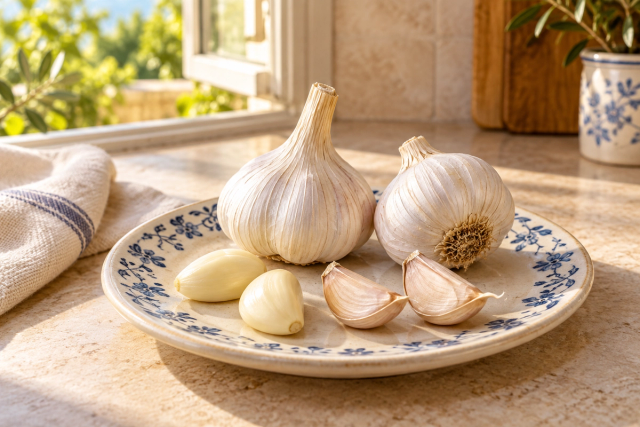
- For peeled garlic, rest its flattest side on the board and slice across it with curled fingertips. Chop through the slices for small distinct pieces; gather and repeat for finer mince. Stop before it becomes a smeared paste unless the recipe asks for crushed garlic.
- For parsley, wash and dry the leaves, remove thick tough stems and gather a compact pile. Slice with a controlled rocking motion, keeping fingertips clear. Put the knife down before turning and gathering the pile, then repeat only until the recipe’s texture is reached.
- If using a second hand to guide a rocking blade, rest the palm on the blunt upper spine near the tip, with fingers clear of the cutting edge. Otherwise use the guiding-hand grip on the food. Never gather pieces toward the sharp edge with your fingers.
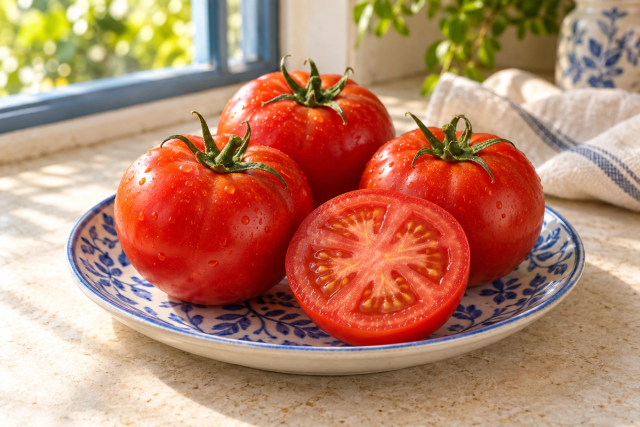
- Keep watery tomatoes separate when the recipe requests draining. More chopping does not remove their liquid. Check for oversized pieces before combining ingredients, and recut just those pieces.
- Use a bench scraper or the blunt back of the knife to gather the food. Stop when the pieces are fine enough and still distinct; a smooth purée is a different result.
Recognize success
- Small pieces are still visible, with no large hard chunks hiding in the mixture.
- The finished texture suits the dish: evenly spreadable filling or a relish that still has bite.
Common mistakes and what to do
- Overworking the pieces can make the mixture wet and pasty. Stop cutting; drain only if the recipe allows it.
- Uneven pieces give an uneven bite. Check the pile before mixing it with other ingredients; it is easier to correct now.
- Chasing a tiny loose piece or cutting with straight fingertips sacrifices control. Put the knife down and reset the piece and your grip. Do not keep cutting a piece you cannot hold securely.
Last updated:
Practice with a real recipe
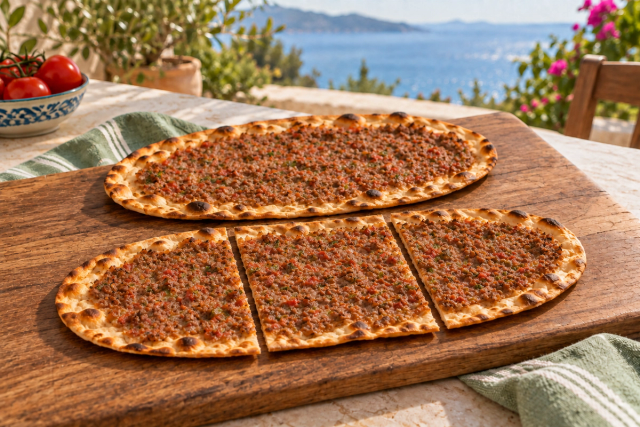
Related ingredients
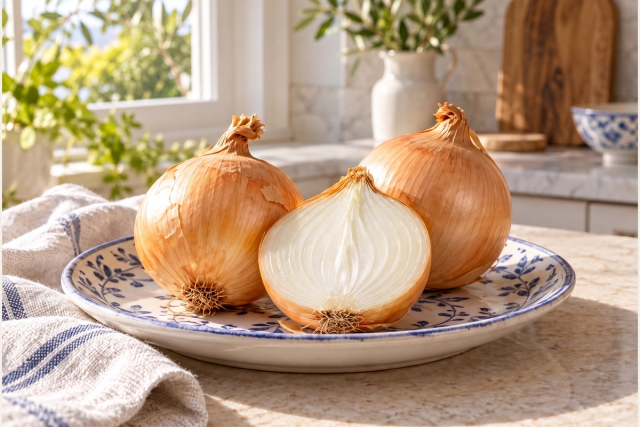
Related skills
Preparation & Knife Skills
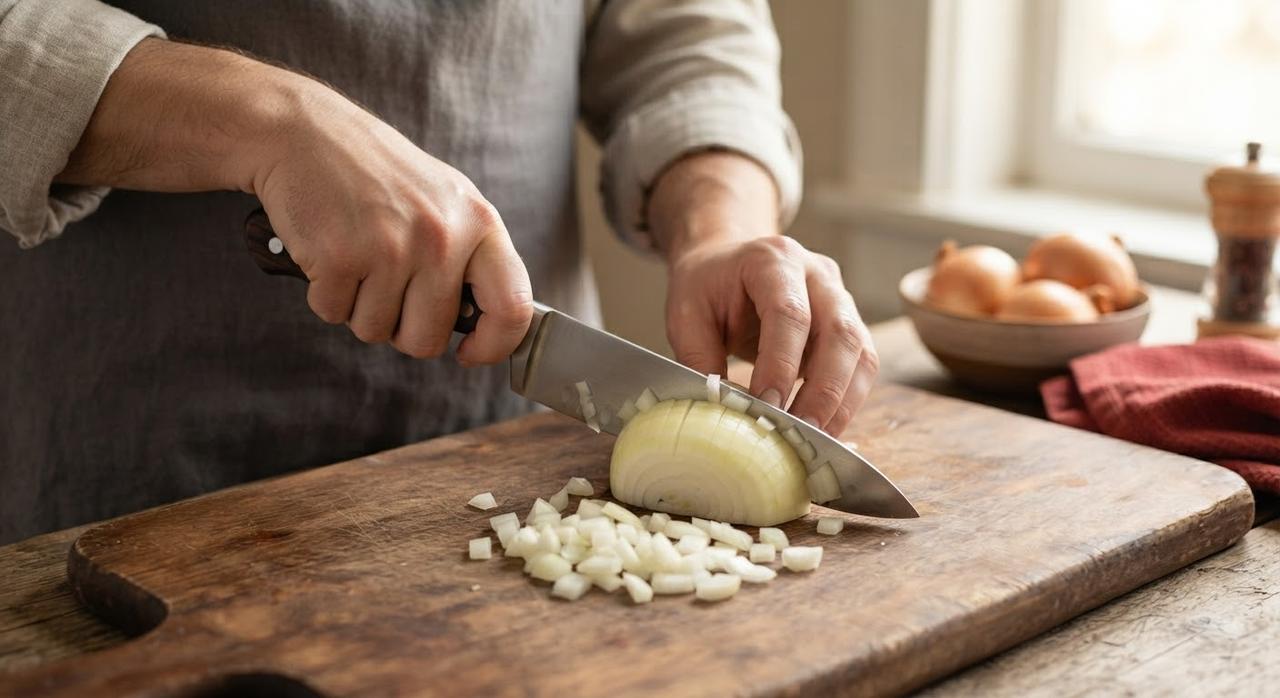
Dicing evenly
Cut slices into strips, then across into small pieces of a similar size.
Moisture Control
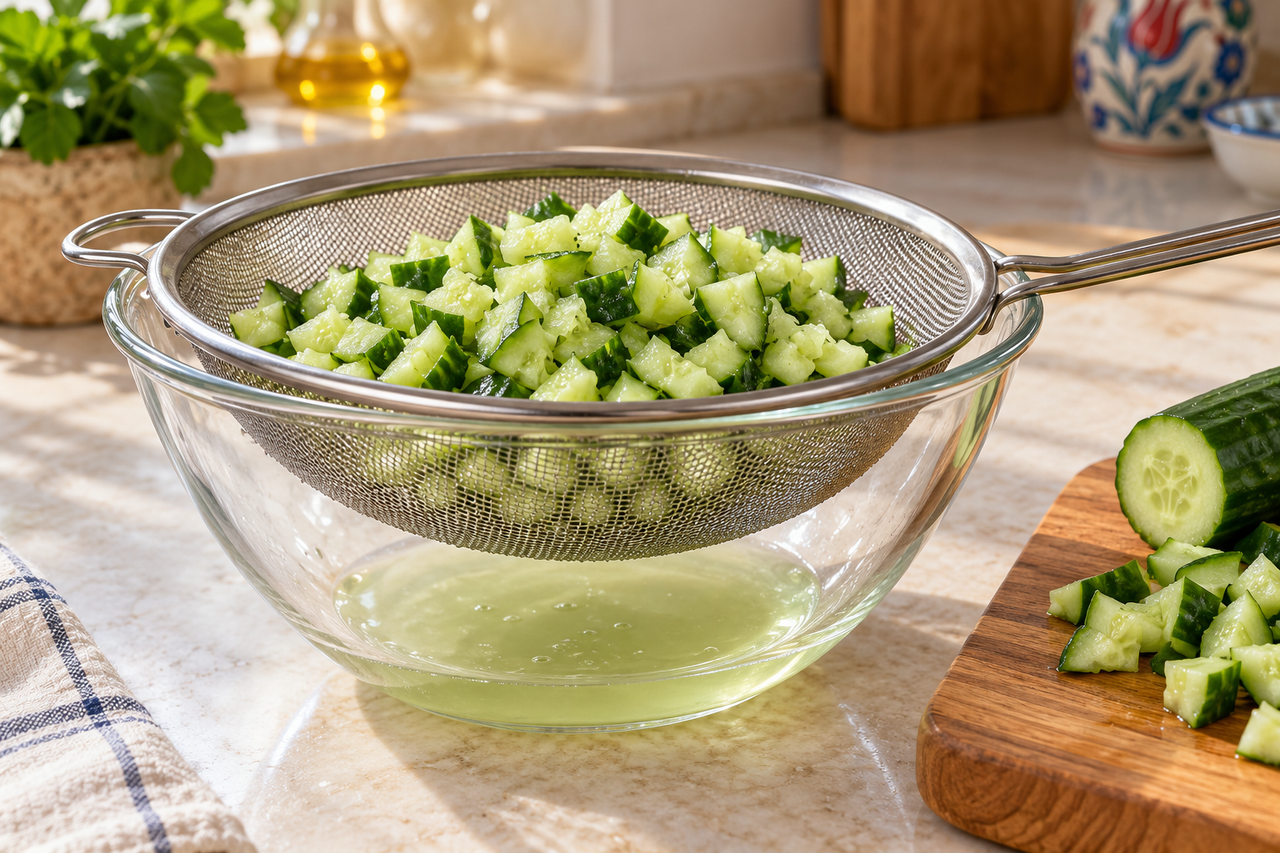
Draining cut vegetables
Let unwanted liquid drain away while keeping the vegetable pieces intact.
Preparation & Knife Skills
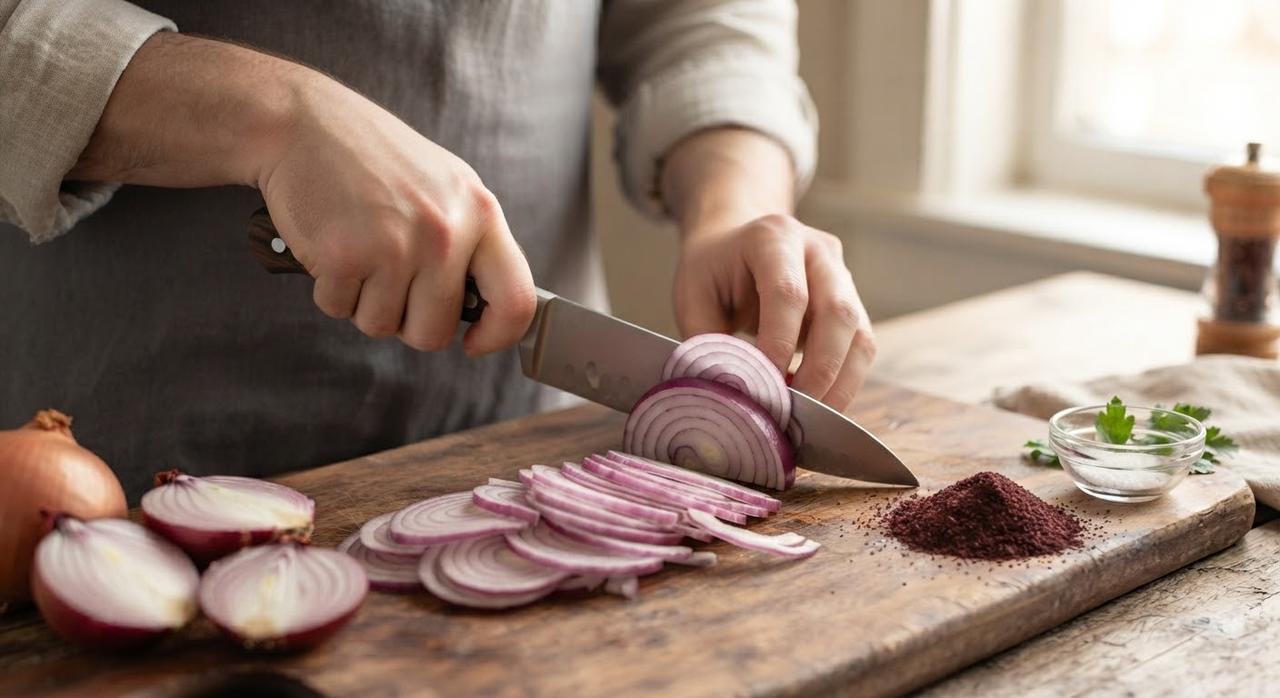
Slicing evenly
Make slices of a similar thickness with a steady board, a curled guiding hand and a controlled cutting motion.