


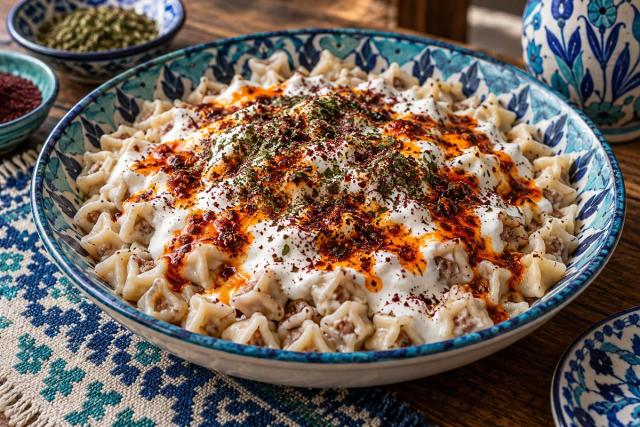
Turkish Dumplings
Small meat-filled dumplings with garlic yogurt, pepper butter, mint and sumac.
Central Anatolia
Thinly rolled dough is a good place to begin getting to know Kayseri’s kitchen. The tiny squares of Kayseri mantısı hold minced beef, dried onion and spices, and reach the plate with a butter and tomato-paste sauce and yogurt. In yağlama, thin şebit breads cooked on a griddle meet a spiced minced-meat filling layer upon layer, served with yogurt. Then it is the stone oven’s turn. Fırın ağzı kebabı cooks lamb slowly with tail fat, tomatoes, green peppers, garlic and thyme, and arrives hot with pide. Pöç kebabı leaves beef tail in clay pots for many hours in a wood-fired stone oven. For dessert, nevzine, made with tahini and walnuts, is soaked in grape-molasses syrup. Among the city’s products, pastırma coated in çemen and Talas’s firm, salty cheese with nigella seeds belong to this table too. From the small squares of mantı to the clay pots of Talas, Kayseri invites you to follow it from one plate to the next.
Last updated:
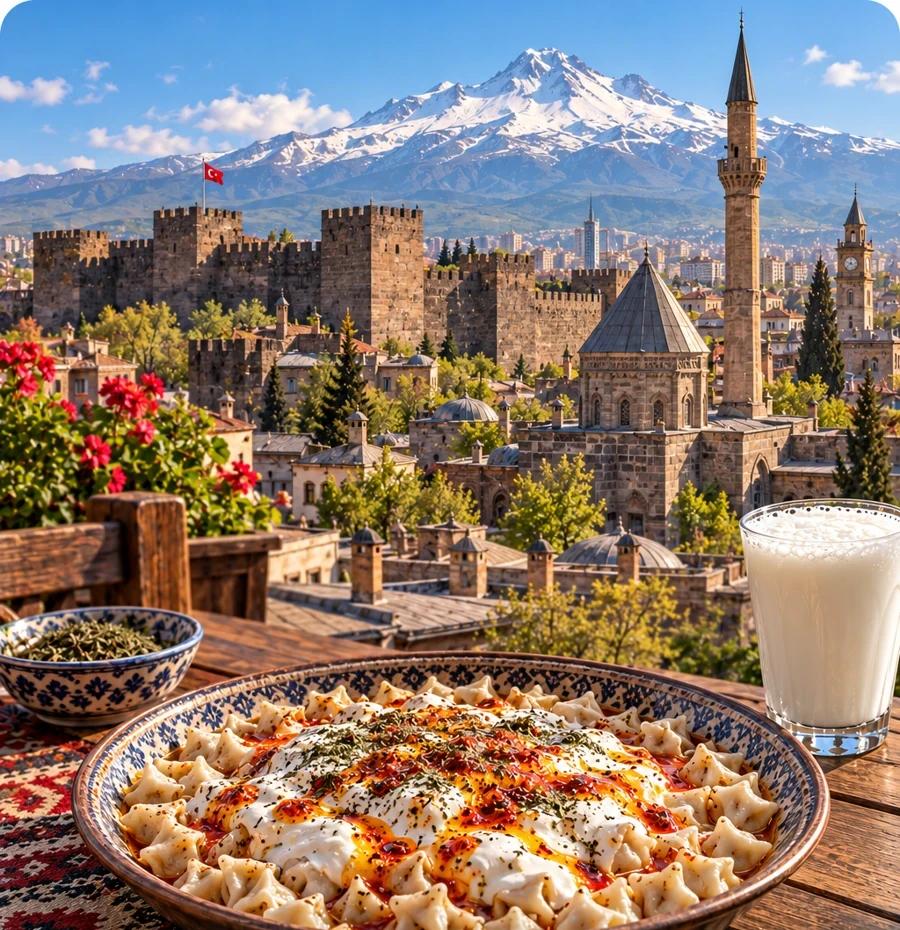
Thin dough, cured meats and Erciyes on the horizon.
Small meat-filled dumplings with garlic yogurt, pepper butter, mint and sumac.
Fried meat dumplings
Squares of yeasted yogurt dough filled with spiced minced meat, shaped like flowers, fried and served with tomato sauce and garlic yogurt.
Layered flatbreads with meat
Thin griddle breads called şebit, layered with a spiced minced-meat filling and served with yogurt.
Meat-topped flatbread
Thin oval dough spread with sheep meat, onion, green pepper, garlic and parsley, baked in a stone oven.
Stone-oven lamb
Lamb cooked slowly in a stone oven with tail fat, tomatoes, green peppers, garlic and thyme, served hot with pide.
Slow-cooked beef tail
Beef tail pieces cooked for many hours in clay pots in a wood-fired stone oven with tail fat, peppercorns and bay leaf.
Molasses-soaked walnut pastry
A dough of flour, fat, tahini and walnuts, baked and then soaked in a grape-molasses syrup.
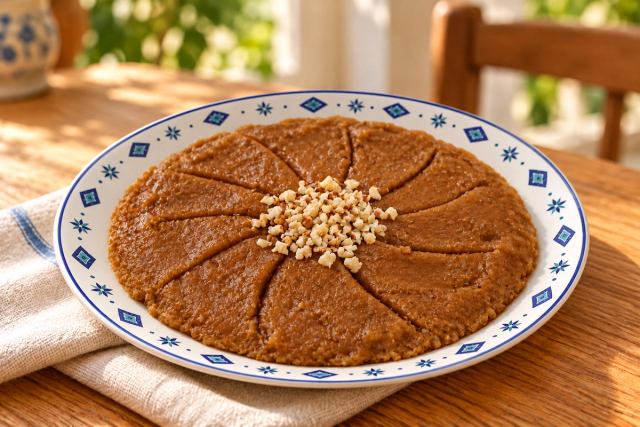
Kayseri’s finely textured flour-and-molasses dessert, cooked with butter and spread on a shallow dish. Served warm with walnuts, it is a simple sweet for winter evenings.
Beef that is salted, pressed, coated in spiced çemen paste and air-dried.
Guide not written yetBeef sausage seasoned with garlic and spices, stuffed into casings and dried.
Guide not written yetA thick, garlicky spice paste, also used to coat pastırma.
Guide not written yetA firm, salty cheese flavored with nigella seeds and aged in clay pots.
Guide not written yetA semi-hard cheese of cow or sheep milk from the Uzunyayla plateau, dried in the open air.
Guide not written yetSnacking pumpkin seeds grown around Tomarza and dried in the sun.
Guide not written yetFlower honey from the meadows and wild plants of Özvatan.
Guide not written yetThe provincial culture directorate describes older Kayseri homes with an ocak or tandır cooking area beside a substantial pantry. Fruit was stored above jars of molasses, pickles and other winter provisions. This is a documented picture of historic household organization, not a claim that every modern home works the same way. Mantı adds another kind of kitchen knowledge: rolling a firm dough thinly, portioning a small filling and closing each parcel. Several local preparations share the name mantı, so shape, filling and cooking method matter as much as the name.
Mantı, yağ mantısı and yağlama all begin with thinly rolled dough and a minced-meat filling.
Pastırma and sucuk are cured and dried, with spiced çemen paste coating the pastırma.
Kayseri’s long relationship with trade comes into view at Kültepe, outside the city center. The site consists of a mound and the surrounding karum, with the ruins of administrative and religious buildings alongside houses, shops and workshops. The karum at Kültepe was the center of the large trade colonies established by the Assyrians, and it oversaw the other karums. The tablets found here, written in Assyrian cuneiform, contain letters, bills, seals and treaties that reveal the political and legal relations of the period.
The story of trade continues along the roads of later centuries. In the Bünyan district, the 13th-century Karatay Caravanserai, with its high outer walls, looks somewhat like a small castle. It was built to accommodate the caravans of its time and was an important stopover on the Silk Road. Across the Kızılırmak, the cut-stone Tekgöz Bridge was built to provide transport between Kırşehir and Kayseri. Its great arch led local people to call it “Tekgöz”, or One Eye.


