


Nevşehir testi kebabı
Meat baked in a clay jug
Beef or lamb with shallots, peppers, garlic and tomatoes, sealed raw in a clay jug, baked in a stone oven or tandır and opened by breaking the jug.
Central Anatolia
In Nevşehir, some dishes reach the table sealed and only open when broken. Testi kebabı leads the way. Beef or lamb with shallots, peppers, garlic and tomatoes is cooked in a sealed clay jug in a stone oven or tandır, then cracked open at the table. Bread lays a trail of its own. On one side is tahinli simit, raised with a chickpea starter and baked in a wood-fired oven. On the other is the potato çörek of Kaymaklı, which comes out of the town's stone ovens and keeps for weeks without going stale. Dolaz, a halva of flour cooked in butter, waits on the sweet side, while the grape follows a path of its own. In autumn, juice from local grapes becomes köftür, a lokum-like sweet. Thin-skinned finger grapes go into jars for winter as çat üzüm turşusu, the grapes eaten and the liquid drunk. Add the large, cream-colored pumpkin seeds, sometimes roasted with milk. A meal that begins with a broken jug then leads you along the grape's road, from juice to pickle jar.
Last updated:
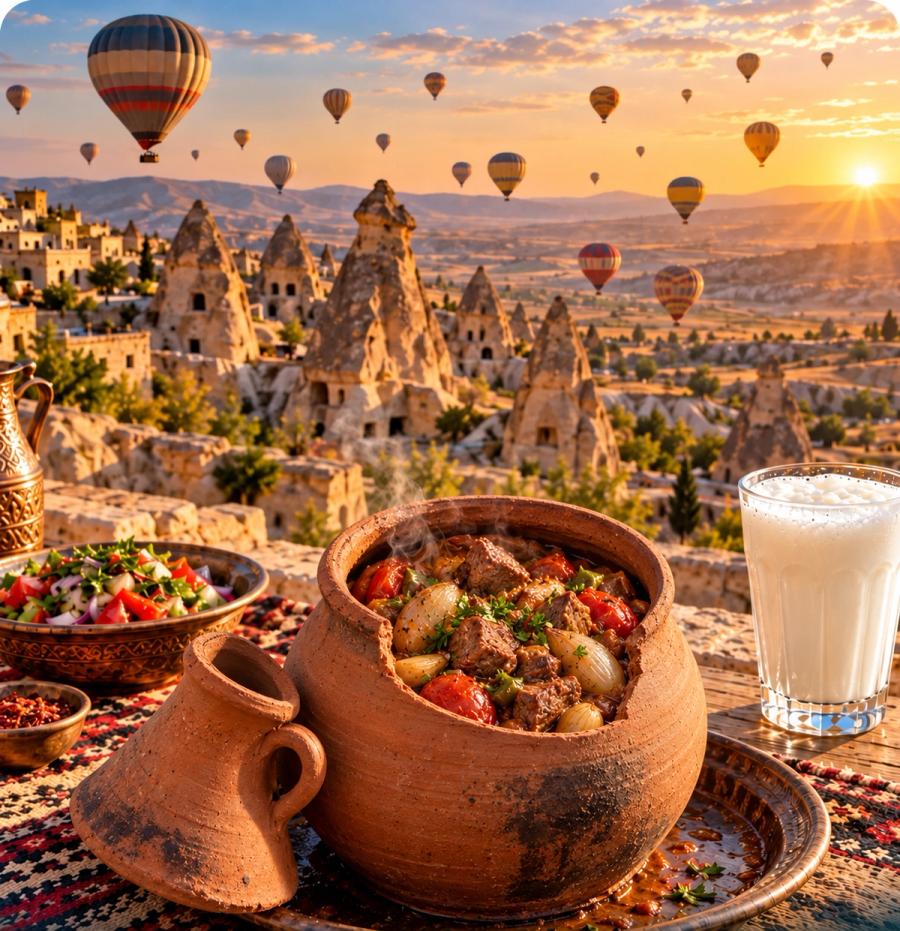
Cappadocian valleys, Avanos clay pots and grape molasses.
Look beyond the dramatic landscape to pottery, pantry foods and everyday grain cooking.
Meat baked in a clay jug
Beef or lamb with shallots, peppers, garlic and tomatoes, sealed raw in a clay jug, baked in a stone oven or tandır and opened by breaking the jug.
Tahini ring bread
A ring bread of dough raised with a chickpea starter and kneaded with tahini and sugar, baked in a wood-fired oven.
Potato bread from Kaymaklı
A bread of flour, yeast and potato, baked in the town’s stone ovens and kept for weeks without going stale.
Chickpeas, wheat and meat
A dish of chickpeas, wheat and meat cooked together.
White beans with meat
White beans cooked with meat and butter.
Grape juice sweet
A lokum-like sweet of local grape juice thickened with starch and dried, made in autumn.
Flour halva with butter
A halva of flour cooked with butter.
Recipes from this city are coming soon.
Large, oval, light cream pumpkin seeds sold raw or roasted, sometimes roasted with milk.
Guide not written yet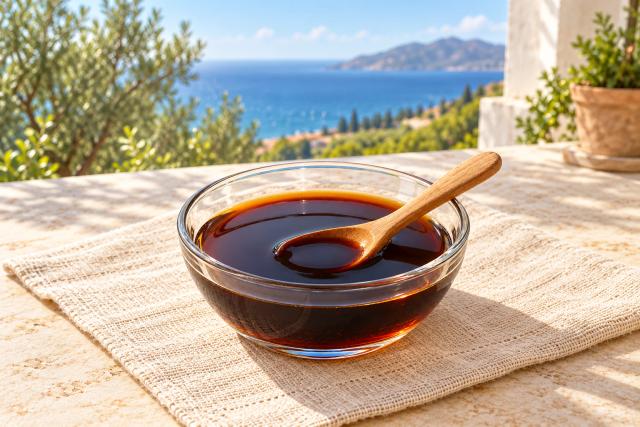
Concentrated grape molasses, mixed with tahini or used to coat sesame bread.
Potatoes grown in the province, also worked into the dough of Kaymaklı bread.
Guide not written yetThin-skinned finger grapes pickled in jars for winter; the grapes are eaten and the liquid is drunk.
Guide not written yetRock-cut architecture and clay working offer different relationships with the landscape. Avanos is associated with pottery, while the region’s decorated churches preserve a distinct artistic and religious history. Food adds another layer through vessels, grape processing and grain-based household dishes. A pottery association helps explain interest in clay-pot cooking, but does not establish the first inventor or an unbroken ancient recipe.
Testi kebabı is baked in a sealed clay pot, and the pot is broken open at the table.
Local grapes become pekmez, wine and köftür, a lokum-like sweet set from grape juice.
Nevşehir’s story begins with the ground itself. Long ago, eruptions from nearby mountains, then active volcanoes, buried the region under lava and thick ash. Over time, that cover hardened into tuff, a soft rock. Wind and water slowly wore the tuff down into cones, pillars and the formations known as fairy chimneys. Most of the region’s fairy chimneys and rock-cut churches are found around Ürgüp, Avanos, Gülşehir, Uçhisar and Göreme.
In the hands of the people who settled here, the soft stone became homes, places of worship and even stables. The rock-hewn sanctuaries of the Göreme Valley and its surroundings offer unique evidence of Byzantine art from the period after iconoclasm. Underground towns such as Kaymaklı and Derinkuyu served as places of refuge against Arab invasions. The town of Hacıbektaş shows a different side of the province. The Turkish and Muslim mystic Hacı Bektaş-ı Veli settled there in the 13th century. A 14th-century külliye, or Islamic complex, there includes his tomb.


