


Yozgat arabaşısı
Spicy chicken soup with set dough
A peppery, lemony chicken soup served with a separate dough that is cooked, left to set and cut into squares, mostly in winter.
Central Anatolia
In Yozgat, the trail of flavor starts with clay: kebabs here cook over a wood fire in clay tandırs and in sealed clay jugs. Tandır kebabı arrives sliced, with tomatoes, peppers, onions and flatbread. Desti kebabı brings cubed lamb with tomatoes, peppers, garlic and butter, cooked in a jug sealed with dough and broken open to serve. Winter is mostly the time for arabaşı, a peppery, lemony soup made with chicken or turkey and eaten with its own separate dough, cooked, set and cut into squares. Sorgun yağlısı spreads a minced-meat topping over thin dough; softer than lahmacun, it is eaten stacked in layers. Clay turns up in the cheese too: çanak peyniri is pressed firmly into clay bowls and aged buried in damp sand. After the jug and the bowl, go looking for the Aydıncık bağrıbütün melon, known locally as ‘yer muzu’, aromatic and orange-fleshed, with its seeds held together in the center.
Last updated:
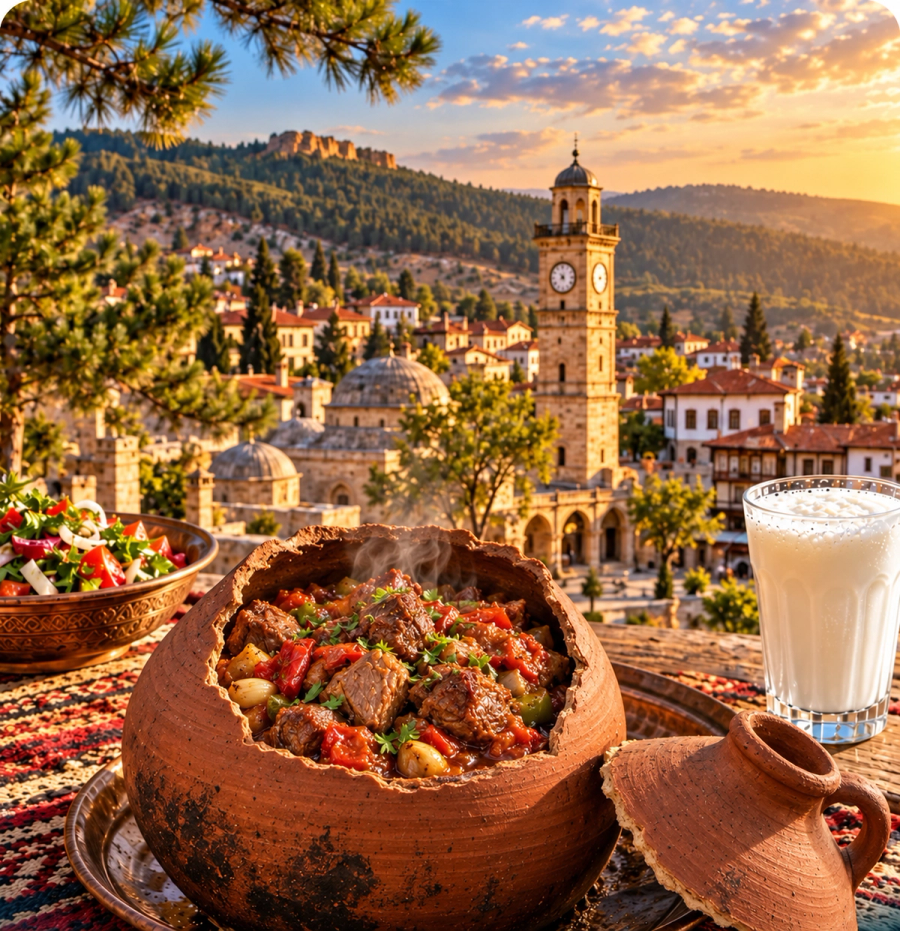
The Bozok plateau, clay tandırs and a winter bowl of arabaşı.
Explore the relationship between soup and dough, then follow meat, dairy and bakery traditions.
Spicy chicken soup with set dough
A peppery, lemony chicken soup served with a separate dough that is cooked, left to set and cut into squares, mostly in winter.
Lamb roasted in a clay tandır
Lamb salted a day ahead, cooked on skewers in a clay tandır and served sliced with tomatoes, peppers, onions and flatbread.
Lamb baked in a clay jug
Cubed lamb with tomatoes, peppers, garlic and butter, sealed with dough in a clay jug, cooked slowly over wood and served by breaking the jug.
Soft minced-meat flatbread
Thinly rolled dough spread with a minced-meat topping, softer than lahmacun and eaten stacked in layers.
Finger-shaped bread
Four pieces of dough joined into a long finger shape, glazed with egg and baked in a wood-fired stone oven, eaten at breakfast with cheese and tea.
Wild greens with pastırma
Finely chopped madımak greens cooked with tomato paste and pastırma, served with garlic yogurt.
Recipes from this city are coming soon.
Cheese curd pressed, salted and packed into clay bowls, then aged buried in damp sand.
Guide not written yetAn aromatic, orange-fleshed melon with its seeds held together in the center, known locally as ‘yer muzu’.
Guide not written yetTubers of a wild orchid from the Akdağmadeni forests, dried and ground in stone mills.
Guide not written yetArabaşı is associated with winter gatherings and shared hospitality. The cooled flour-and-water dough is served with the soup as a separate component, rather than cooked into it like noodles. This serving relationship matters as much as a list of ingredients. District bakery foods and the preserved dairy pantry offer additional perspectives on local practice; none establishes that all households follow one menu.
Arabaşı is eaten with a cold, set dough cut into squares, a custom of the winter table.
Kebabs are cooked in clay tandırs and in sealed clay jugs over a wood fire.
A good place to begin exploring Yozgat is the Çapanoğlu Mosque, one of the city’s symbolic buildings. It carries Turkish architectural features that emerged under European influence during the Ottoman period, and with its slender minaret and high dome it can be seen from all over the city. On the outer wall of the cemetery to the east of the mosque stands the Hamidiye Fountain with its clock, built to mark the twenty-fifth anniversary of Sultan Abdul Hamid II’s accession to the throne. Yozgat Museum, meanwhile, occupies a building constructed in the 19th century as a private mansion and later used as an art school for girls and as a regie.
The province also holds the remains of a far older city: Kerkenes. It was once thought to have been founded by the Medes in the Iron Age, but Phrygian inscriptions found during excavations suggest it may have been a Phrygian settlement. Kerkenes is thought to be Pteria, a city mentioned in ancient sources. When the Persians took the city, it was burned and its walls destroyed. Public buildings and an advanced system for harvesting and distributing water offer clues to the urban life that once flourished behind those walls.


