


Niğde tava
Stone-oven lamb tray bake
Chunks of lamb or mutton with tail fat, tomatoes, garlic and green peppers, baked in a tray in a wood-fired stone oven and eaten with warm pide.
Central Anatolia
In Niğde, two meat dishes are cooked in the same place: a wood-fired stone oven. Niğde tava, made with lamb or mutton arranged in a tray with tail fat, tomatoes, garlic and green peppers, is eaten with warm pide. Bor söğürmesi brings thin slices of lamb rib and back meat over green peppers, arriving in its tray with pide and onion. Kelle söğüş is served cold, its cheek, tongue and brain meat paired with parsley, onion, cumin and red pepper. On the dough side, there is Niğde tahinlisi, made with tahini either plain or with sugar and eaten especially during Ramadan. It is followed by sarım burma tatlısı, thin dough twisted around crushed walnuts and sweetened with cold syrup. Beyond the oven, the road leads to Ulukışla’s highland villages. There, large heart-shaped Darboğaz cherries are picked from the last week of June into August. And don’t forget to add geven honey to the journey, made from wild geven and other flowers and sold strained or in the comb.
Last updated:
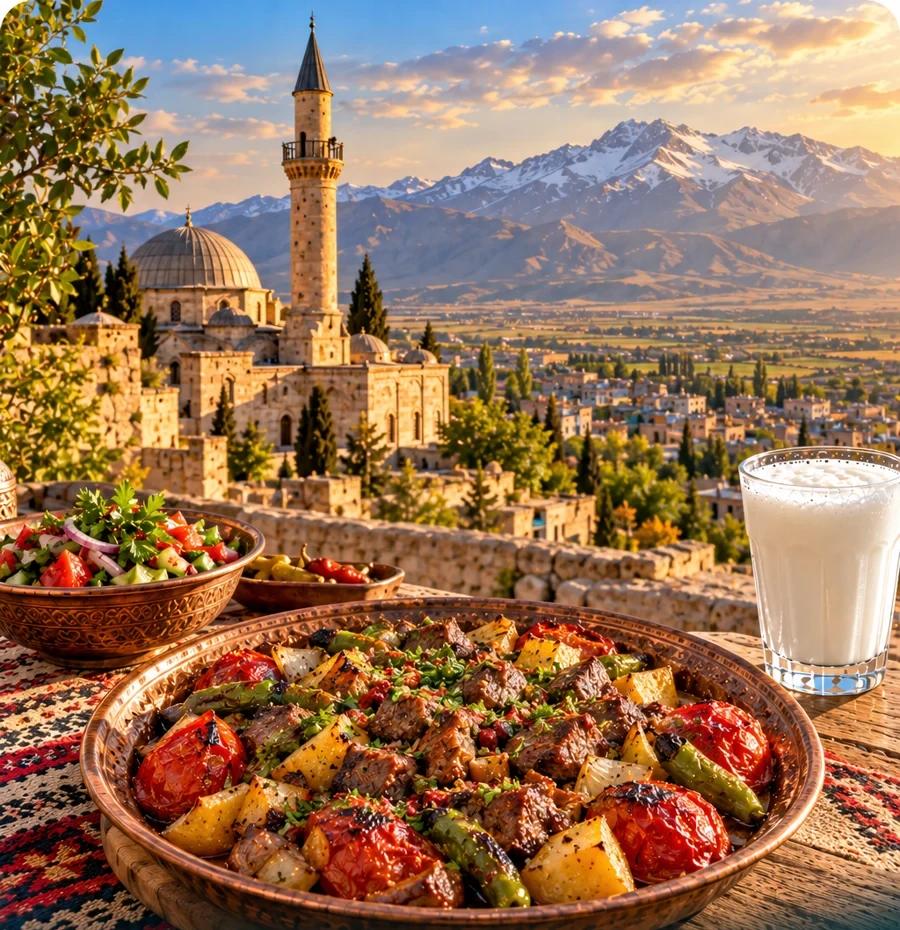
Apple orchards below the Taurus and a stone-oven tray of lamb.
Follow orchard produce and bakery foods alongside lamb and bulgur preparations.
Stone-oven lamb tray bake
Chunks of lamb or mutton with tail fat, tomatoes, garlic and green peppers, baked in a tray in a wood-fired stone oven and eaten with warm pide.
Oven-baked lamb on peppers
Thin slices of lamb rib and back meat with tail fat, baked on green peppers in a wood-fired stone oven and served in the tray with pide and onion.
Rolled tahini bread
Hand-rolled dough spread with tahini, plain or with sugar, coiled, flattened and baked, eaten especially during Ramadan.
Cold chopped head meat
Cheek, tongue and brain meat from cooked lamb or sheep heads, chopped and served cold over parsley and onion with cumin and red pepper, in bread or on a plate.
Lamb and quince stew
Lamb browned in fat, then simmered with sliced quince and grape molasses and served hot.
Bulgur meatballs in broth
Small balls of minced meat, fine bulgur, semolina, egg and herbs, boiled in a broth of onion, tomato paste, mint and butter.
Rice-stuffed apples
Hollowed apples filled with rice and minced meat, sprinkled with sugar and simmered until the rice is cooked.
Walnut pastry coils in syrup
Thin dough rolled around crushed walnuts, twisted, baked and soaked in cold syrup, made for Ramadan, holidays and special occasions.
Recipes from this city are coming soon.
Large, heart-shaped red cherries from Ulukışla’s highland villages, picked from late June into August.
Guide not written yetHoney from wild geven (milk vetch) and other flowers, sold strained or in the comb.
Guide not written yetApples from the province’s wide orchards, also stuffed in elma dolması.
Guide not written yetPotatoes, a major field crop of the province.
Guide not written yet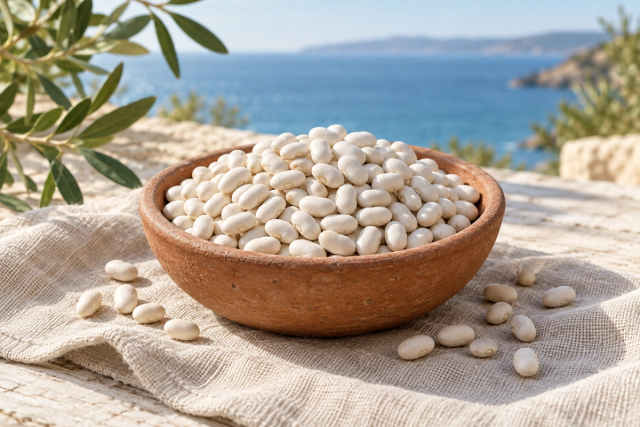
Dried white beans, soaked and cooked thoroughly for stews and salads.
Carpet weaving is documented across places including Bor, Kemerhisar, Ulukışla and the Melendiz area. The provincial culture directorate describes wooden looms, wool and large central motifs, while also noting the craft’s changing economic role. That living craft history complements the province’s orchards and bakery culture. The district names offer a useful way to follow those different traditions.
Niğde tava and Bor söğürmesi are both baked in trays in wood-fired stone ovens and eaten with warm pide.
Potatoes, dried beans and apples are major crops, and late cherries ripen in Ulukışla’s highland villages.
In Niğde city, history gathers around the hill where the old town stood. The castle on that hill was ringed by walls, and the clock tower raised on one of its old bastions is now regarded as the symbol of Niğde. In the city, the crown gate of Sungur Bey Mosque is carved with animal figures such as a bird, an elephant and a goat. They are thought to represent the old Turkish calendar of twelve animals.
The province’s ancient past continues in a separate town, Kemerhisar. The town takes its name from the aqueducts built to carry spring water from the Roman Pool, and the ruins of Tyana lie beneath a large part of it. Known as Tuwanuwa in the Hittite period, the settlement served as a capital in the late Hittite period and was known as Tyana in the Roman era. Niğde also lies on the route of the King’s Road. To keep trade routes secure, the Seljuks, among others, built inns along them, and Kamereddin Inn, on the Konya–Adana route, dates from the Seljuk period.


