


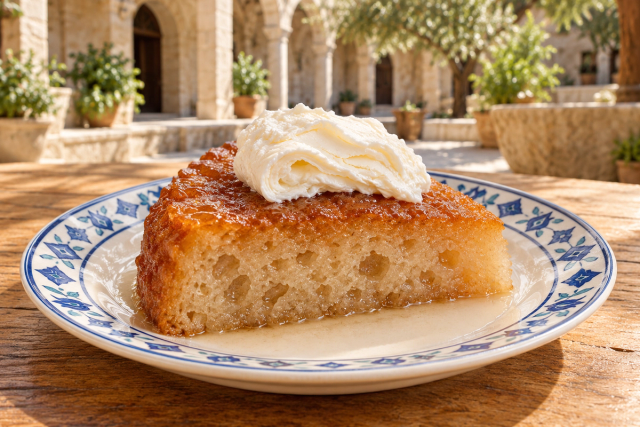
Bread Pudding with Clotted Cream
A porous, golden-brown bread absorbs plain sugar syrup and is served in wedges with buffalo-milk clotted cream. The bread is baked and dried before its final stovetop cooking.
Aegean Region
Known across Türkiye simply as Afyon
In Afyonkarahisar, following the trail of kaymak is not hard. You first meet Afyon kaymağı, made from buffalo milk, at breakfast, where it sits beside honey and poppy-seed pastries. The same kaymak also moves into desserts. Paired with a syrup-soaked bread dessert, it becomes kaymaklı ekmek kadayıfı, and paired with Turkish delight, it becomes kaymaklı lokum. The poppy seeds you saw at breakfast turn up often in the region’s local pastries too. Haşhaşlı bükme is one of the pastries that brings these tiny seeds to the table. Move on to vegetable dishes and you find that eggplant holds a special place in Afyon cooking. Badılcan böreği, an eggplant börek, is one of those eggplant dishes. Çullama köfte, a local meatball dish, has its own place on the province’s wedding tables. In the pantry, sour cherries from Çay, one of the province’s districts known for growing fruit, are waiting. A morning that begins with kaymak can easily send you after haşhaşlı bükme, badılcan böreği and the sour cherries of Çay.
Last updated:
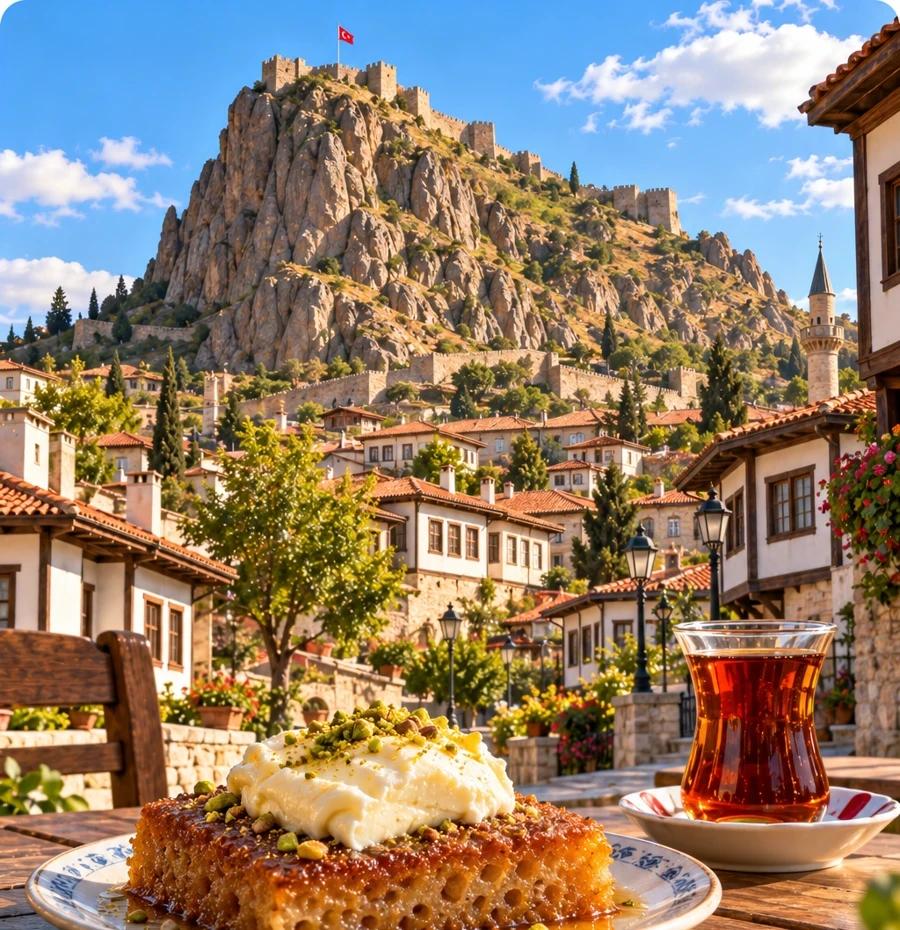
A castle above the rooftops, and kaymak worth lingering over.
Explore the dishes that shape the city’s table.
A porous, golden-brown bread absorbs plain sugar syrup and is served in wedges with buffalo-milk clotted cream. The bread is baked and dried before its final stovetop cooking.
Turkish delight with kaymak
Kaymak brings Afyon’s dairy tradition to its lokum.
Wheat and meat keşkek
A local keşkek tradition from the Şuhut district.
Coated meatballs
A familiar dish in the province’s wedding-food repertoire.
Eggplant börek
One of the many eggplant dishes in Afyon’s kitchen.
Poppy-seed pastry
A local pastry bringing poppy seeds to the table.
Potato-dough village bread
A distinctive bread of the province.
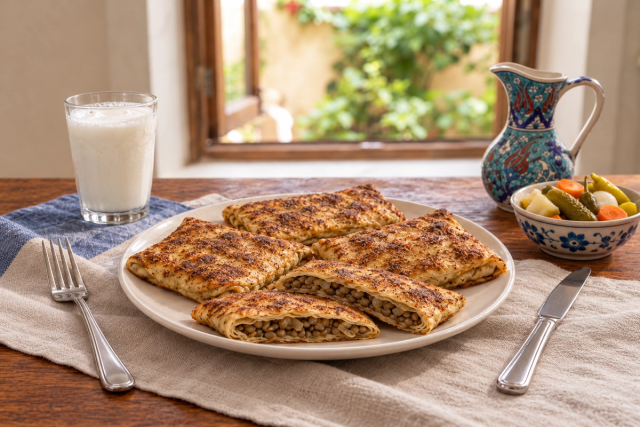
Thin, folded Afyon pastries filled with green lentils and onion, with olive oil and yellow poppy paste between the layers.
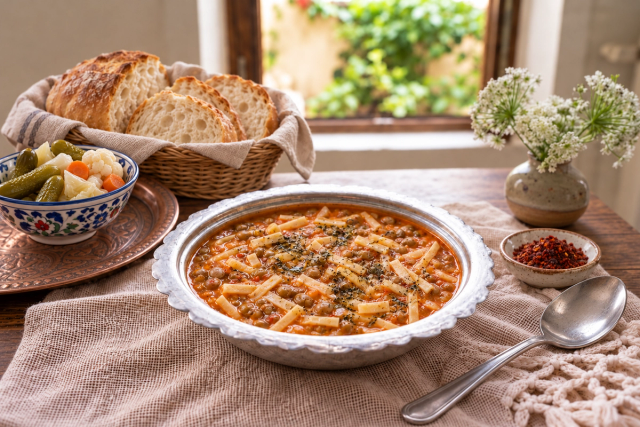
An Afyon soup of whole green lentils and thin dried erişte noodles, with onion, tomato paste and flour. A little mint butter can be spooned over each bowl.
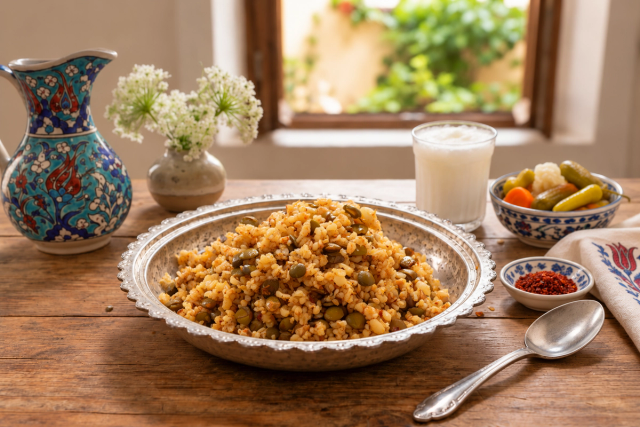
Dry green lentils are soaked and simmered, then cooked with coarse bulgur in their own liquid. Hot cold-pressed poppy-seed oil is stirred through, and the pilaf rests under a paper towel so the grains stay separate.
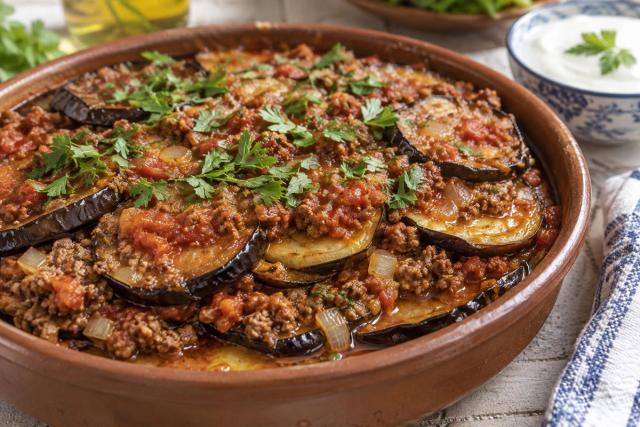
Roasted eggplant layered with minced beef and tomato, with an optional chickpea variation. The optional chickpeas reflect a documented Afyonkarahisar variation. This oven adaptation roasts the eggplant instead of frying it and has no béchamel topping.
Rich cream for breakfast and desserts.
Guide not written yetA well-known local meat product.
Guide not written yetSour cherries from the province’s fruit-growing districts.
Guide not written yetPastırma from the city’s meat-product tradition.
Guide not written yetPoppy seeds used in local pastries.
Guide not written yetAt celebrations and gatherings, Afyon’s sıra yemeği brings dishes to the table in a set order. Soups, meat, vegetables, pastries and sweets share a place in this generous food tradition.
Kaymak, honey and poppy-seed pastries are part of the morning table.
Afyon’s vegetable repertoire gives eggplant a prominent place.
You can start exploring Afyonkarahisar at Karahisar Castle, built on a volcanic mountain in the city center. Closely associated with the formation of the city’s name, the castle has yielded Phrygian traces and places of worship dedicated to the Mother Goddess Kybele at its summit. In the time of the Seljuk Sultan Alaaddin Keykubat, the walls were repaired, and a small mosque and a palace were built next to the castle. Under the Ottomans, the castle was used to store the state treasury.
The city’s Seljuk heritage is strongly felt at the Grand Mosque, also known as the mosque with 40 columns. Built by the sanjak-bey Nusreddin Hasan during the Anatolian Seljuk period, it rises on wooden columns and is an example of 13th-century Seljuk woodworking. Afyonkarahisar also played a very important role in the War of Independence. The Great Offensive started from this city. The building of the Victory Museum, opposite the Victory Monument and the castle, is where the Field Battle of the Commander-in-Chief, also known as the Battle of Dumlupınar, was planned and ordered.


