


Aksaray tulum kebabı
Wood-oven lamb with tulum cheese
Rested lamb shoulder with salt, black pepper, thyme, basil, butter and tulum cheese, cooked for hours in a wood oven and served with rice.
Central Anatolia
At the Aksaray table, lamb takes two different paths, both of them slow. On one side is tulum kebabı, cooked for hours in a wood oven with tulum cheese and served with rice. On the other is Hasandağı testi kebabı, which arrives in a clay pot sealed with dough, its neck broken to serve. The sweet side often begins at breakfast, with pide fresh from the oven, spread with butter, cut into finger-thick strips and drizzled with syrup. In Ramadan and on holidays, two more sweets join the table. Şeker böreği, made with tail fat, butter and walnuts, meets warm syrup once it has cooled. Köpük helva, also called bulama, is a glossy, spoonable halva made with soapwort extract. Follow these flavors out to the districts and you will find thick sheep’s milk yogurt from Eşmekaya in Eskil. After the walnuts in şeker böreği, you can go looking for the walnuts of Ağaçören. And Hasandağı, which gives the testi kebabı its name, leads you, together with the Ekecik area, to grape molasses.
Last updated:
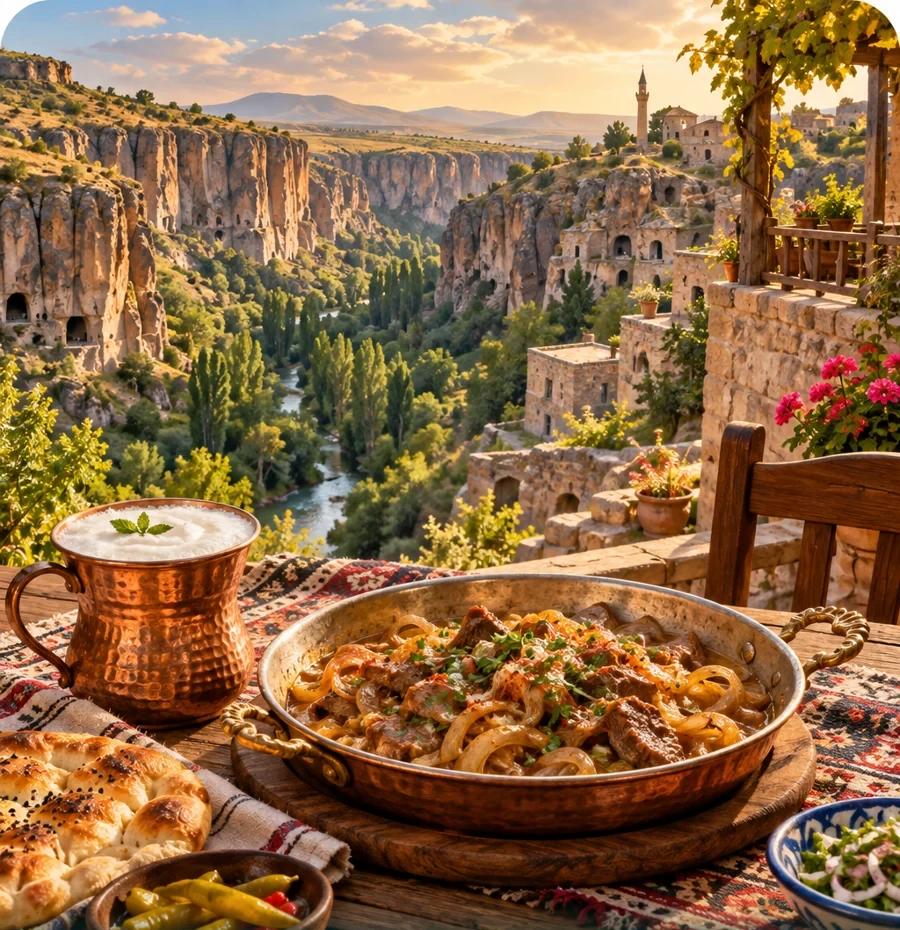
Volcanic plains, wood ovens and syrupy sweets.
An oven tray of lamb, tomato and peppers is one starting point; filled dough and grain-based sweets offer others.
Wood-oven lamb with tulum cheese
Rested lamb shoulder with salt, black pepper, thyme, basil, butter and tulum cheese, cooked for hours in a wood oven and served with rice.
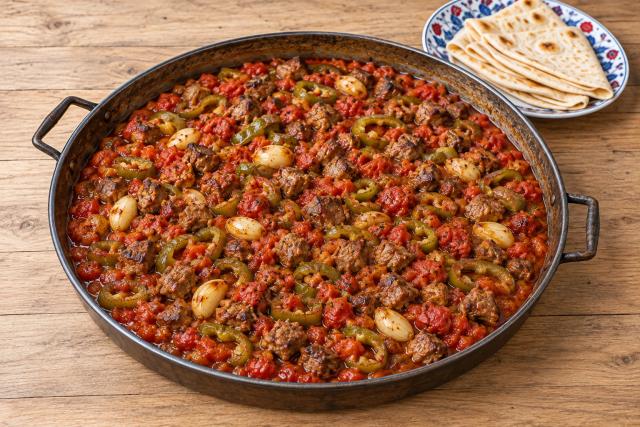
Small pieces of lamb baked with tomatoes, green peppers and whole garlic in a rich tomato and pepper sauce, served with warm lavaş.
Lamb in a sealed clay pot
Lamb, tail fat, garlic, tomato and onion cooked in a pot sealed with dough; the neck is broken to serve.
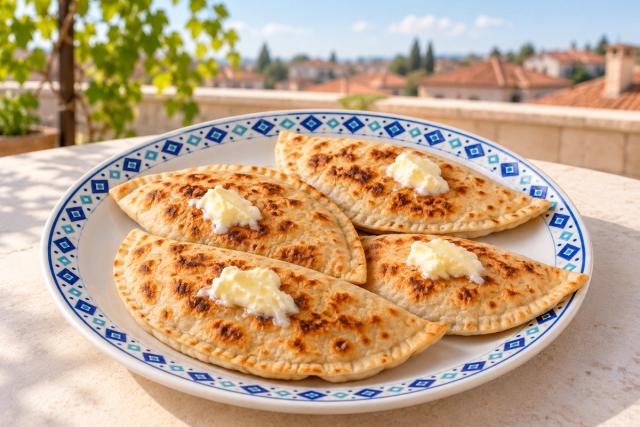
Çiğleme from Aksaray: small rounds of plain flour-and-water dough filled with fresh kaymak, folded closed and cooked slowly in a pan, then served hot with more kaymak on top. It differs from an egg-filled pastry that shares the name.
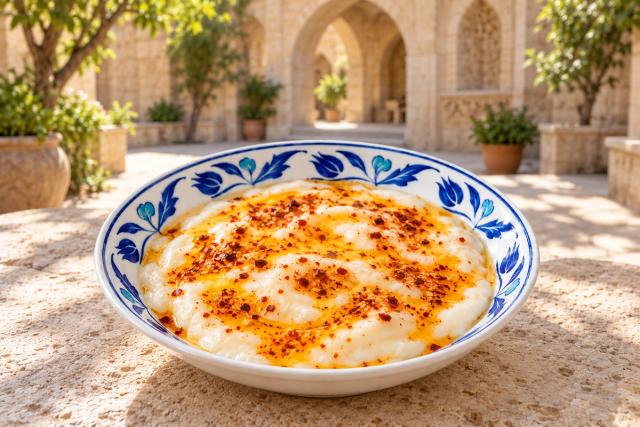
Aksaray’s savory dolaz: milk thickened with flour to a smooth, pudding-like consistency, salted and finished with butter melted with pul biber. Unlike the sweet dolaz made elsewhere in Central Anatolia, it has no sugar or molasses.
Onions with minced meat
Onions and minced meat cooked together, made in almost every home in Aksaray.
Buttered pide in syrup
Pide fresh from the oven, spread with butter, cut into strips and drizzled with syrup; usually eaten at breakfast.
Walnut pastry in syrup
Dough made with tail fat, butter and walnuts, pressed on a sieve-like mold, baked and served with warm syrup.
Soapwort halva
A glossy, spoonable halva of soapwort (çöven) extract, sugar and corn syrup, also called bulama.
Thin-rolled dough dessert
A dessert named after its very thinly rolled dough, made for iftar, holidays and weddings.
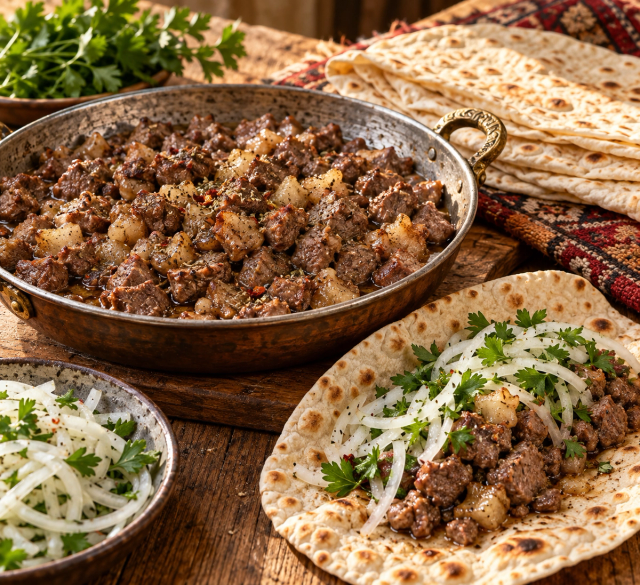
Lamb cooked with sheep tail fat, seasoned with kekik and pepper, served in flatbread with onion and parsley.
White, glossy pumpkin seeds eaten as a snack.
Guide not written yetThick sheep’s milk yogurt from Eşmekaya in the Eskil district.
Guide not written yetWalnuts from the Ağaçören district.
Guide not written yetGrape molasses from the Hasandağı and Ekecik area.
Guide not written yetTaşpınar carpets are an important part of Aksaray’s weaving tradition. The provincial directorate describes wool as a central material and stylized plant motifs arranged within geometric designs. It also records how patterns have changed and circulated between weaving centers. That history of exchange matters: a local tradition can have a recognizable identity while adapting over time. It offers a useful counterpart to food, where names, ingredients and household methods also deserve careful distinction.
Tulum kebabı cooks for hours in a wood oven, and testi kebabı in a dough-sealed pot.
Köpük helva, incelek and şeker böreği come to the table in Ramadan and on holidays.
Following the Melendiz Stream through Aksaray leads you to the Ihlara Valley, once known as Peristremma. Thanks to its natural form and sheltered setting, the valley served monks and priests as a hermitage from the fourth century onward and grew into an important monastic center. In frescoed churches such as Sümbüllü, Yılanlı and Kokar, religious scenes reflect the art of the Byzantine period.
A fresco in Kırkdamaltı Church offers a striking detail from a later chapter. It shows Basileios, the Christian ruler who governed the region on behalf of the Seljuks, presenting a model of the church to St Georgios together with his wife Tamara. In this scene, Basileios wears a turban and a kaftan. At the far end of the valley, in Selime, stands the two-storey Selime Cathedral. The Eğri Minaret, a thirteenth-century Seljuk work, takes its name from its slight lean.


