


Ermenek helvası
Grape molasses and tahini halva
Grape molasses cooked with soapwort extract and beaten into tahini, without added sugar.
Central Anatolia
In Karaman, grape molasses meets tahini and bulgur meets walnuts, and a few plates are enough to see it. Ermenek makes a good first stop. On one side is Ermenek helvası, made with grape molasses, soapwort extract and tahini, with no added sugar. On the other is batırma, where düğürcük, a very fine bulgur, comes together with tomato, onion, walnuts, parsley and basil and is eaten with vine leaves or cabbage. Karaman-type bulgur, cracked in stone mills, then leads you to two more dishes. One is şebit pilavı, cooked with chickpeas and green pepper and topped with lamb or mutton, served with şebit bread. The other is İlisıra dolması, aubergines paired with a minced-meat and coarse-bulgur filling and finished with garlic yogurt. For something sweet there is guymak, kaymak roasted with flour and served with honeycomb. Tulum cheese, matured in skins inside the Divle sinkhole cave, gives you a fine reason to follow Karaman from Ermenek’s two plates all the way into a sinkhole.
Last updated:
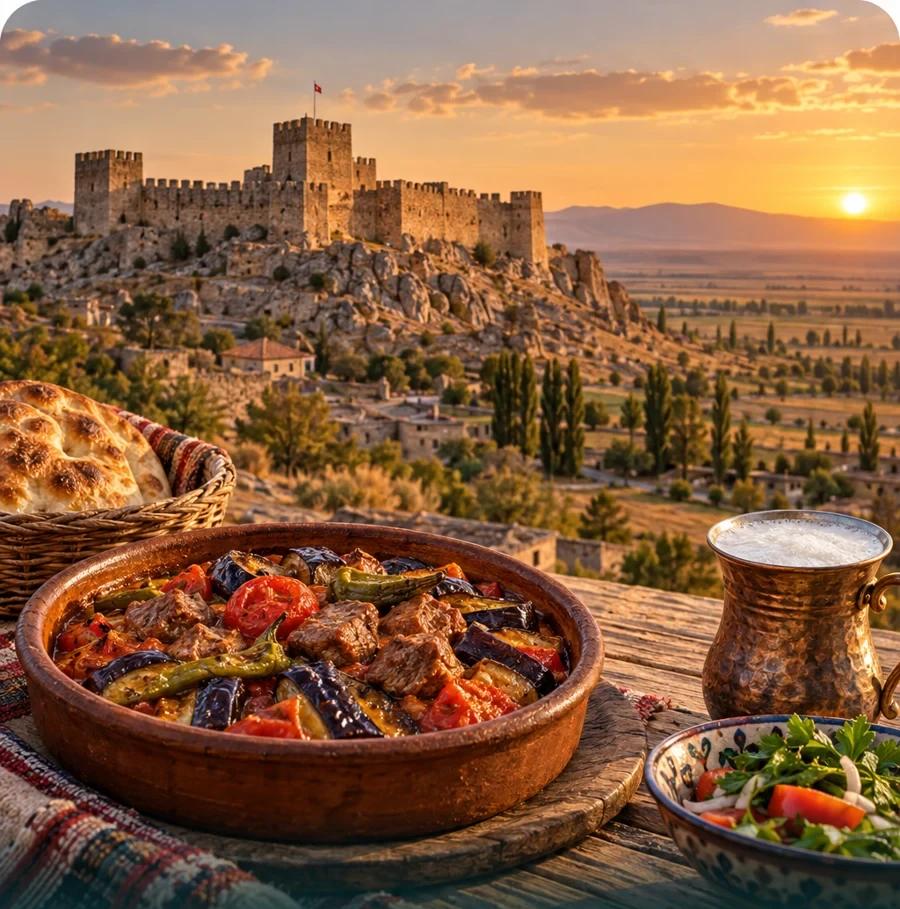
Taurus foothills, vineyards and a table of bulgur and helva.
Explore sesame and grape molasses in helva, then follow fine bulgur and clay-pot cooking.
Grape molasses and tahini halva
Grape molasses cooked with soapwort extract and beaten into tahini, without added sugar.
Bulgur and walnut salad
Fine bulgur kneaded with grated tomato, onion, walnuts, parsley and basil, eaten with vine leaves or cabbage.
Meat and aubergine casserole
Meat, aubergine and other vegetables cooked together in a casserole.
Bulgur pilaf with lamb
Bulgur pilaf with chickpeas and green pepper, topped with boiled and sautéed lamb or mutton and served with şebit bread.
Aubergine and bulgur dolma
Aubergines layered with a minced-meat and coarse-bulgur filling, cooked in a butter sauce and served with garlic yogurt.
Kaymak sweet with honeycomb
Kaymak heated and roasted with flour until golden, then served with honeycomb.
Yufka börek with lor cheese
Yufka brushed with yogurt and egg, scattered with lor cheese, gathered into rolls and baked.
Stone-baked tahini pide
Dough spread with tahini and butter and baked in a stone oven, sometimes with walnuts.
Lamb and vegetable kebab
Sheep or goat meat roasted on iron plates with vegetables and finished in the oven, associated with the Zeyve area of Ermenek.
Recipes from this city are coming soon.
Tulum cheese of goat’s, cow’s and sheep’s milk, matured in skins in the Divle sinkhole cave.
Guide not written yetClotted cream salted and matured inside a cleaned stomach.
Guide not written yetA small, dark grape with a sour taste, eaten fresh or dried.
Guide not written yetVery fine bulgur, the base of batırma.
Guide not written yet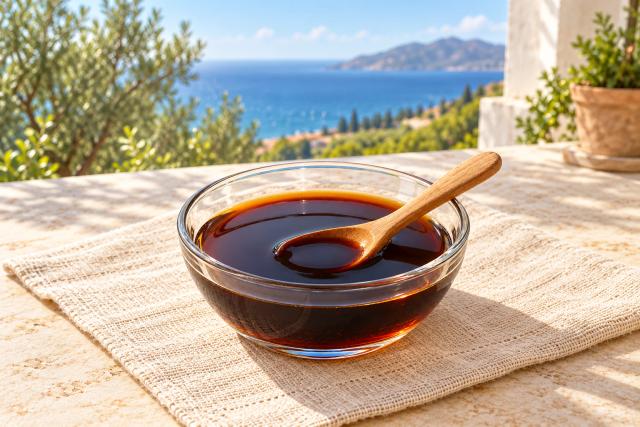
Concentrated grape molasses, mixed with tahini or used to coat sesame bread.
Taşkale carpets connect wool, handloom work and local design knowledge. The governorate and Ministry accounts describe the craft as part of the settlement’s cultural identity. This is a living material tradition rather than evidence of a single unchanged pattern. Storage, weaving and cooking all draw attention to household work. Exploring them together gives the province more depth than a list of monuments and signature dishes alone.
Grape molasses and tahini come together in Ermenek helvası, and tahini fills Karaman’s pide.
Karaman-type bulgur, cracked in stone mills, goes into şebit pilavı and İlisıra dolması.
A good place to begin exploring Karaman’s past is the castle in the city center. It was renovated during the Seljuk and Karamanid periods and later repaired by the Ottomans. During these repairs, inscriptions and architectural pieces taken from earlier, destroyed buildings were reused in the ramparts. Also in the city center, Aktekke Mosque links Karaman with the family of Mevlana Celaleddin-i Rumi. Mevlana came to Karaman with his family, married here and stayed for seven years. Because the tomb of his mother, Mümine Hatun, lies inside the building, the mosque is also known as the Mader-i Mevlâna Mosque.
On Karadağ, a volcanic mountain north of the city, the Değle Archaeological Site sheds light on the Byzantine era and earlier periods. The Byzantine houses uncovered in excavations were simply built and quite plain compared with the religious buildings of the same era. An older altar was turned into a rock altar during the Byzantine era. Its relief shows a man holding a bowl in one hand and sowing seeds with the other, which indicates that farming communities settled in Karaman in antiquity. In Taşkale village, in Karaman’s central district, the grain stores are chambers carved into calcareous clay rock.


