


Antep baklavası
Pistachio baklava
Thin pastry layers, pistachios and syrup define the city’s famous sweet.
Southeastern Anatolia
Antep, to most Turks
Go looking for something sweet in Gaziantep and the trail usually leads to Antep pistachios, the leading flavor of the city’s sweets. That thread is easy to follow through two pastries. Antep baklavası, made with thin layers of pastry, pistachios and syrup, is a protected geographical indication in the European Union. Katmer, one of the city’s much-loved pastries, pairs Antep pistachios with kaymak. On the savory side, you can start the day with beyran, a dish of meat and rice that in Gaziantep is enjoyed at breakfast too. In ali nazik, eggplant, yogurt and meat meet on a single plate. The pantry leans towards sour flavors, with nar ekşisi and sumac bringing a tart brightness to local cooking. When it is time for a cup, there is menengiç kahvesi, a drink made from terebinth and associated with Gaziantep. From a morning plate of beyran to pistachio baklava, and from the yogurt of ali nazik to a cup of menengiç kahvesi, the choice of where to begin on this table is yours.
Last updated:
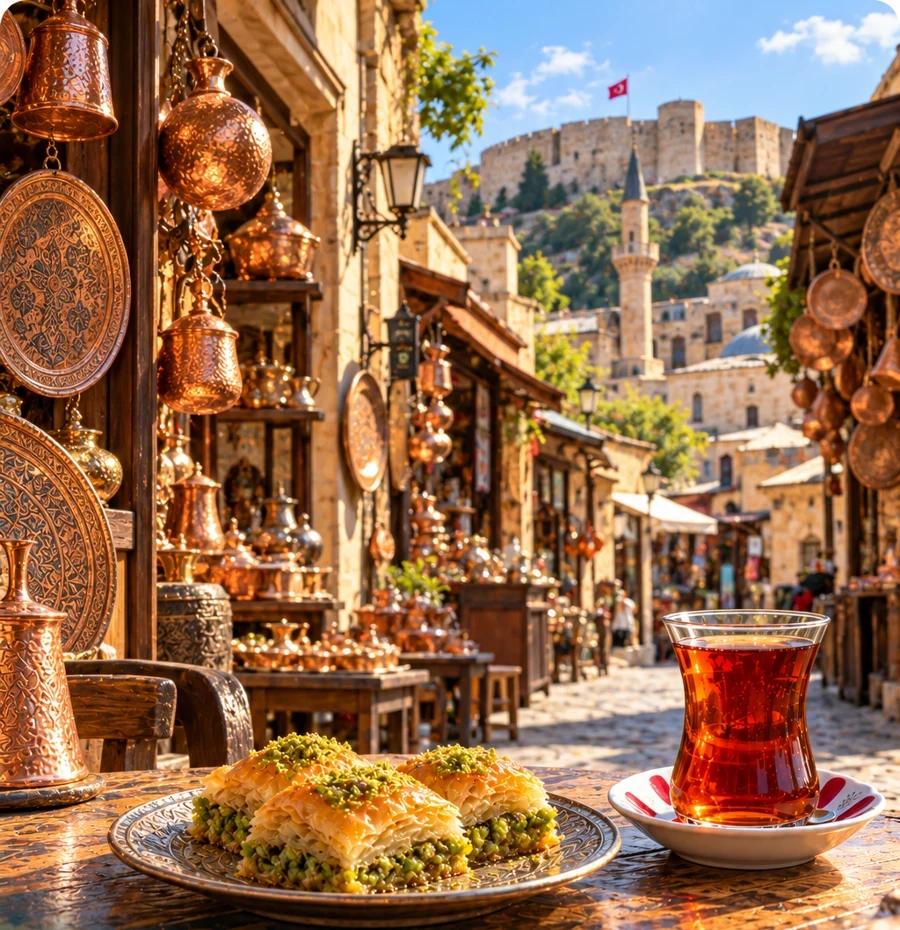
Copper workshops, pistachio groves, and sweetness shaped by hand.
Explore the dishes that shape the city’s table.
Pistachio baklava
Thin pastry layers, pistachios and syrup define the city’s famous sweet.
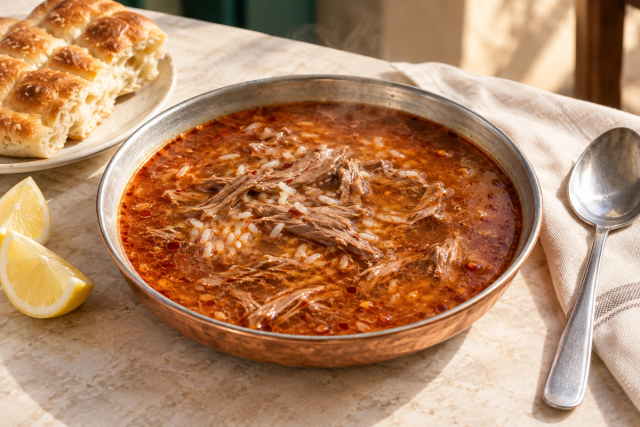
Shredded lamb and rice in a hot garlic-and-red-pepper broth inspired by Gaziantep’s cuisine. The home method uses a regular saucepan and avoids the dramatic flame of specialist beyran service. Longer professional cooking and individual copper-pan assembly give a different result.
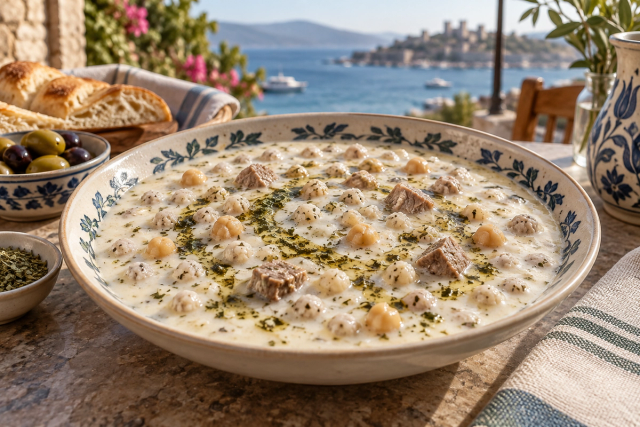
Tiny rice-and-lamb balls, chickpeas and tender lamb in a yogurt broth finished with mint butter. Gaziantep yuvalama is a substantial celebratory dish, often described locally as a meal rather than an everyday soup. This home adaptation uses rice flour for the small balls; traditional preparations may grind soaked rice with meat.
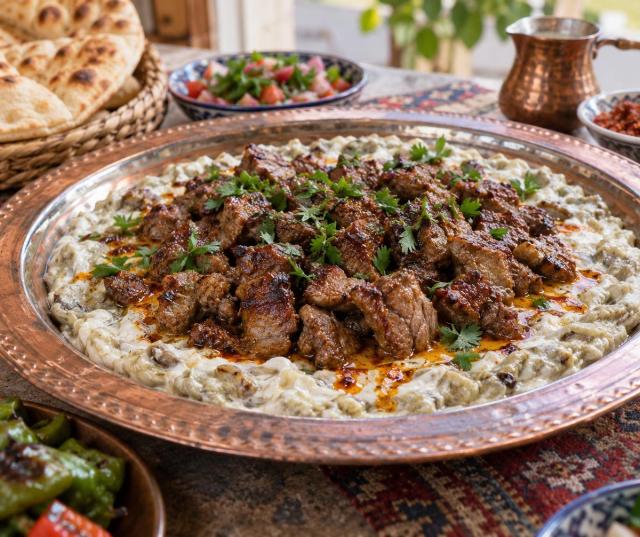
Hot lamb and pepper butter over smoky eggplant folded into garlic yogurt. This diced-lamb adaptation is related to Gaziantep’s alinazik, which is also made with coarsely minced meat. Let the eggplant cool to warm before folding it into the yogurt so the base stays creamy.
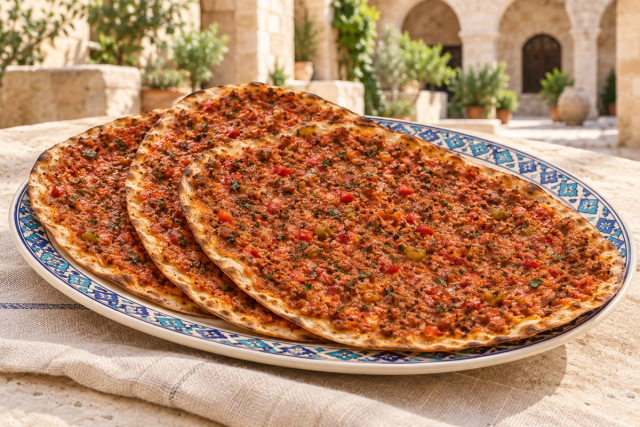
Thin oval flatbreads carry an onion-free topping of lamb, garlic, tomato, peppers and parsley. The finely chopped filling is spread to the edges and baked on a hot surface until the base is cooked and the edges crisp.
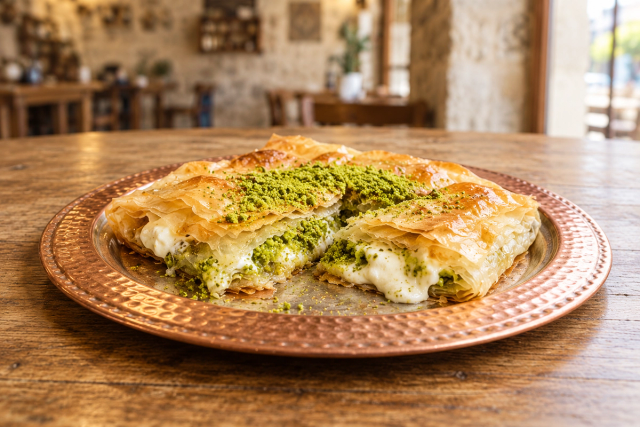
Paper-thin pastry folds around pistachios, kaymak and sugar, then bakes until golden and crisp. The handmade dough rests before stretching, while melted clarified butter enriches the delicate layers.
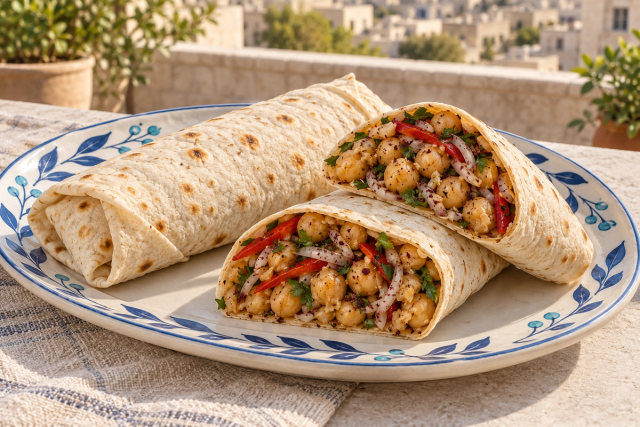
Warm lavash wraps soft chickpeas with sumac onions, parsley and sweet red pepper. Cumin and Turkish red pepper flakes season the filling, while olive oil softens the sharp onion mixture.
Yogurt stew
A local dish in Gaziantep’s broad yogurt-based repertoire.
Local kadayıf sweet
A local kadayıf sweet from the city’s dessert tradition.
Terebinth coffee
A drink made from terebinth, associated with Gaziantep.
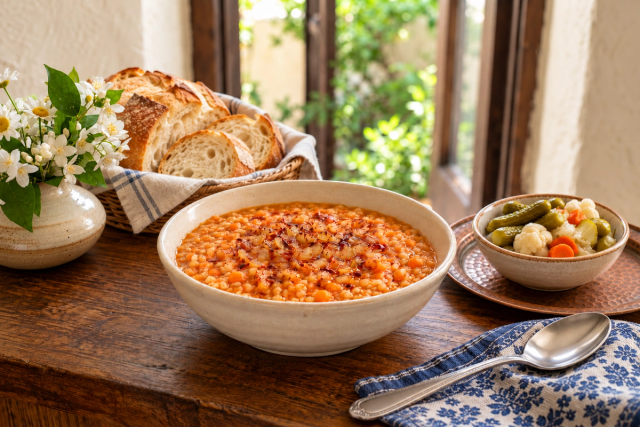
A soft Gaziantep porridge of red lentils and coarse bulgur with tomato and pepper pastes, finished with hot onion and red-pepper oil.
Pistachios at the heart of the city’s sweets.
Guide not written yetRed pepper for the local pantry.
Guide not written yet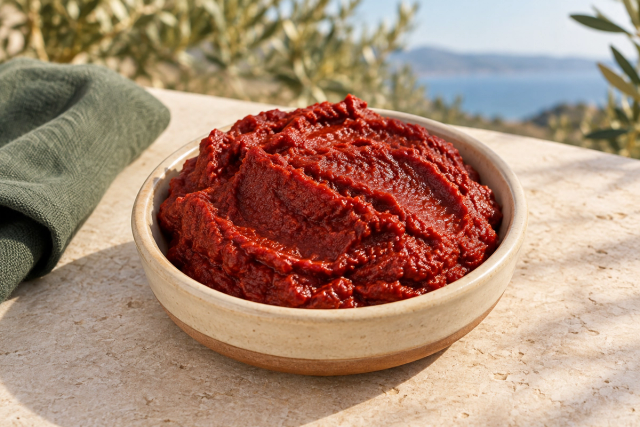
A thick red pepper paste for sauces, fillings and meze.
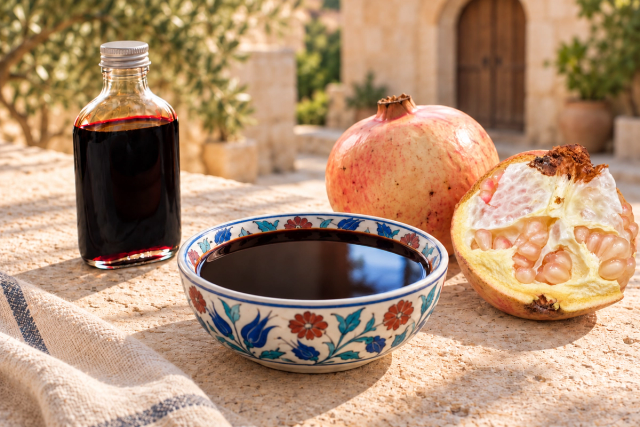
Gaziantep’s registered pomegranate molasses, boiled down from sweet Oğuzeli pomegranates with nothing added.
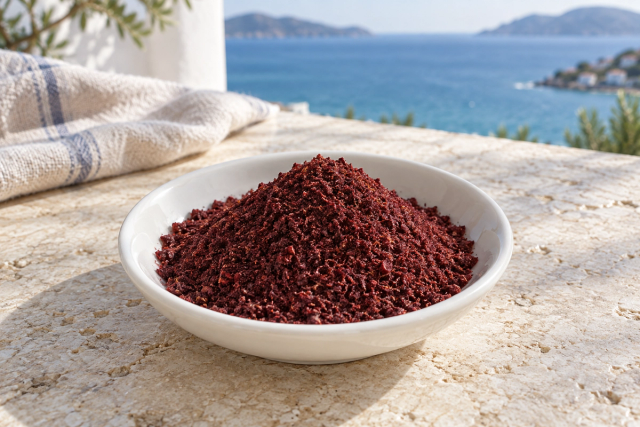
Ground culinary sumac that adds a tart note.
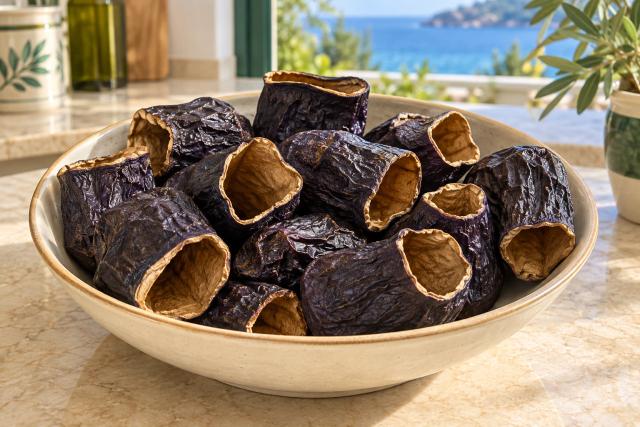
Hollowed eggplant shells, dried for stuffing.
Gaziantep’s table starts early with beyran or katmer, then moves through a broad repertoire of kebabs, yogurt dishes and pastries. Yuvalama welcomes guests at festive gatherings, while food festivals celebrate the city’s shared culinary knowledge.
Baklava and katmer make pistachio central to the city’s sweet repertoire.
Sumac and pomegranate bring tart flavors to local cooking.
Zeugma, beside the Euphrates, is a good place to begin exploring the past of Gaziantep province. In the Roman period, Zeugma stood out for its houses overlooking the Euphrates River and its river trade. Merchants, commanders and wealthy people who settled there built villas on scenic terraces, and craftsmen adorned their floors with colored-stone mosaics of mythological scenes and geometric motifs. Finds from the excavated villas were moved to the Zeugma Mosaic Museum, while the parts that could not be excavated were flooded by the Birecik Dam.
On a hill in the city center, Gaziantep Castle was founded on a mound reaching back to the Chalcolithic period. Excavations show that it was built as a Roman watchtower and expanded over time, taking its current form in the 6th century under the Byzantine Emperor Justinian. Water was carried through underground channels called livas to keep it from evaporating. Large spaces opened along the livas beneath mosques were called kastels; the Pişirici Kasteli was built by the Mamluks in the 13th century.


