


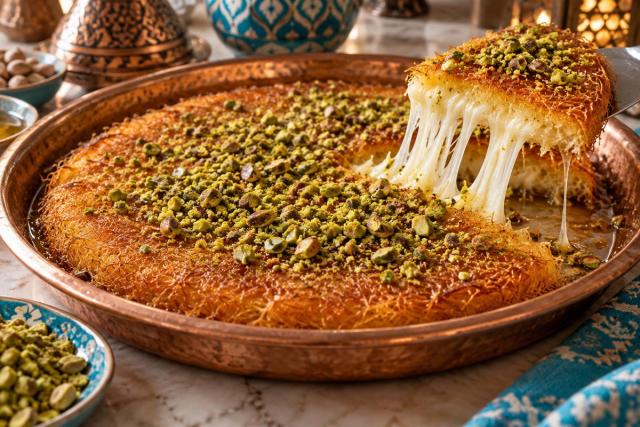
Kunafa
Crisp buttered kadayıf surrounding melting unsalted cheese, finished with syrup and pistachios.
Mediterranean Region
Home to Antakya, on the Asi River
Starting the day with biberli ekmek is an inviting way into Hatay’s cooking. Made with a mixture of spices, peppers, tomato paste and onion, this bread is a familiar taste on Hatay’s breakfast tables. When it comes to meat, the path leads through the zırh. Meat chopped with this knife is mixed with pepper and parsley and baked in a tray, and the result is tepsi kebabı. Belen tava brings cubed lamb together with tomato, peppers, onion and garlic in clay pots baked in a wood-fired oven, and it is also served at weddings and festivals. Look into the pantry and three products stand out. Zahter, a wild thyme from the mountains, is eaten fresh in salads and used dried as a seasoning. Sürk is a curd worked with zahter, pepper paste and spices and shaped by hand. Pomegranate molasses made from local pomegranates finds its way into salads and pastries. Let a Hatay discovery that begins with biberli ekmek at breakfast carry on to künefe, cooked in a copper tray and eaten hot with its syrup.
Last updated:
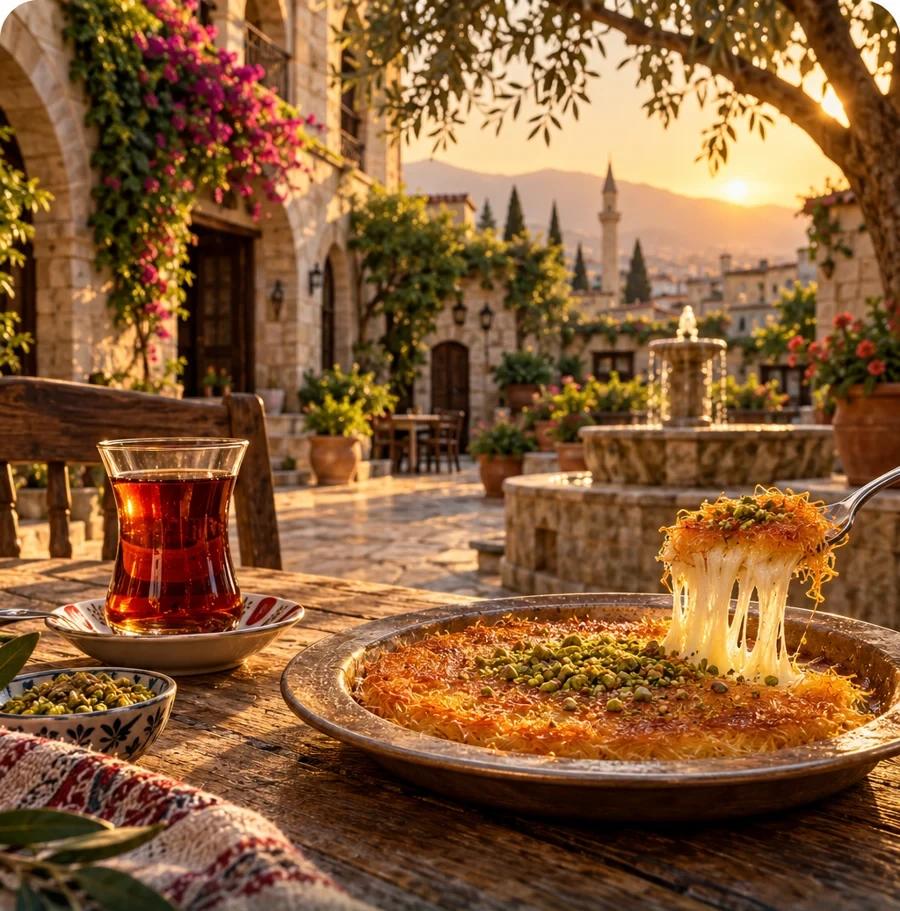
A courtyard gathers sweetness in the evening light.
Explore cheese in both sweet and savory forms, alongside vegetables, pulses and rich condiments.
Crisp buttered kadayıf surrounding melting unsalted cheese, finished with syrup and pistachios.
Tray-baked minced meat kebab
Meat chopped with a zırh knife, mixed with pepper and parsley, and baked in a tray.
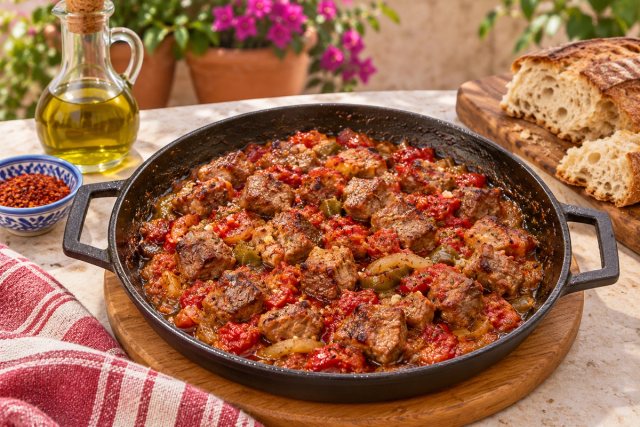
Chunks of lamb baked over onion, peppers and tomato with garlic, thyme and melted butter.
Kebab baked on paper
Hand-chopped beef with peppers, parsley and garlic, shaped into a disc and baked on greaseproof paper.
Pepper-topped bread
Bread baked with a sauce of spices, peppers, tomato paste and onion, familiar on Hatay breakfast tables.
Bread with pepper paste and curd
Thin dough spread with hot pepper paste and spiced curd, eaten warm from the oven.
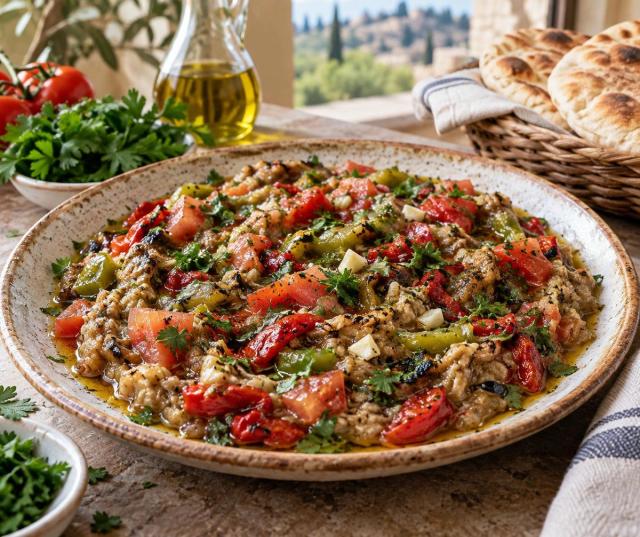
Coarsely chopped charred eggplant, peppers and tomato with garlic, olive oil and lemon.
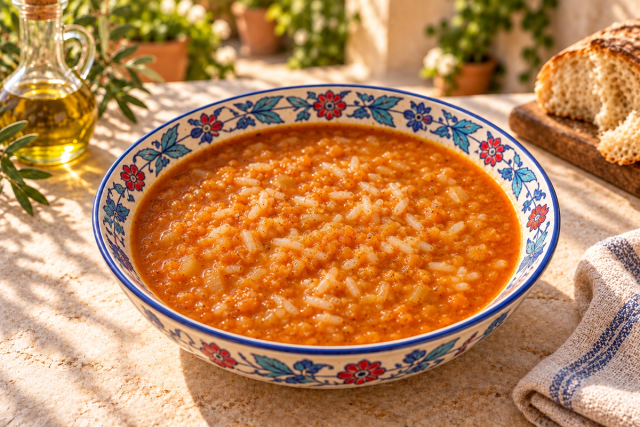
Red lentils and rice simmer together, finished with onion, tomato paste and cumin.
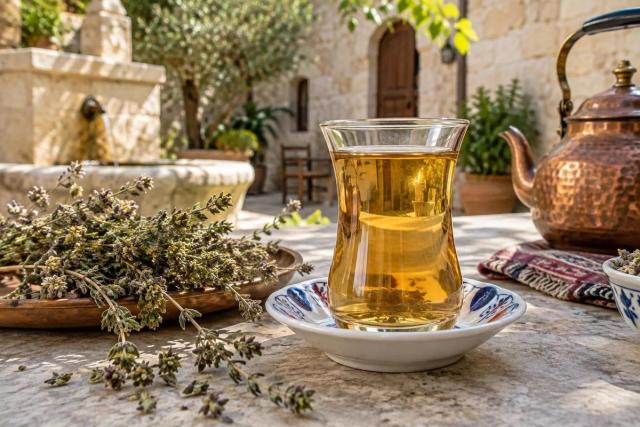
A fragrant, clear zahter infusion, briefly steeped and strained.
Pomegranate molasses boiled down from local pomegranates, used in salads and pastries.
Guide not written yetCurd kneaded with zahter, pepper paste and spices, then shaped by hand.
Guide not written yetStrained yogurt cooked down with salt, used in meals, soups and pastries.
Guide not written yetThe unsalted cheese inside künefe.
Guide not written yetWild thyme from the mountains, eaten fresh in zahter salad and used dried.
Guide not written yet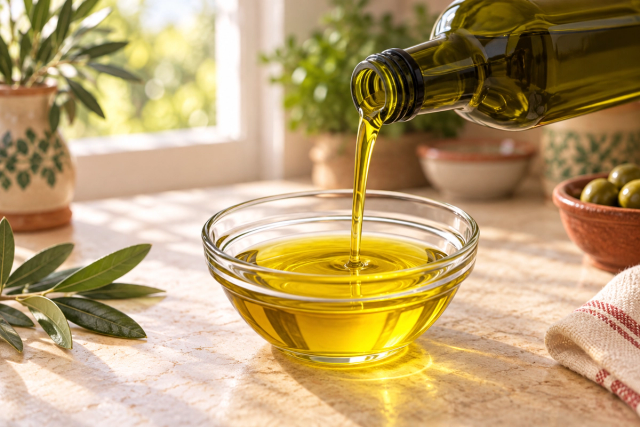
Olive oil for cooking and dressings, in extra virgin and standard grades.
Hatay’s food culture reflects the lives of several linguistic and religious communities. Its richness comes from people, skills and exchange rather than a fixed count of supposedly unique dishes. The municipal UNESCO report describes digital activities, training and efforts to support cultural continuity after the earthquakes. That dated account shows work towards recovery; it does not establish that every venue or programme is operating today.
Künefe hides unsalted cheese, while sürk and salted yogurt take dairy in savory directions.
Olive oil, pulses, vegetables, zahter and pomegranate molasses shape everyday cooking.
One thread tying Hatay’s history to its landscape is the Asi River. The waterfalls of Harbiye, close to Antakya, flow into it. Seleucus I Nikator, one of Alexander the Great’s generals, built at Harbiye while building up Antakya. According to legend, the nymph Daphne, fleeing Apollo, turned into a laurel tree here, and the waterfalls were believed to be her tears. In Samandağ, on the plain where Kel Mountain and Musa Mountain meet the Mediterranean, the Titus Tunnel, begun on the orders of the Roman emperor Vespasian to protect against floods, was carved entirely into the mountain.
At Payas, the Sokullu Mehmet Paşa Complex was built by Mimar Sinan for Sokullu, the vizier of Suleiman the Magnificent; its most important structure, the caravanserai, was where caravans and travellers spent the night. The earthquakes of 6 February 2023 struck Hatay heavily, destroying or damaging a large part of the city. In their aftermath, special support programmes and measures were put in place to protect and rebuild cultural heritage.


