


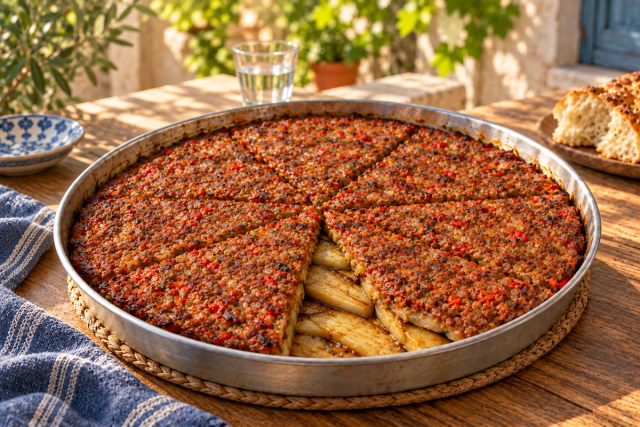
Baked Lamb and Eggplant Tray Kebab
Finely chopped vegetables mixed with ground lamb and baked in a thin layer over sliced eggplant.
Southeastern Anatolia
Olive oil is a good place to begin with Kilis. Cold-pressed from the local Kilis oil olive, it turns up both at breakfast and in kırk semseği. In the morning, bread is dipped first into the oil and then into toz zahter, a roasted, ground blend of chickpeas, seeds, thyme, sesame, sumac and chilli. The same oil fries kırk semseği, small squares of thin dough filled with rice and minced meat. Minced sheep meat leads the savory dishes. Kilis tava comes from its tray with eggplant or potatoes, onions, tomatoes and peppers, served with pide. The meatballs of ekşili kebabı, in their sauce of shallots and pomegranate molasses, are laid over fried pide. When dessert arrives, it belongs to pistachios. Thin, hand-rolled katmer is folded like a parcel around pistachios, sugar and often cream, then cooked on a griddle. Cennet çamuru brings butter-browned shredded kadayıf together with pistachios, syrup and cream. With the large, oval, blue-black horoz karası grape, eaten fresh or dried, your exploration of Kilis can run from olive oil to pistachio and on to the vine.
Last updated:
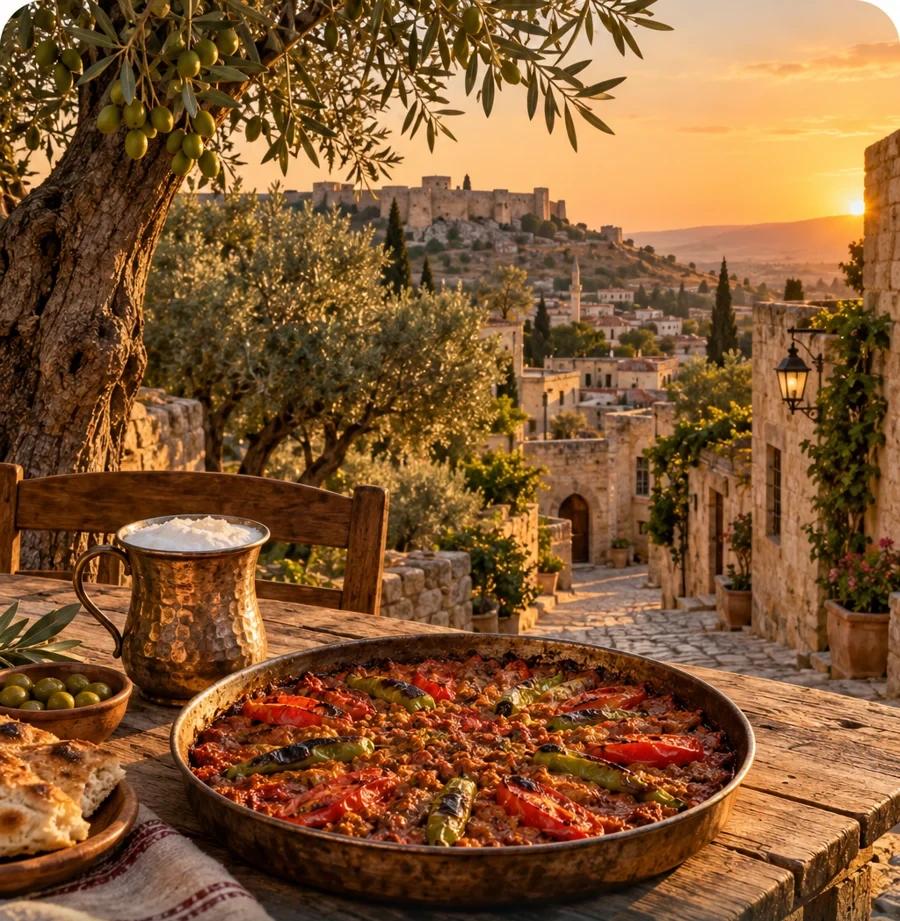
Olive groves, vineyards and a tray of Kilis tava.
Move from the oven tray to olive-oil breakfasts and shredded-pastry sweets.
Finely chopped vegetables mixed with ground lamb and baked in a thin layer over sliced eggplant.
Meatballs in a sour sauce
Baked meatballs of minced sheep meat, cooked again in a sauce with shallots and pomegranate molasses and served over fried pide.
Fried meat and rice pastries
Thin dough filled with rice and minced meat, cut into small squares and fried in Kilis olive oil.
Stuffed vegetables in tomato sauce
Fried, hollowed-out vegetables stuffed with minced lamb, onion and chickpeas, simmered in tomato sauce and served with garlic yogurt.
Stuffed bulgur meatballs
Triangular shells of bulgur and lean minced meat filled with tail fat, walnuts and spices, served hot.
Pistachio-filled griddle pastry
Thin, hand-rolled dough filled with pistachios, sugar and often cream, folded into a parcel and cooked on a griddle.
Kadayıf with pistachio and cream
Shredded kadayıf browned in butter with sugar and pistachios, moistened with syrup and topped with cream.
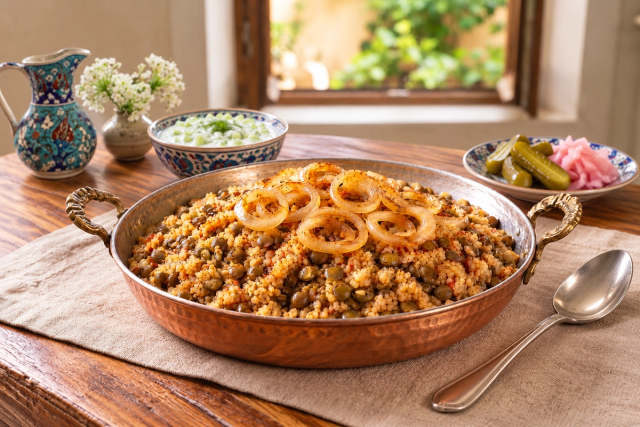
A Kilis pilaf of green lentils and coarse bulgur with soft, sweet onions, olive oil and a little butter and tomato paste.
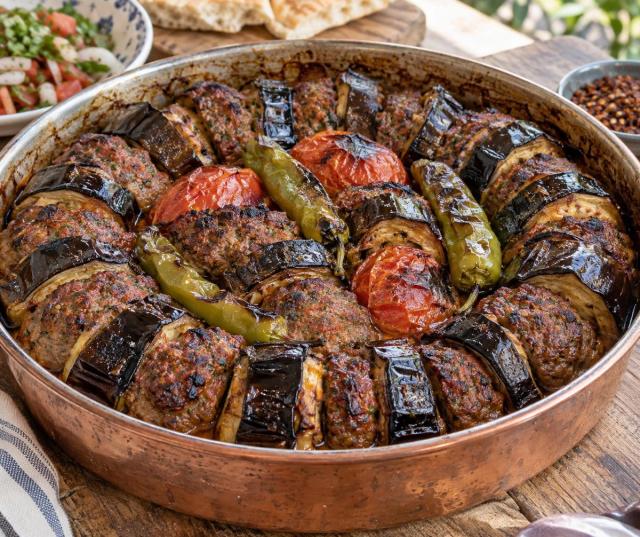
Alternating eggplant rounds and lamb patties roasted with tomatoes and green peppers. This oven adaptation follows the alternating meat-and-eggplant arrangement documented in Kilis. Use a shallow dish and avoid packing so tightly that the vegetables steam without softening.
Virgin olive oil, cold-pressed from the local Kilis oil olive.
Guide not written yetLarge, oval, blue-black grapes eaten fresh or dried.
Guide not written yetA roasted, ground breakfast blend of chickpeas, seeds, thyme, sesame, sumac and chilli, eaten with bread dipped in olive oil.
Guide not written yetThe historic Sabunhane links olive oil with soap production and industrial heritage. The provincial authority identifies the building as a surviving Ottoman soap works, restored as a museum that opened in 2021. This connection broadens the story of an ingredient beyond cooking. Olives support food, work and material culture; neither archaeological seeds nor a historic factory certify the provenance of a modern bottle.
Kilis olive oil fries kırk semseği and joins zahter on the breakfast table.
Katmer and cennet çamuru pair pistachios with sugar and cream.
Oylum Höyük, the mound that dominates the Kilis Plain, is a good place to start getting to know the province’s past. It lies on ancient trade routes running east to west and north to south, and both surveys and excavations point to continuous settlement here from the Late Chalcolithic period onward. The mound served as a regional center in various periods, especially the Bronze Age. Just southwest of it is the Mosaic Basilica, an Early Christian church dated to the sixth century, laid out on a basilica plan with mosaic floors.
In the city center, history mingles with traces of everyday life. According to its inscription, the Canpolat Paşa Dervish Lodge Mosque was built by Canbolat Bey, the Mayor of Kilis, and its central plan reflects the classical Ottoman style. The Historical Sabunhane was the largest olive oil and soap factory in Kilis when it was built, and today it is a museum of local history and soap making. The Synagogue once hosted the religious life of more than three hundred Jewish families living in the city and closed to worship as the community gradually migrated. It remains one of the important witnesses to Kilis’s multicultural past.
