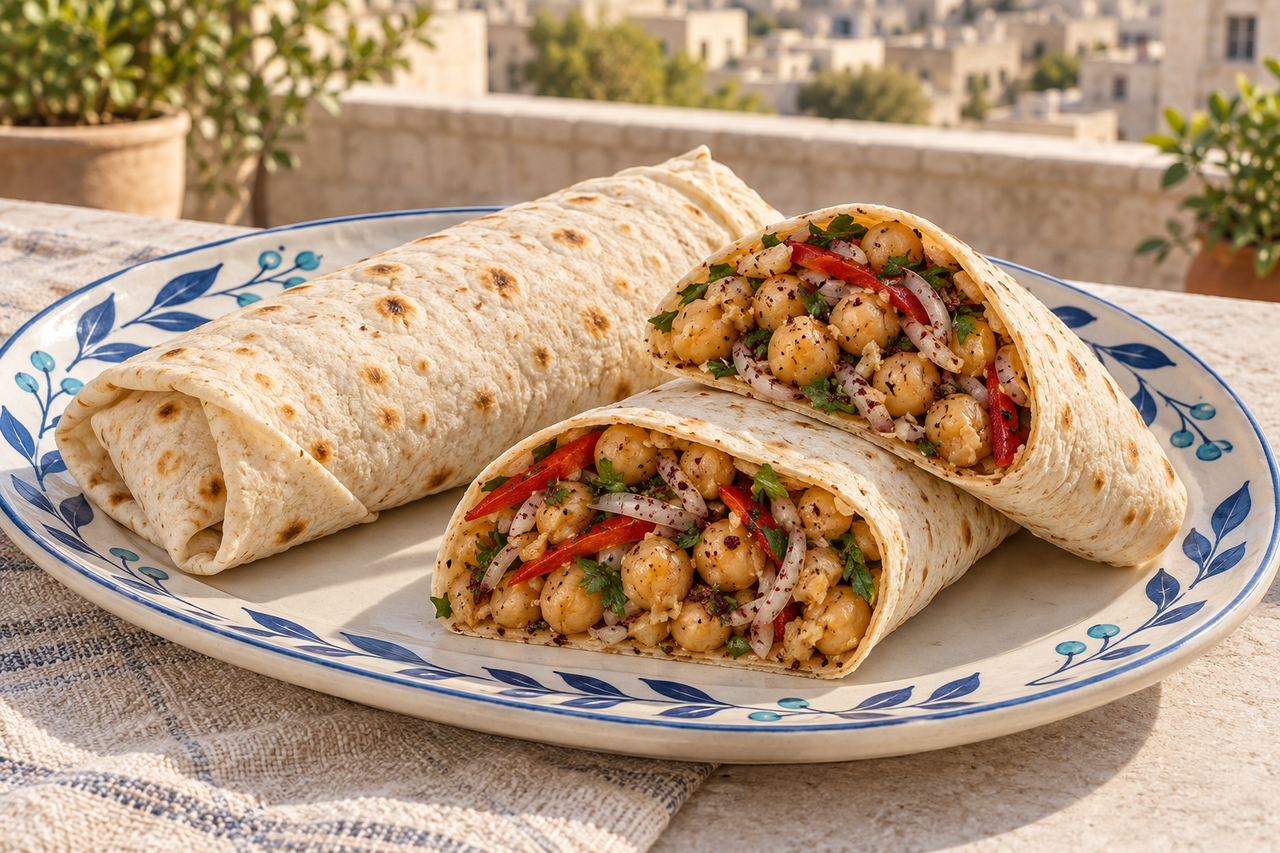
Warm lavash wraps soft chickpeas with sumac onions, parsley and sweet red pepper. Cumin and Turkish red pepper flakes season the filling, while olive oil softens the sharp onion mixture.
Put the cooked chickpeas in a saucepan with enough water to cover. Heat until hot throughout and very soft, then drain and keep warm. This recipe starts with cooked chickpeas, not dried chickpeas.
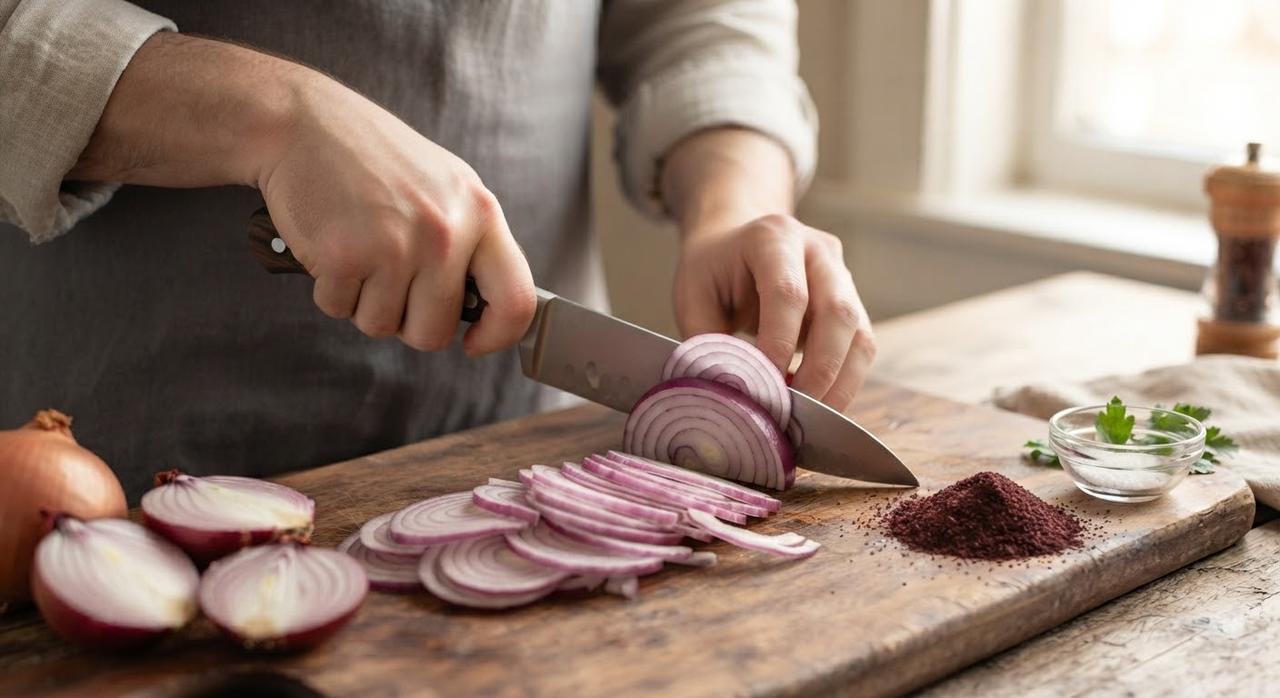
Rub the sliced onion, chopped parsley and sumac together with your hands. Add the red pepper, olive oil and salt, and mix.
Make slices of a similar thickness with a steady board, a curled guiding hand and a controlled cutting motion.
Lay out the warm lavash. Divide the hot chickpeas between the two breads. Add the onion mixture, then divide the red pepper flakes, cumin and black pepper between them.
Fold in the edges and roll snugly around the filling. Serve straight away while the chickpeas and bread are warm.
Cooking guidance
Measure the chickpeas after cooking and draining. They should be very soft, rather than crisp or firm.
Keep the bread warm and flexible, and slice the onion and pepper thinly so the wrap closes neatly.
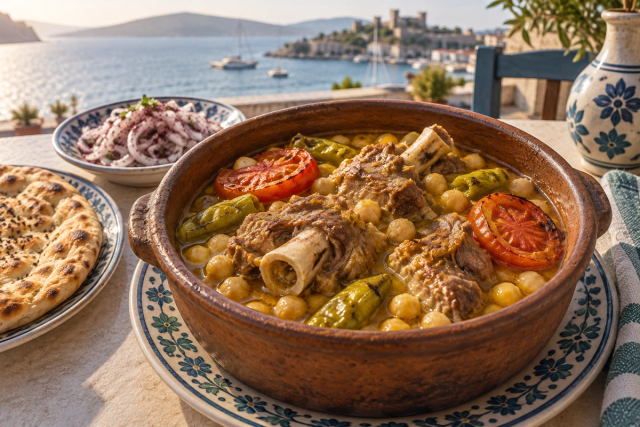
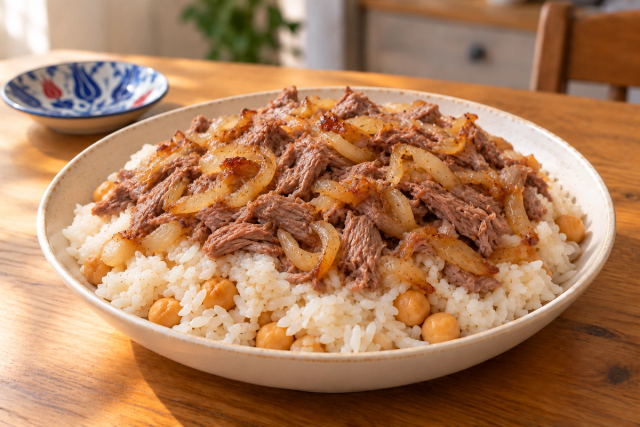
Lamb and chickpeas in turmeric broth, finished with tomato and green pepper in an earthenware casserole. This home adaptation follows the Kars lamb-and-chickpea preparation. It is distinct from other regional dishes also called piti. Use oven-safe cookware and protect the table from the hot casserole.
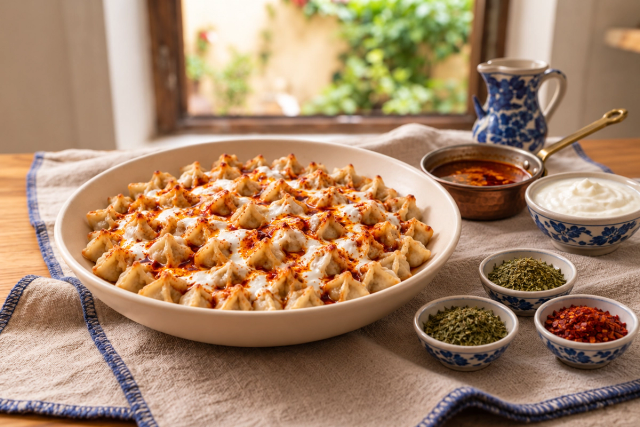
Small, closed lentil dumplings baked first until golden, then finished in hot water. Serve with garlic yogurt and red-pepper butter, with extra yogurt and herbs on the side.
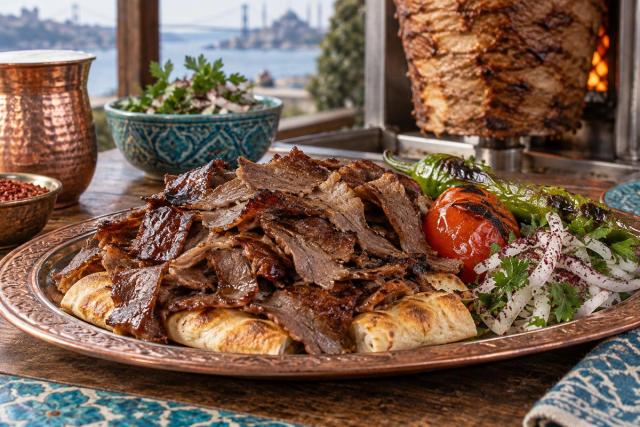
Thin layers of seasoned beef and mince, chilled into a roll, sliced and quickly browned in a skillet. This is a skillet adaptation of layered döner. A restaurant spit uses a different cooking process. Slice only when the roll is firm but safely cuttable; never force a knife through a solid frozen block.