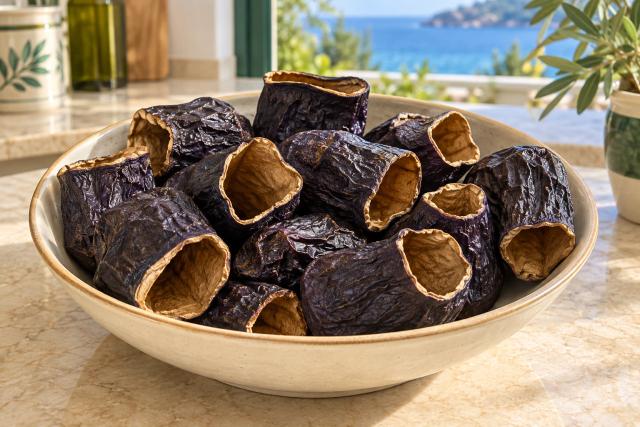
Hollowed eggplant shells are dried for stuffing. Rehydrate them until pliable, fill without packing tightly and let the rice finish cooking inside the shells.
Last updated:
Dried hollow eggplant shells for dolma, not whole fresh eggplants or dried slices.
Types & forms
Hollow dried shells
Cup-shaped pieces with space for filling. Size and wall thickness affect soaking and cooking.
Dried slices
Flat pieces for other preparations; they cannot hold dolma filling in the same way.
What to look for when buying
Look for dry shells without mold, insect damage or a musty smell. Some color variation is normal; damp clumped shells need caution.
Choose reasonably similar sizes so the portions cook evenly. Count shells alongside the recipe’s filling amount.
Prepare & cook
Rinse and rehydrate as the recipe directs until the walls bend without cracking. Drain before filling; do not assume they are ready just because the outside is wet.
Leave space for rice to expand and avoid forcing filling into fragile walls. Arrange closely enough to support the shells during gentle cooking.
Store it well
Keep unsoaked shells dry in a closed container away from humidity. Check again for mold or insects before use.
Once soaked or cooked, treat them as perishable food and refrigerate promptly. Store cooked dolma in shallow containers.
Substitutions depend on the dish
Fresh hollowed eggplant
Requires a different preparation and cooking plan; fresh and dried shells are not interchangeable by weight.
Dried peppers
May be stuffed alongside eggplant in suitable recipes, but their flavor and softening time differ.
Nutrition
No verified nutrition data is available for this ingredient.
At the Turkish table
Drying hollowed vegetables for dolma is documented in several Turkish regional food traditions. The linked currant-filled recipe is Denizli-style; a Gaziantep source here explains the dried form, not its exclusive origin.
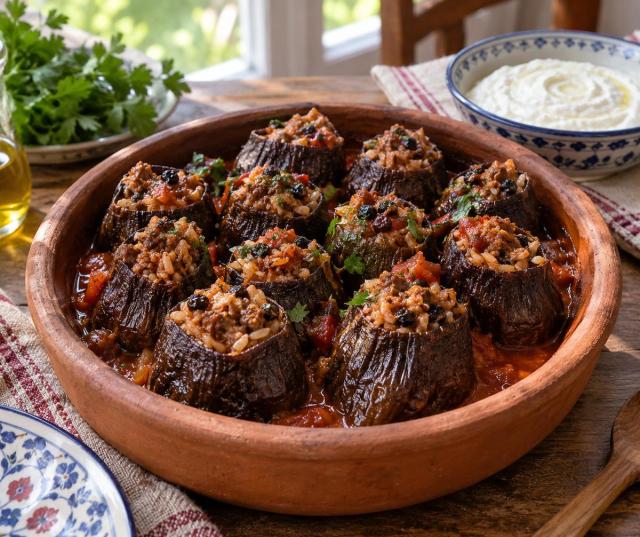
Dried eggplant shells filled with beef, rice and currants, gently cooked in a tomato-and-pepper sauce. Currant-filled dried eggplant is associated with Denizli. This home version uses onion, herbs and mixed tomato and pepper pastes; local variations exist.