


Tarhana çorbası
Fermented tarhana soup
Soup made from Uşak tarhanası, a fermented mix of flour, yogurt, red peppers, onion, tomato and mint.
Aegean Region
The first lesson of Uşak’s cooking is waiting. Uşak tarhanası is fermented with sourdough for weeks, dried in the shade and rubbed into granules by hand, before it finally returns to the bowl as tarhana çorbası. But patience is not the only taste on this table. Alacatene shows its plainer side, bringing green lentils together with roasted onions and bulgur. Dessert splits into two quite different paths. One leads to Uşak baklavası, thin sheets layered with walnuts, baked with clarified butter and soaked in syrup. The other leads to demir tatlısı, which takes its name from the iron mold that shapes its dough and is finished with syrup. Reach into the pantry and you will find haşhaş ezmesi, a paste of ground poppy seeds, and tahin, the sesame paste that also becomes tahin helvası. Begin getting to know Uşak with a bowl of tarhana soup. Then follow the trail of the iron mold and the taste of poppy-seed paste.
Last updated:
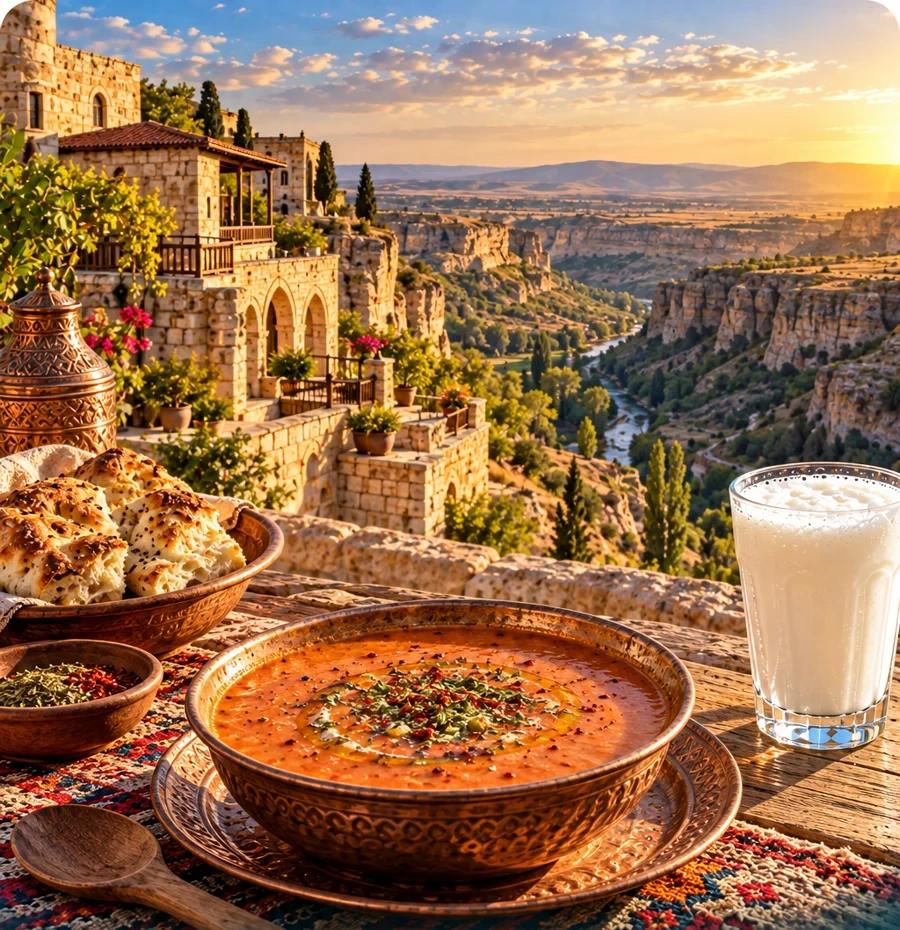
Rolling farmland and hills of inland Aegean Uşak.
Begin with fermented tarhana, then explore pulses, wheat and filled pastry.
Fermented tarhana soup
Soup made from Uşak tarhanası, a fermented mix of flour, yogurt, red peppers, onion, tomato and mint.
Walnut baklava
Thin sheets of dough layered with chopped walnuts, baked with clarified butter and soaked in syrup.
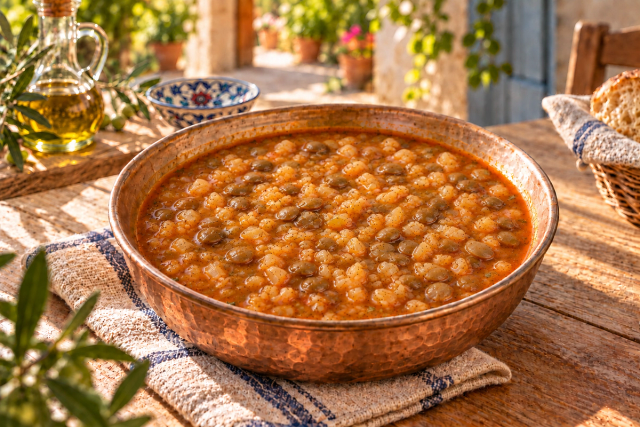
A Uşak soup of dry green lentils and coarse bulgur with onion, red pepper paste and dried mint.
Cheese or spinach börek
A börek filled with cheese or spinach, eaten at breakfast and tea time.
Liver and rice in caul fat
Lamb liver with rice and currants, wrapped in lamb caul.
Iron-mold pastry in syrup
Dough shaped with an iron mold and finished with syrup.
Pounded wheat with meat
Pounded wheat cooked with meat or chicken, made for weddings and special occasions.
Flour, yogurt, peppers, onion, tomato and mint fermented with sourdough, dried in the shade and rubbed into granules.
Guide not written yetPaste of ground poppy seeds.
Guide not written yetSesame paste, also made into tahin helvası.
Guide not written yetUşak carpets have an important place in textile history, while Eşme kilims retain a distinct district association. The provincial culture directorate records continued village weaving as well as the historical carpet tradition. Food preparation offers another form of household skill. Fermenting and drying tarhana, working pastry and preparing keşkek for shared occasions connect ingredients with labour and social life. These practices have regional variations rather than one universal formula.
Uşak tarhanası ferments for weeks before it is dried in the shade and rubbed into granules.
Uşak baklavası is layered from many thin sheets and walnuts and finished with syrup.
A good place to begin with Uşak’s past is its Archaeology Museum, housed in a building next to the train station. One of its floors is devoted to the Lydian period and the Treasures of Croesus, including the “Winged Seahorse Pendant”, one of the treasure’s most valuable pieces. Finds from the ancient city of Acmonia in Banaz are displayed here too. Acmonia was built on a high hill on the Lydian King’s Road, and a considerable amount of mosaic was found there.
In Ulubey, the shape of the land makes the history easier to read. Blaundus stands on a hill surrounded by deep, steep valleys. It was built by people who came from Macedonia after the campaigns of Alexander the Great, and the city reached its peak in the Roman period. Its remains include a stadium, the entrance arch of the northern walls and a temple of the Roman Emperor Claudius. The Ulubey canyons nearby, whose life source is the Ulubey and Banaz creeks, hold water channels, rock tombs and caves from ancient times.


