


Isparta fırın kebabı
Oven-roasted lamb
Milk-fed lamb, kid or goat, depending on the season, roasted on upright skewers in a wood-fired oven without salt or spices and served on thin pide.
Mediterranean Region
In Isparta, the first word belongs to fırın kebabı. Made with milk-fed lamb, kid or goat depending on the season, cooked over a wood fire without salt or spices, it arrives on thin pide. Crowded tables have a dish of their own: kabune pilavı, cooked in copper pots and brought out on copper plates, usually with white beans and meat alongside. Head towards Eğirdir and the lake’s carp becomes sazan dolması, filled with pine nuts and currants. In Yalvaç, güllaç made with a type of curd cheese takes the shape of a rose. And the rose does not stop at dessert: Isparta’s roses become jam, Turkish delight and rose water for the breakfast and coffee table. Count in the apples of Eğirdir as well, and a plate of kebab gives you good reason to follow your curiosity on to Eğirdir, for its carp and its apples, and to Yalvaç, for a dessert shaped like a rose.
Last updated:
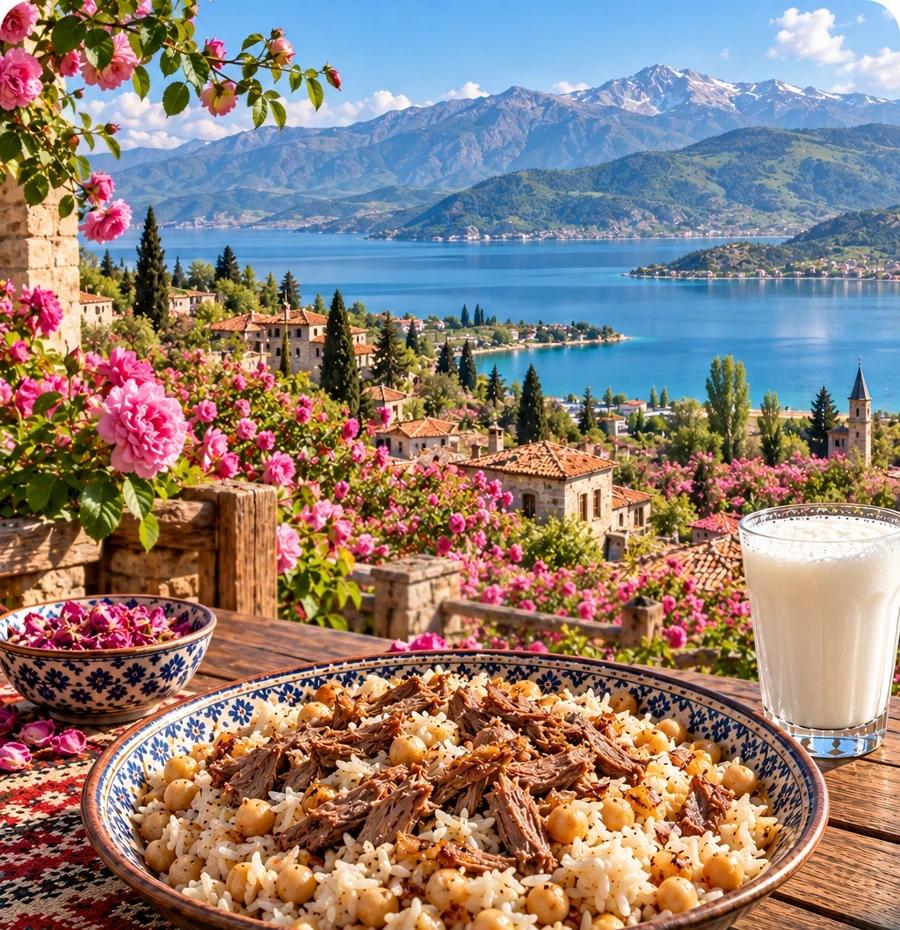
Rose fields, apple orchards and Eğirdir Lake.
Follow the rose into a breakfast preserve, then explore ceremonial rice and district bread.
Oven-roasted lamb
Milk-fed lamb, kid or goat, depending on the season, roasted on upright skewers in a wood-fired oven without salt or spices and served on thin pide.
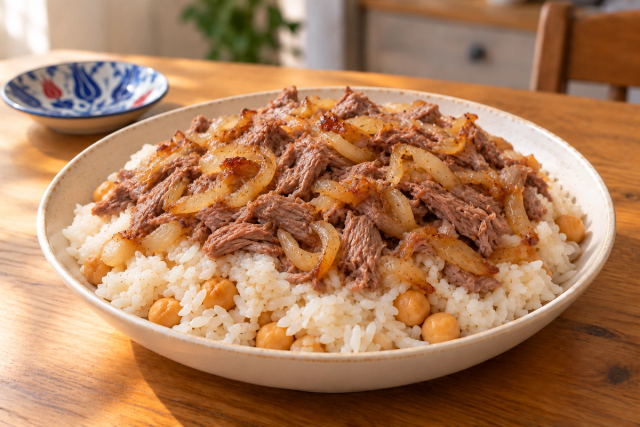
Layers of shredded beef, caramelized onion, rice and chickpeas, cooked in broth and turned onto a platter.
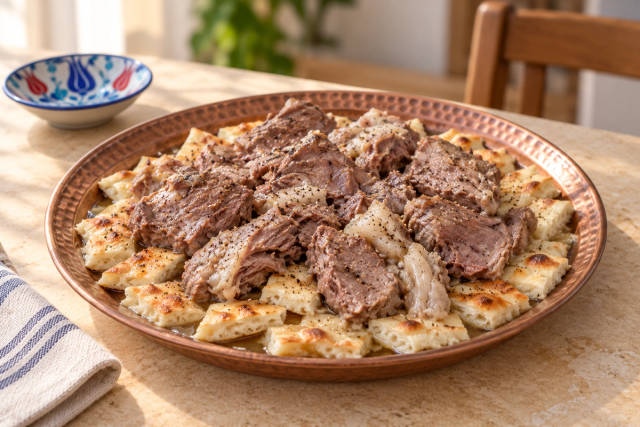
Tender lamb and its hot broth served over pieces of firm pide, finished with black pepper.
Tahini and potato bread
A bread flavored with butter, tahini and mashed potato, made especially for weddings and sent to the groom’s house.
Güllaç with curd cheese
A güllaç, also called kesmik, made with a type of curd cheese and shaped like a rose.
Stuffed carp
A skinned carp rubbed with tomato paste and spices, filled with bulgur or rice, pine nuts and currants, sewn shut and baked; a speciality of Eğirdir.
Walnut pastry in syrup
Thin dough folded into triangles around walnuts, crumbled yufka and grape molasses, dried, fried and dropped into cold syrup.
The damask rose, grown for rose oil, rose water, jam and Turkish delight.
Guide not written yetRose water made from Isparta’s roses.
Guide not written yetApples grown across the province, with Eğirdir as the leading district.
Guide not written yetCherries from the Uluborlu orchards.
Guide not written yetMulberries from Sütçüler.
Guide not written yetCarp from Eğirdir Lake, the fish used for sazan dolması.
Guide not written yetThe Ministry’s account identifies the oil-bearing rose associated with Isparta as Rosa damascena. Cultivation and distillation form part of a wider regional story that also includes neighbouring provinces. The rose is not exclusive to the city. Food and fragrance involve different products and uses. Rose jam belongs to the kitchen, while distilled cosmetic products should not be treated as interchangeable ingredients. The craft and agricultural context can be explored without offering a home-production recipe.
Isparta’s roses become jam, Turkish delight and rose water for the breakfast and coffee table.
Kabune rice, cooked in copper pots for special occasions, and Uluborlu banak feed large tables.
A good place to begin exploring Isparta’s past is the shore of Eğirdir Lake. Eğirdir Castle stands on a peninsula reaching into the lake; there is no firm agreement on when it was first built, but the remains visible today are known to date from the Byzantine period. Out on the water, Yeşil Island keeps its distinctive character, with stone-foundation wooden houses and narrow streets. On the lake’s eastern side, in Gelendost, the Ertokuş Inn sits on the historical caravan route that linked Eğirdir with Konya. Built in the early 13th century by Mübârizeddîn Ertokuş, according to its inscription, the inn is a reminder that this lakeshore once lay along a trade road.
In Yalvaç, the story reaches much further back. Just north of the town lies Pisidian Antioch, an ancient city established in the Hellenistic period, with ruins from Roman and Byzantine times. It is regarded as the place where Saint Paul, who played an important role in the spread of Christianity, preached his first documented sermon. Southeast of Antioch, a sanctuary was dedicated to Men, a god respected across Phrygia and Pisidia, who was believed to spread goodness and heal through the mysterious power of the Moon.


