


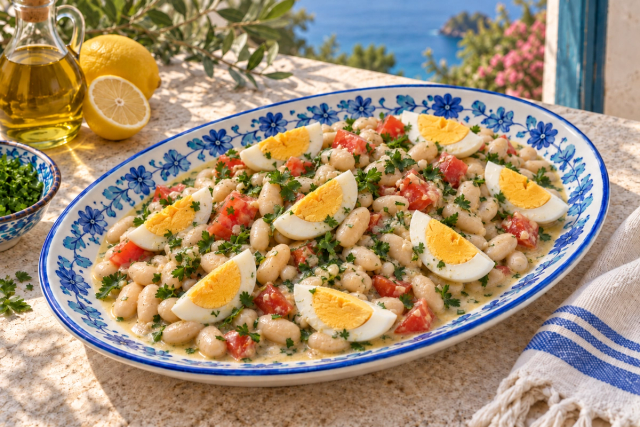
White Bean Salad with Tahini
Cooked white beans with a lemon-tahini dressing, tomato and parsley, topped with hard-boiled eggs. An Antalya-style home adaptation.
The Turkish pantry
Choose juicy tomatoes for salads, fleshier types for cooking, and the right preserved form for the job.
Last updated:
A guide to tomatoes, pictured as ripe red fresh tomatoes. Paste and canned tomatoes are processed forms with different uses.
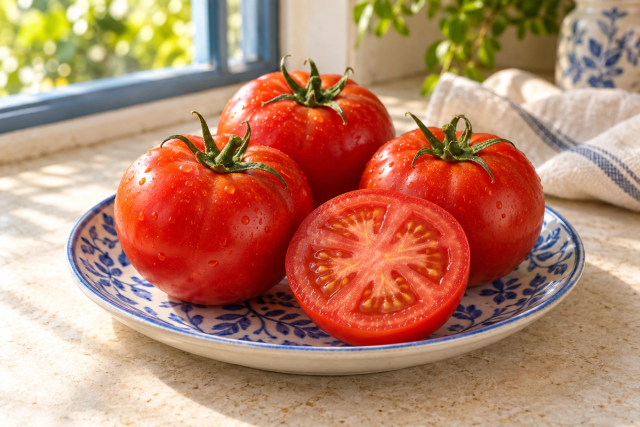
Juicy flesh; useful raw in salads or diced into piyaz.
An alternative shape to look for when shopping for cooking tomatoes.
Canned pieces bring moisture; paste is concentrated. They are not equal-volume replacements.
Canned tomatoes can stand in for fresh; adjust the liquid and cook to the required thickness. This does not reproduce the texture of fresh tomato in a salad.
Use tomato paste of the specified concentration. Fresh tomato is not a spoon-for-spoon substitute.
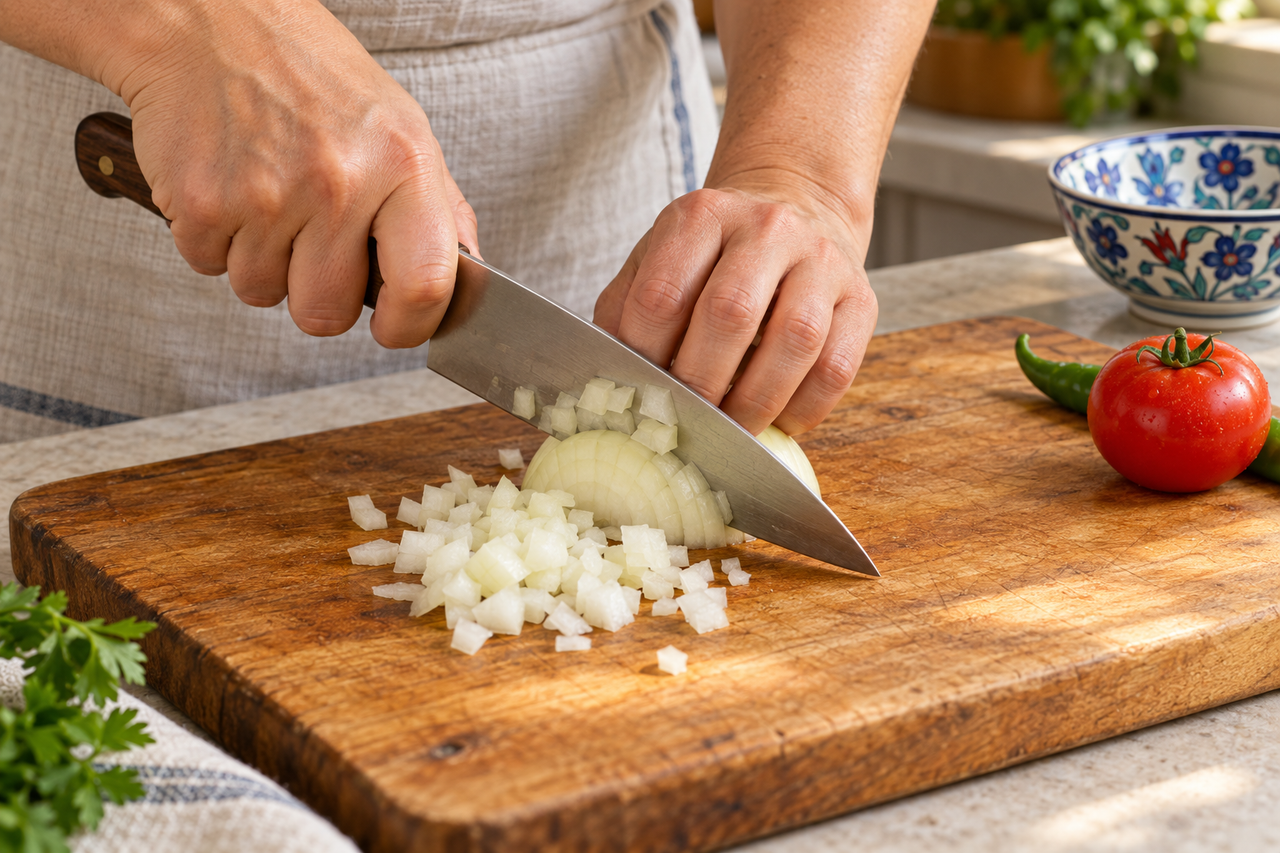
Preparation & Knife Skills
Keep small vegetable pieces distinct instead of turning them into a watery paste.
Raw ripe red tomato [1]
| Nutrient | Amount |
|---|---|
| Energy | 18 kcal |
| Protein | 0.88 g |
| Total fat | 0.2 g |
| Saturated fat | 0.03 g |
| Carbohydrate | 3.89 g |
| Dietary fiber | 1.2 g |
| Total sugars | 2.63 g |
| Sodium | 5 mg |
| Cholesterol | 0 mg |
| Calcium | 10 mg |
| Iron | 0.27 mg |
| Potassium | 237 mg |
| Vitamin D | 0 µg |
A generic raw-food reference, not a separate analysis of every variety, prepared form or cooked dish. Values are rounded for readability; “not reported” does not mean zero. A “<” value is below the source’s measurement limit.
Nutrition values come from the reference source named above. They are published reference values, not our own measurements. Actual products and cooking methods may change the values.
In our Antalya-style piyaz, diced tomato provides a juicy contrast to beans and tahini dressing. This is one serving example, not a claim that tomatoes or tomato salads belong exclusively to Antalya.
Cooked white beans with a lemon-tahini dressing, tomato and parsley, topped with hard-boiled eggs. An Antalya-style home adaptation.
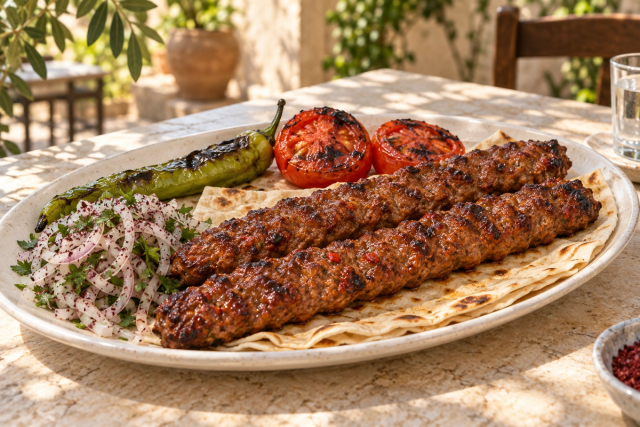
Hand-chopped lamb and tail fat grilled on flat skewers, with warm flatbread, charred vegetables and sumac onions.
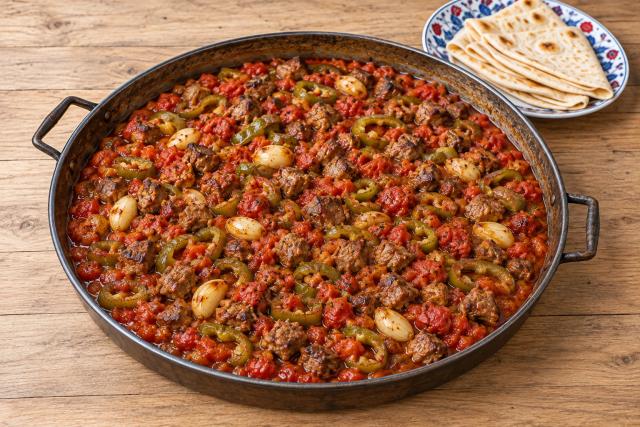
Small pieces of lamb baked with tomatoes, green peppers and whole garlic in a rich tomato and pepper sauce, served with warm lavaş.
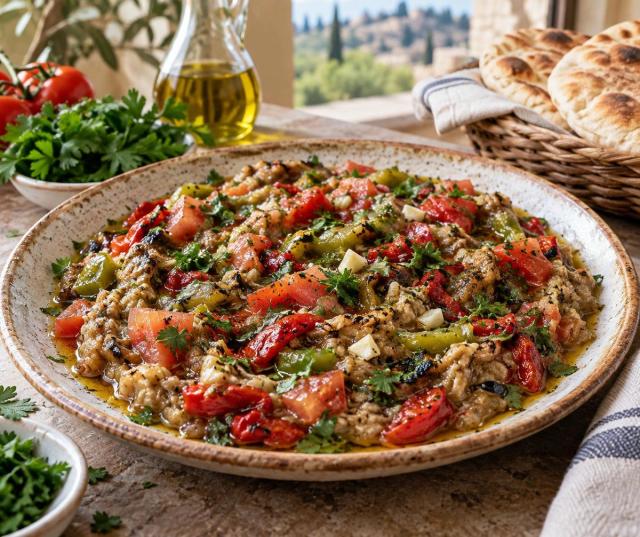
Coarsely chopped charred eggplant, peppers and tomato with garlic, olive oil and lemon.
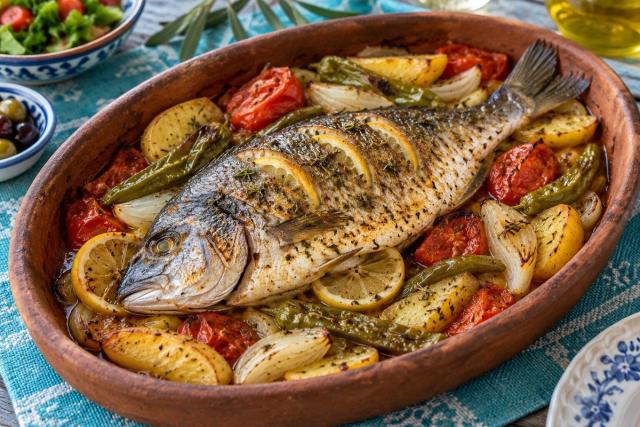
Whole sea bream roasted with thin potatoes, tomato, green pepper and lemon.
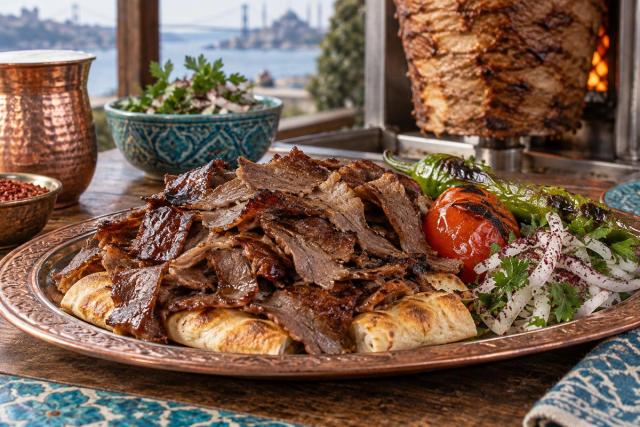
Thin layers of seasoned beef and mince, chilled into a roll, sliced and quickly browned in a skillet. This is a skillet adaptation of layered döner. A restaurant spit uses a different cooking process. Slice only when the roll is firm but safely cuttable; never force a knife through a solid frozen block.
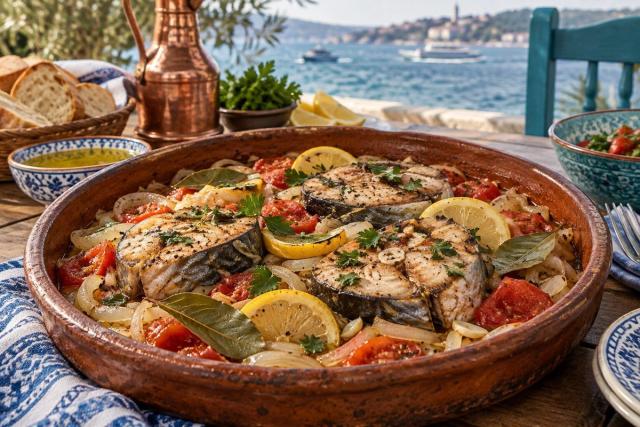
Atlantic bonito steaks baked over soft onions and tomatoes with bay and lemon.
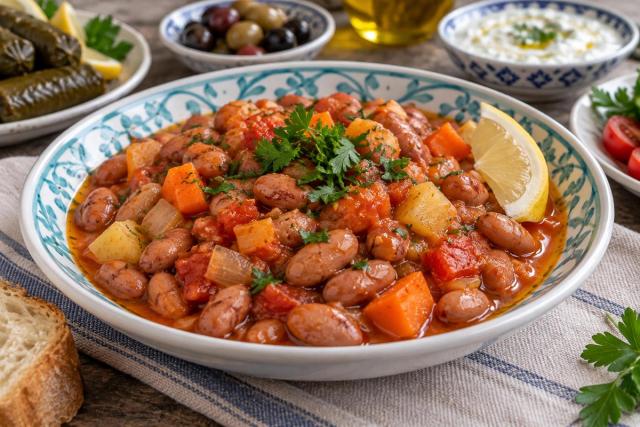
Borlotti beans with tomato, carrot, potato and garlic in a mellow olive-oil sauce.
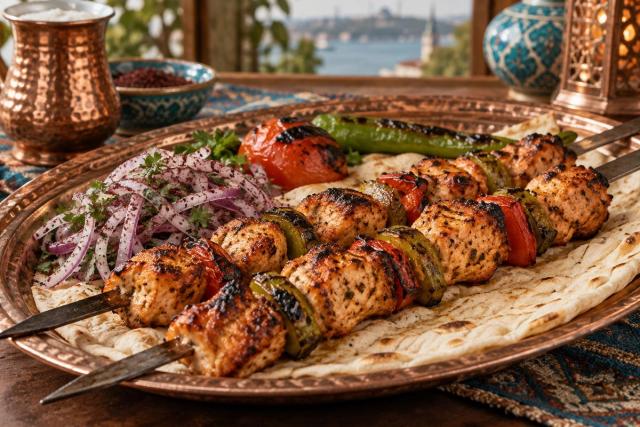
Yogurt-marinated chicken thighs grilled with peppers and served on warm lavash.
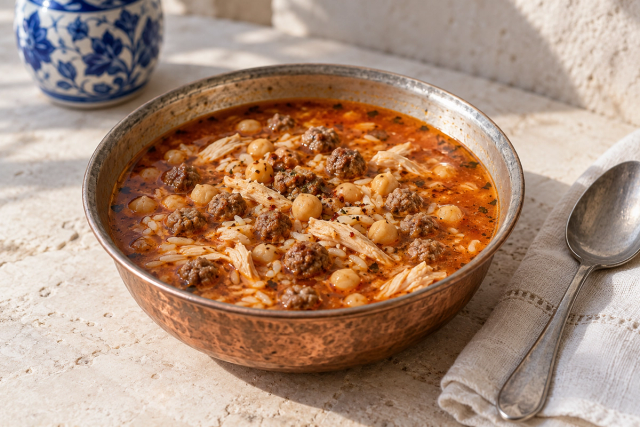
A tomato-based soup with chicken, chickpeas, rice and tiny meatballs, flavored with dried mint.
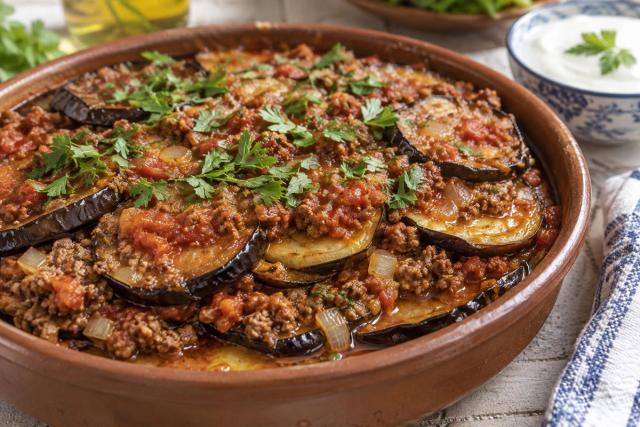
Roasted eggplant layered with minced beef and tomato, with an optional chickpea variation. The optional chickpeas reflect a documented Afyonkarahisar variation. This oven adaptation roasts the eggplant instead of frying it and has no béchamel topping.
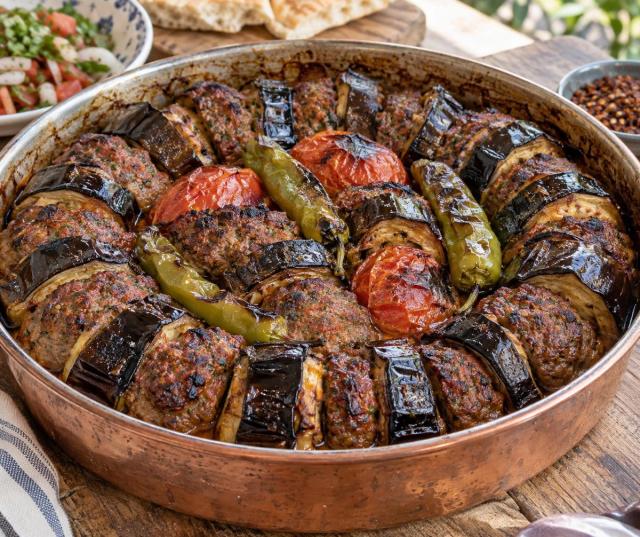
Alternating eggplant rounds and lamb patties roasted with tomatoes and green peppers. This oven adaptation follows the alternating meat-and-eggplant arrangement documented in Kilis. Use a shallow dish and avoid packing so tightly that the vegetables steam without softening.