



Draining cut vegetables
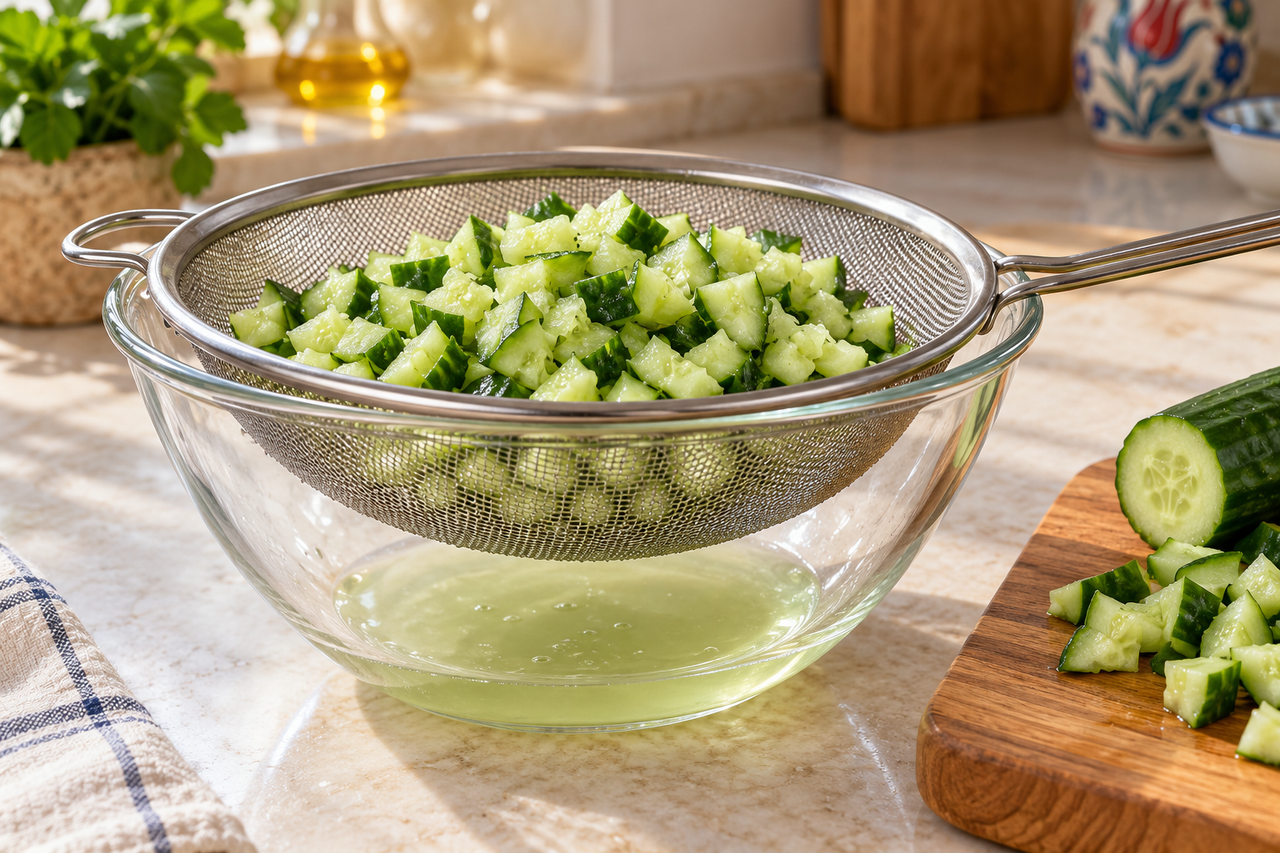
Let unwanted liquid drain away while keeping the vegetable pieces intact.
What this skill is for
Draining lets loose liquid leave cut vegetables through a sieve. It is gentler than squeezing in a cloth and different from drying a surface with paper. Use it only when the recipe needs less liquid.
Watery chopped tomatoes in ezme are a useful example. Cucumber may need draining for a deliberately thick dip, but our cacık keeps its cucumber water, and our Shepherd’s Salad serves its juices. Those are intended textures, not mistakes.
How to do it
- Read the recipe first. If it wants the vegetable juices, keep them. If draining is requested, prepare the vegetables to its stated cut before mixing in the dressing or yogurt.
- Set a clean fine sieve over a bowl, leaving space beneath it so the vegetables do not sit in the collected liquid. Choose a mesh that holds the pieces.
- Add the cut vegetables and let loose liquid drip away. For watery ezme tomatoes, use the recipe’s short draining stage. Do not press or squeeze those tomatoes dry.
- Salt only if the chosen recipe asks for it; do not add an extra pinch automatically. For a cucumber variation, follow that recipe’s draining method rather than changing the cacık recipe.
- Lift the vegetables away from the liquid and continue with the recipe. They should remain moist and distinct. For longer preparation, cover and refrigerate rather than leaving the setup out while you do other jobs.
Recognize success
- Some loose juice has collected below the sieve while the pieces stay above it.
- The pieces still hold their shape and feel moist, not crushed dry.
- The final mixture reaches its recipe’s texture without an unintended puddle.
Common mistakes and what to do
- Draining every vegetable can remove juices a dish is meant to keep. Check the intended result before starting.
- Pressing soft tomatoes through the mesh damages their texture. Stop pressing; use gravity and follow the recipe.
- Letting the sieve sit in its own liquid defeats the purpose. Empty or replace the collecting bowl before the liquid reaches the food.
Last updated:
Practice with a real recipe
Related skills
Moisture Control
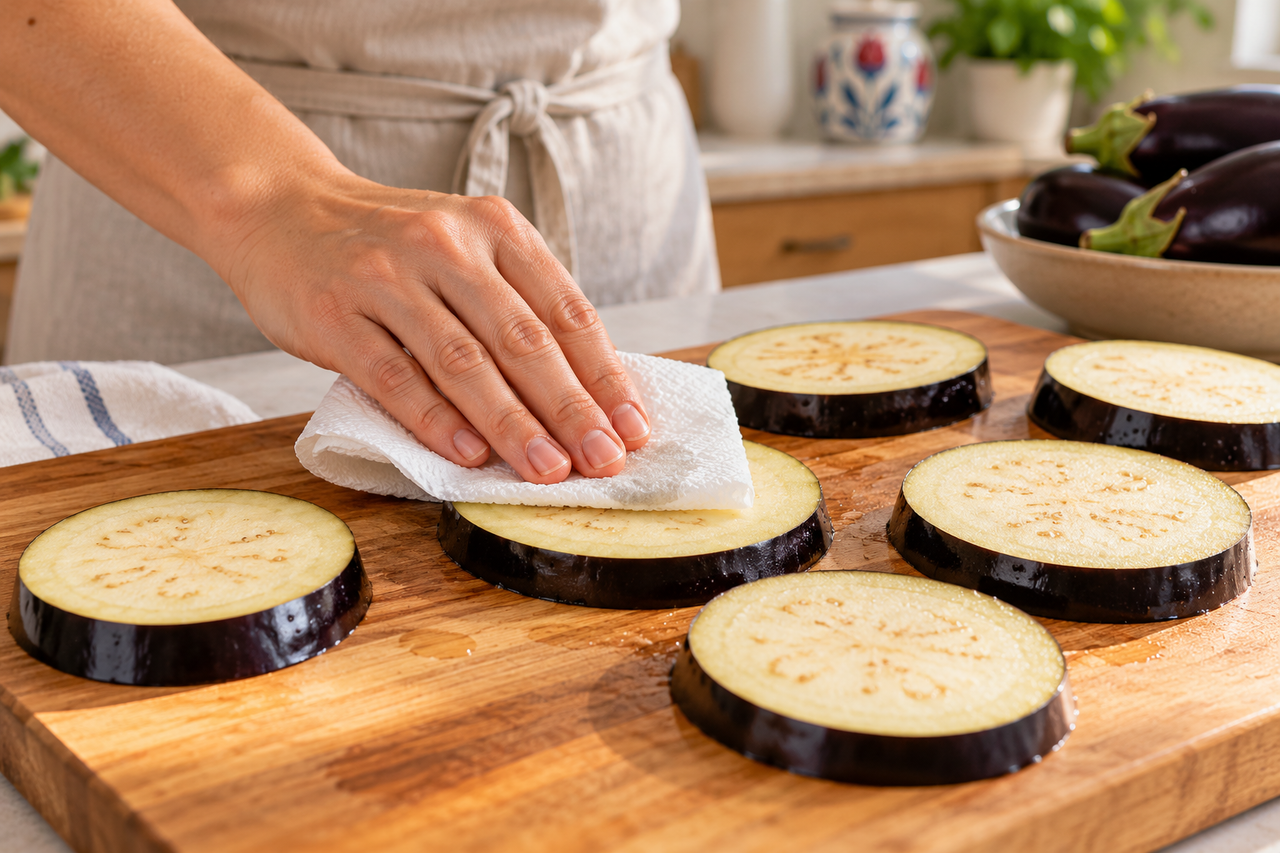
Drying surfaces before cooking
Blot away surface moisture before the recipe’s oiling and cooking stage.
Moisture Control
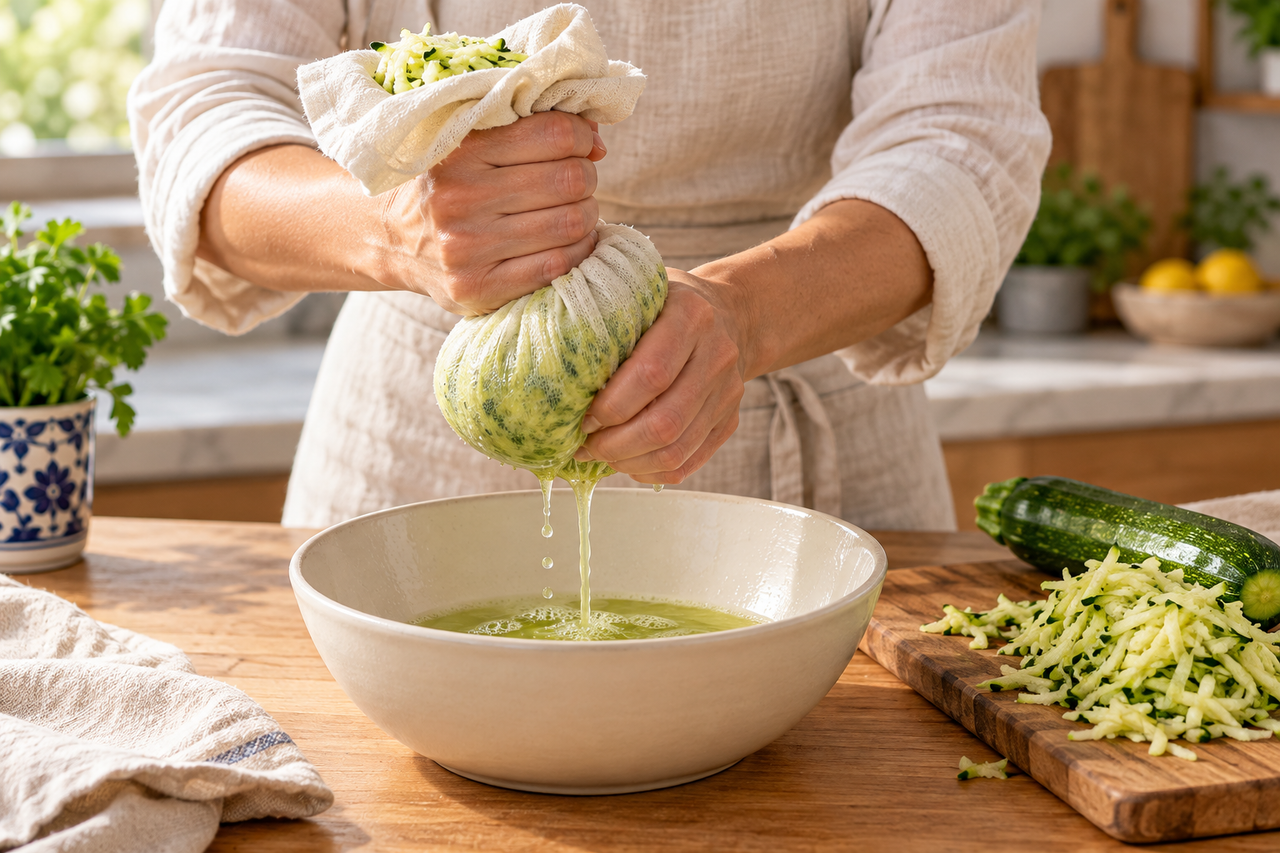
Squeeze excess water from grated vegetables
Remove excess liquid before mixing vegetables into a filling or batter that needs to hold its shape.