


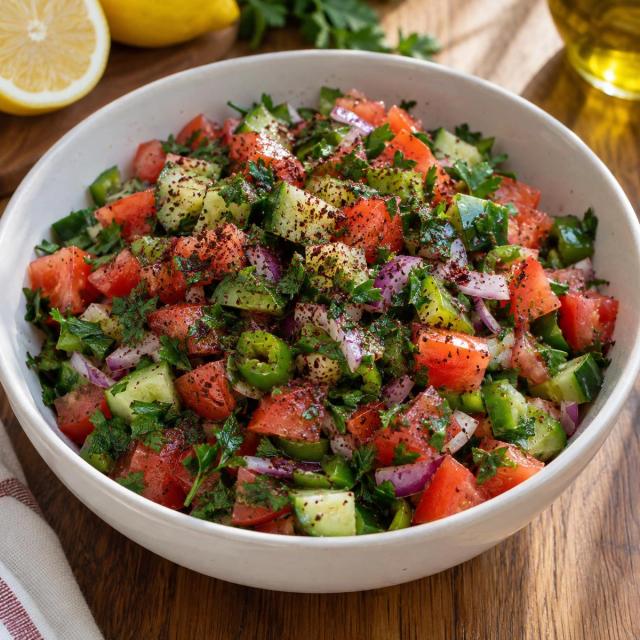
Dicing evenly
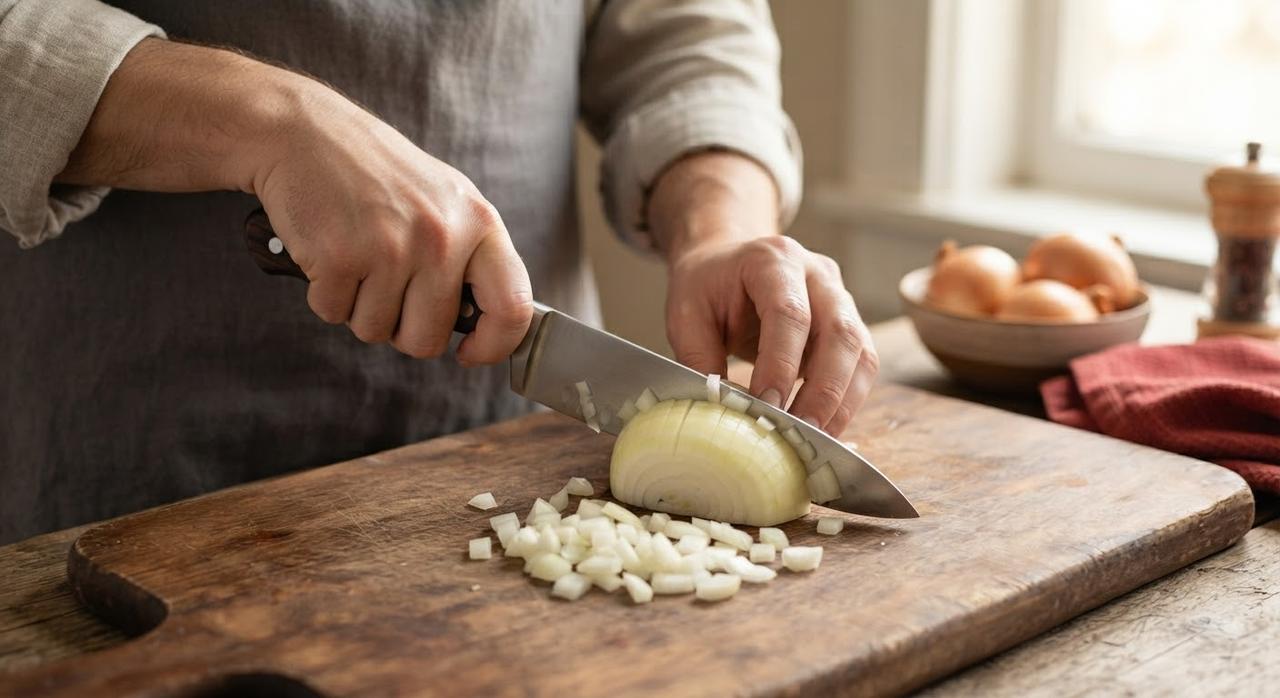
Cut slices into strips, then across into small pieces of a similar size.
What this skill is for
Dicing makes small, roughly cube-shaped pieces. Use it when a recipe needs distinct vegetable pieces in a salad, soup or filling. The recipe decides the size; evenness matters more than perfect cubes.
An onion has natural layers, so it needs different handling from a pepper panel or a tomato slice. The examples below teach the same habit: keep your cuts evenly spaced and work with a stable, manageable piece.
How to do it
- Set a board on a non-slip mat or damp towel. Use a sharp knife and keep the handle dry. Curl your guiding fingertips inward, tuck your thumb back and keep them clear of the edge. Choose the size your recipe asks for.
- For an onion, trim the stem end. Stand it on that flat end, hold the sides with fingertips clear of the downward cut, and halve it through the root. Peel it, keeping the root attached, then put a half flat-side down.
- Make evenly spaced downward cuts along the onion from stem toward root, stopping short of the root so the layers stay together. Turn it and cut across those cuts from the stem end toward the root. This simple method uses the natural layers without horizontal cuts toward your hand; curved pieces are normal.
- For pepper, remove the stem, seeds and thick white ribs. Lay a manageable flat panel skin-side down, cut it into strips, then cut across the aligned strips. Use small groups instead of a tall stack.
- For tomato, use a sharp knife or a small serrated knife if the skin resists. Make stable slices, then strips and crosscuts. Work with one slice at a time if it is soft; use a gentle cutting motion instead of pressing it flat.
- Stop before a piece becomes too small to hold securely. Put the knife down, spread the pieces and recut oversized ones individually. Transfer them with a bench scraper rather than scraping the sharp edge along the board.
Recognize success
- Pieces are reasonably similar in size, with few large chunks among tiny fragments.
- Tomato pieces and pepper edges remain distinct rather than crushed into a paste.
- Your board and ingredient stay steady throughout the cuts.
Common mistakes and what to do
- Uneven first slices create uneven dice. Check the strips before making the final crosscuts.
- A tall, slippery stack is hard to control. Work in smaller groups and reset any rolling piece onto a flat side.
- Repeatedly chopping the whole pile turns dice into fine chop. Recut only the large pieces and stop at the texture the recipe needs.
Last updated:
Practice with a real recipe
Where to practice this skill

Related skills
Preparation & Knife Skills
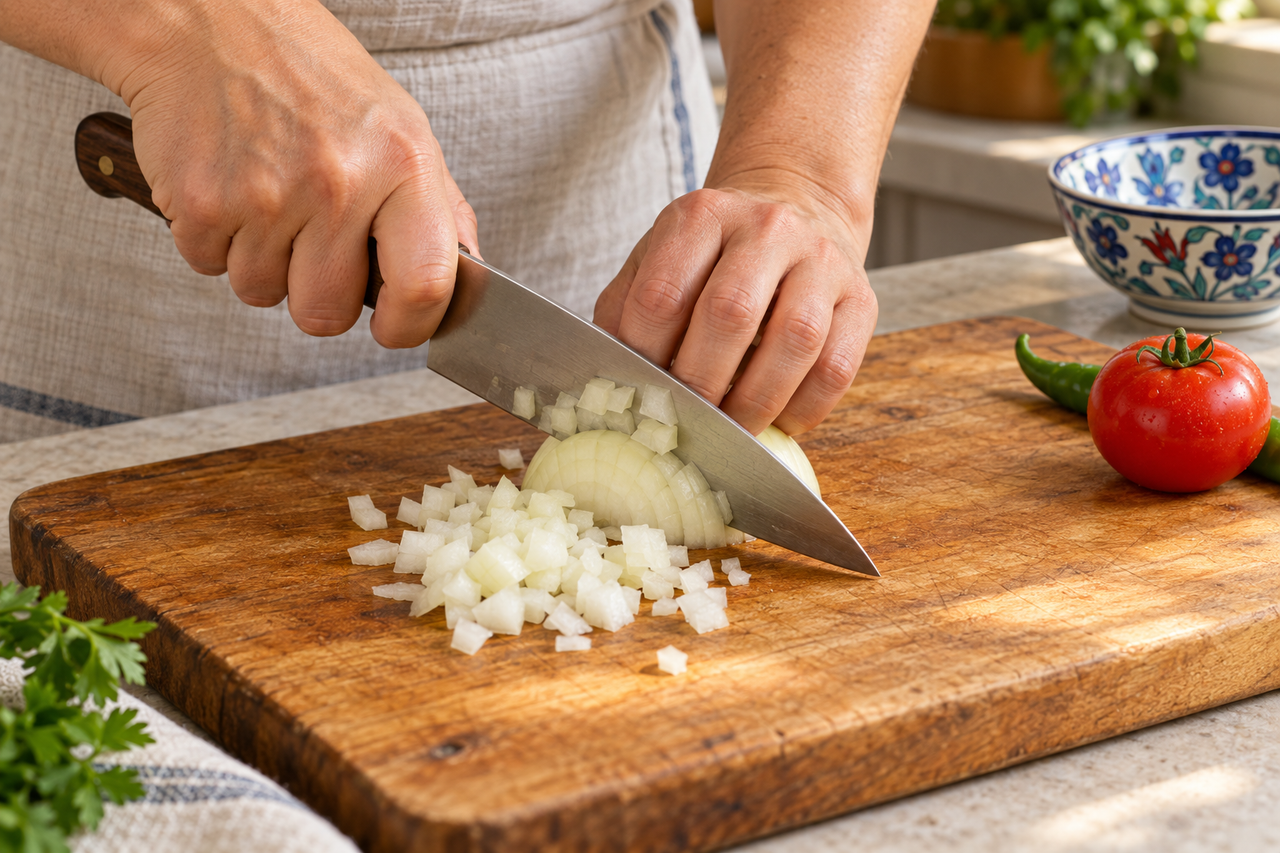
Fine chopping by hand
Keep small vegetable pieces distinct instead of turning them into a watery paste.
Preparation & Knife Skills
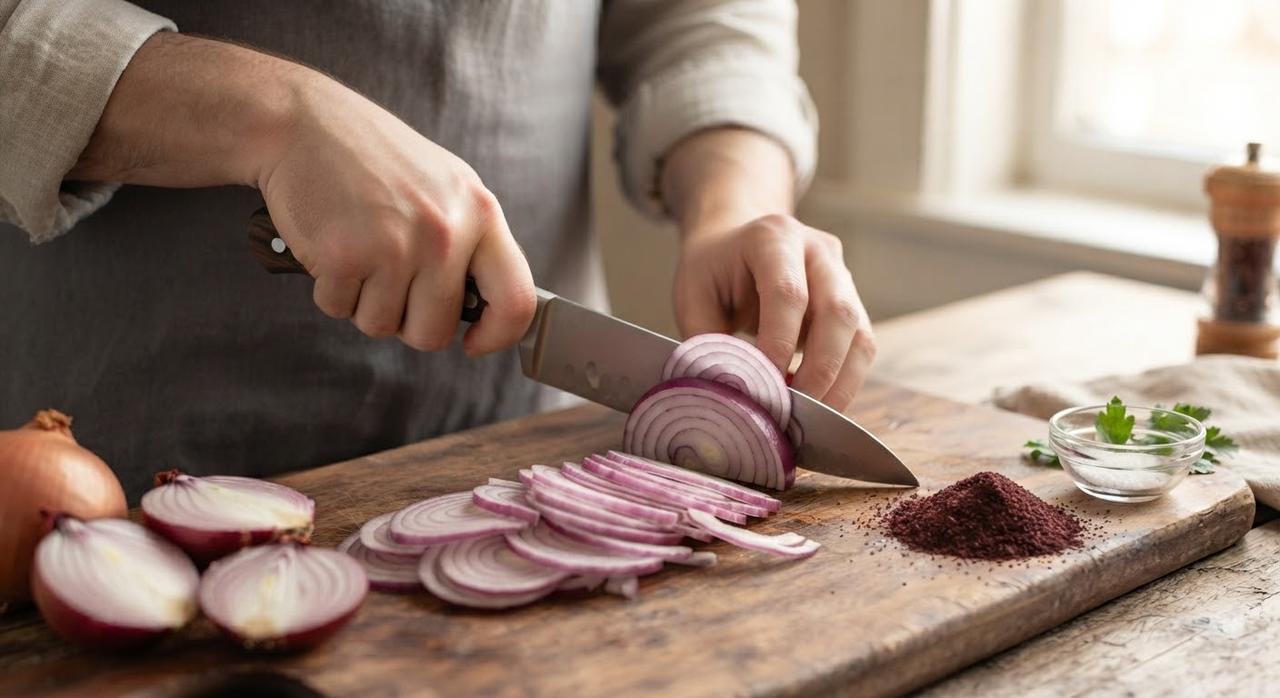
Slicing evenly
Make slices of a similar thickness with a steady board, a curled guiding hand and a controlled cutting motion.