


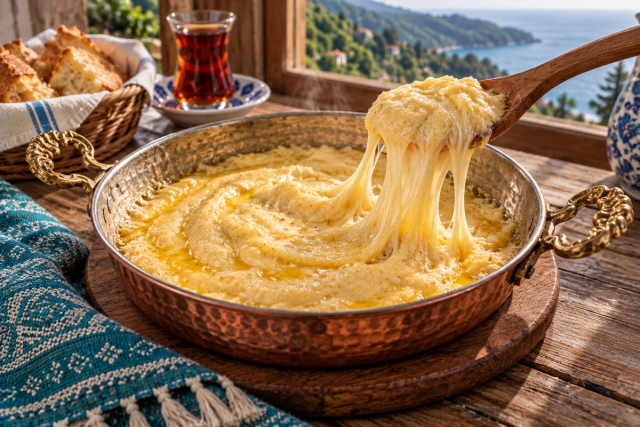
Melted Cheese and Cornmeal
A warm cornmeal, butter and melting-cheese dish inspired by Trabzon cooking.
Black Sea Region
Trabzon's kitchen can be followed through three ingredients: corn flour, anchovies and hazelnuts. Kuymak, served hot at breakfast, brings corn flour toasted in butter together with cheese that melts and stretches. Akçaabat köftesi is known as a hand-shaped meatball grilled over charcoal and brought to the table with roasted peppers and tomato. Along the coast, anchovies go into pilaf and bread, while in hamsi kuşu boned anchovies are closed in pairs around a filling and fried. For dessert, Hamsiköy sütlacı, baked in clay bowls, arrives plain or with hazelnuts. Hazelnuts, often sold freshly roasted in Trabzon, reach the last plate of the meal this way. The pantry holds one more name: Tonya tereyağı, a yellowish butter made from the milk of cows raised in Tonya, traditionally by churning yogurt in a wooden churn. Follow these three threads and sketch your own Trabzon route, from the köfte of Akçaabat to the rice pudding of Hamsiköy and on to the butter of Tonya.
Last updated:
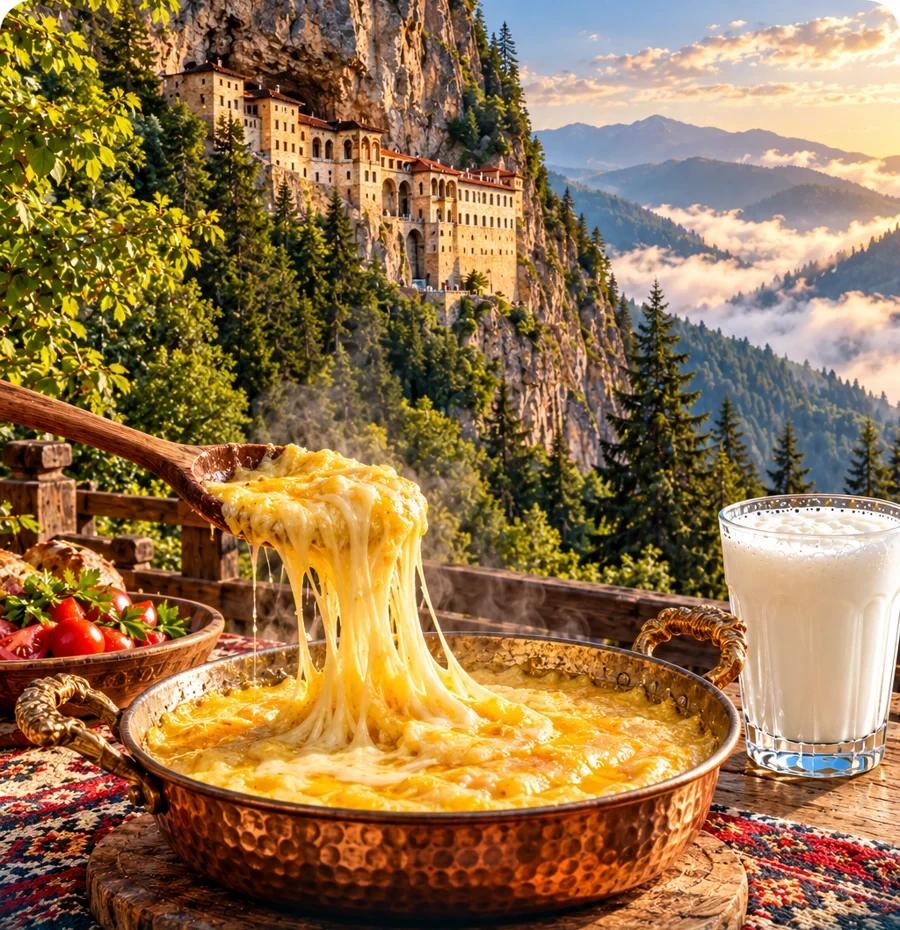
Green hills above the Black Sea coast around Trabzon.
A warm cornmeal, butter and melting-cheese dish inspired by Trabzon cooking.
Garlicky charcoal-grilled meatballs
Beef, suet, stale bread, garlic and salt kneaded at length, shaped by hand and grilled over charcoal; served with roasted peppers and tomato.
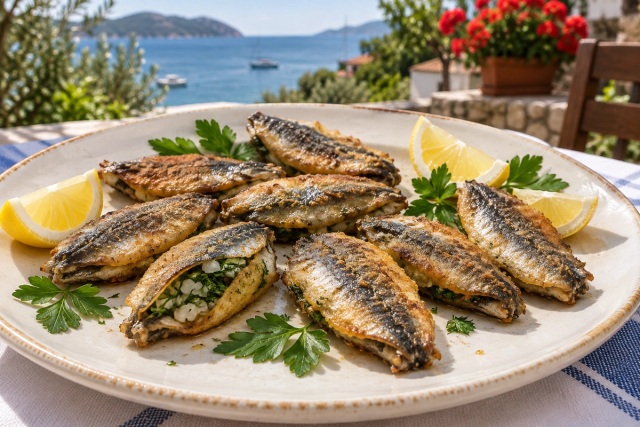
Pairs of small anchovies enclosing a little onion and herbs, crisped in a light cornmeal coating. This version sandwiches two butterflied anchovies. Hamsi kuşu also has other local shapes and mixtures; the name does not imply one fixed recipe. Use very little filling so each pair stays closed.
Rice pudding baked in clay bowls
Rice pudding cooked with milk, baked in clay bowls and served plain or sprinkled with hazelnuts.
Collard, bean and corn soup
Soup of finely chopped collard greens with corn flour, barbunya beans and dried hot pepper.
Large wood-fired loaf
Large round loaves baked in stone ovens over a wood fire.
Yellowish butter from the milk of cows raised in Tonya, traditionally made by churning yogurt in a wooden churn.
Guide not written yet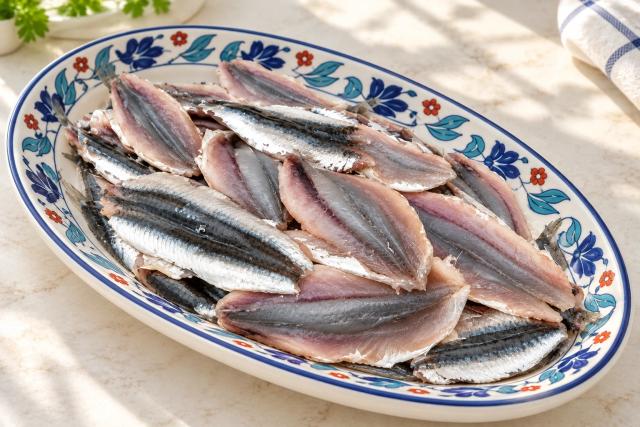
Raw anchovies, cleaned and butterflied, for frying or arranging around rice.
Hazelnuts, often sold freshly roasted.
Guide not written yetPersimmons, known in Turkish as Trabzon hurması.
Guide not written yetTrabzon’s food identity includes district specialities as well as city dishes. GoTürkiye highlights Vakfıkebir bread, Tonya butter and Hamsiköy rice pudding alongside kuymak. Tea is another everyday reference point, with cultivation in the eastern part of the province. Keeping district names matters: a provincial guide should not erase the places and producers behind a food.
Corn flour, butter and cheese come together in kuymak, served hot at breakfast.
Anchovies go into hamsi kuşu, pilaf and bread along the coast.
Trabzon’s story begins with its position on the ancient Silk Road. The city passed through the Roman and Byzantine periods before it was conquered by Mehmet the Conqueror. Suleiman the Magnificent was raised in this city. Its buildings reflect that long history. Trabzon Castle rises on ancient Byzantine foundations dating back to the 5th century. The Hagia Sophia is regarded as one of the important examples of late Byzantine architecture and frescoes.
Inland, the province reveals its mountainous character. Sümela Monastery is a monastic complex built into the rock cliffs of the Altındere Valley, southeast of Maçka. According to tradition, it was founded by two monks from Athens, Barnabas and Sophronios. In later centuries, the Komnenian rulers restored and enlarged the monastery. In the Çaykara district, Uzungöl is one of the well-known destinations in this green, mountainous province.


