


Bayburt lor dolması
Curd-filled wild dock rolls
Evelik (wild dock) leaves rolled around lor curd, clotted cream and bulgur, baked and finished with melted butter.
Black Sea Region
At Bayburt's table, dairy from upland herds sits beside the pickles of a winter larder. On the dairy side, lor dolması stands out. Evelik (wild dock) leaves are rolled around lor curd, clotted cream and bulgur, then come from the oven finished with melted butter. From the larder comes ekşi lahana, sauerkraut cooked with dried salted beef ribs and bulgur into a sour stew. Galacoş, stale bread soaked in garlicky yogurt and topped with green lentils, minced meat and onion, is served hot. For something sweet, süt böreği is known for its golden baked yufka soaked in sweetened milk syrup. Tatlı çorba, made with rosehip, wheat, dried fruit and cloves, is offered at holidays and weddings. The larder shelves also hold Aydıntepe şeker fasulyesi, a quick-cooking bean grown without synthetic fertiliser. Bayburt tarhunu is tarragon dried in the shade to keep its color, and it goes into soups, mantı and pastries. From lor dolması to süt böreği, dairy links savory and sweet on this table. A tarragon-scented mantı opens the door to whatever you want to try next.
Last updated:
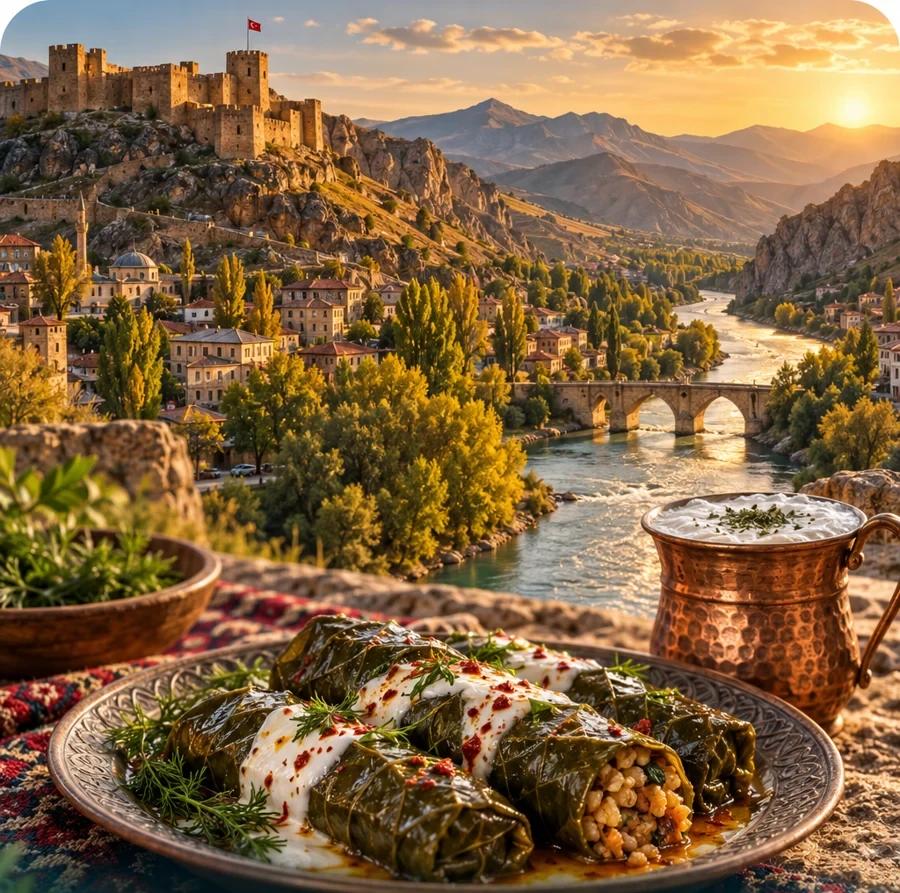
Upland pastures, the Çoruh valley and a dairy-rich table.
Follow curd, bulgur and lentils from the pantry into two very different preparations.
Curd-filled wild dock rolls
Evelik (wild dock) leaves rolled around lor curd, clotted cream and bulgur, baked and finished with melted butter.
Lentils and mince over yogurt bread
Stale bread soaked in garlicky yogurt and topped with green lentils, minced meat and onion, served hot.
Sour cabbage and bulgur stew
Sauerkraut cooked with dried salted beef ribs and bulgur into a sour stew.
Milk-soaked sweet börek
Yufka sheets baked until golden, then soaked in a sweetened milk syrup.
Rosehip and dried-fruit sweet soup
Rosehip cooked with wheat, dried fruit and cloves, topped with crushed hazelnuts or walnuts and served at holidays and weddings.
Rolled pastry with roasted flour
Milk and butter dough rolled around flour roasted in butter, glazed with egg yolk and baked.
Pulled thread halva
Sugar syrup cooled on snow, then pulled with roasted flour into fine threads; made in winter.
Recipes from this city are coming soon.
Flower honey from Bayburt’s upland meadows.
Guide not written yetDry beans grown in Aydıntepe without synthetic fertiliser; they cook quickly.
Guide not written yetTarragon dried in the shade to keep its color, used in soups, mantı and pastries.
Guide not written yetFresh curd from local milk, the filling of lor dolması.
Guide not written yetBaksı Museum stands in Bayraktar village. Founded through artist Hüsamettin Koçan’s initiative, it brings contemporary art into conversation with traditional production. Its weaving workshops include ehram and kilim work, with women’s participation central to the documented programme. This is a useful way to understand living heritage: inherited skills can support new work and new institutions. The museum’s own account traces the project from an idea in 2000 through a foundation in 2005 to the museum building in 2010.
Lor, butter and clotted cream from upland herds go into dolma and börek.
Sauerkraut, dried ribs and rosehip carry the table through long winters.
Bayburt Castle rises on a hill above the city, with the Çoruh River surrounding it on three sides. No one knows when it was first built, or by whom. What is known is that it stood on the trade route linking the Black Sea to the Persian Gulf. Romans, Byzantines and Arabs all held it before it came under Turkish control. In the 12th century, during the Seljuk period, its walls were decorated with patterned tiles in turquoise, purple, sky blue and green. The traveller Evliya Çelebi, who visited Bayburt, wrote that a neighbourhood and the Ebü’l-Feth Mosque stood inside the castle.
Settlement in the area goes back much further. Excavations at Büyüktepe Tumulus uncovered Early Bronze Age pottery and showed that people lived there until the Roman period. Korgan Bridge spans the Çoruh along the historic Silk Road and shows Seljuk stone craftsmanship from the 13th to the 14th centuries. On the Bayburt–Erzurum border, Kop Mountain carries the traces of the First World War in its trenches, defensive positions and cemeteries.


