


Karalahana çorbası
Kale soup with corn and beans
Kale, called pancar locally, simmered with corn and borlotti beans and thickened with cornmeal; often eaten at breakfast.
Black Sea Region
At the Giresun table, kale sits at one end and hazelnuts at the other. Kale, called pancar locally, becomes a soup with corn and borlotti beans, thickened with cornmeal, and it is eaten at breakfast too. Reach the oven and Giresun simidi greets you: a sourdough ring dipped in grape-molasses water and baked in a wood-fired stone oven, with no sesame at all. The round hazelnuts grown in orchards stretching from the coast to the high villages go into sweets rather than savory dishes. Fındık ezmeli kadayıf brings fine kadayıf together with Giresun hazelnuts and a milky syrup. With its twisted dough, butter and syrup, fındıklı burma appears at weddings and holidays. Görele dondurması thickens milk, salep and sugar with licorice root and is sold from tinned copper cylinders set in wooden barrels. Add Çamoluk şeker kuru fasulyesi, a dried bean known for cooking in a short time, and Giresun invites you to explore its table, from kale to hazelnut, one district at a time.
Last updated:
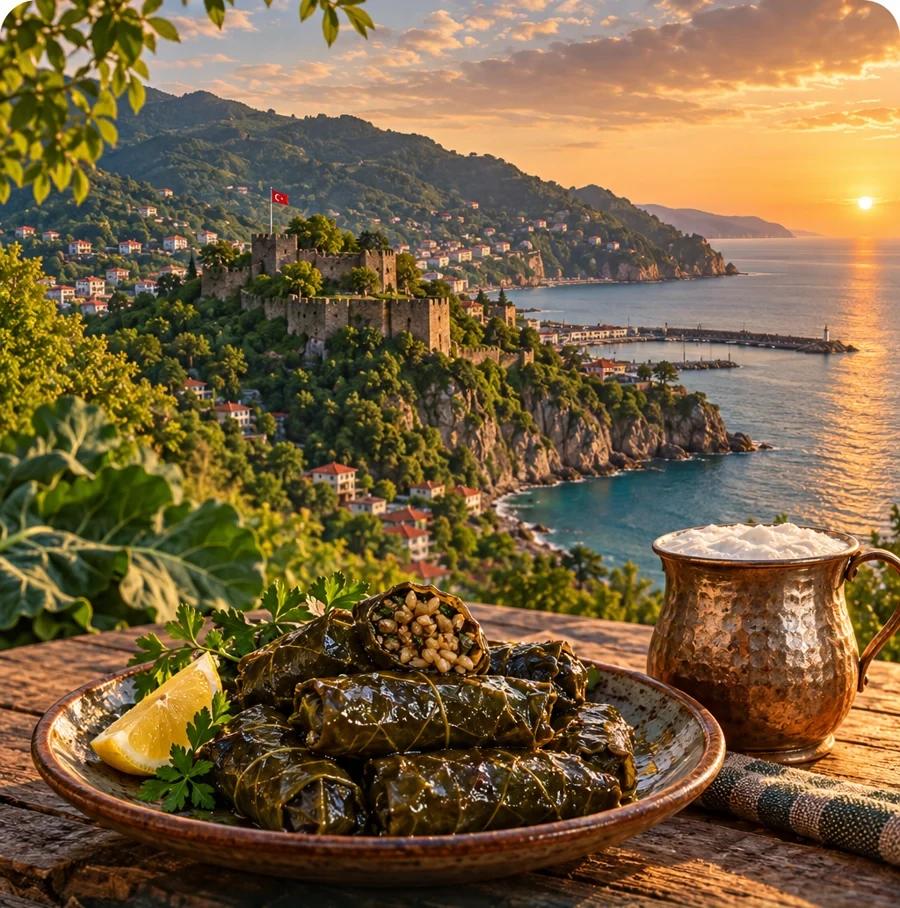
Hazelnut orchards, green hills and the Black Sea coast.
Begin with the hazelnut, then follow greens, bread and seafood through the provincial pantry.
Kale soup with corn and beans
Kale, called pancar locally, simmered with corn and borlotti beans and thickened with cornmeal; often eaten at breakfast.
Slow-cooked kale with rice
Finely chopped kale, potato and carrot layered with onion and rice and cooked slowly in their own juices.
Oven-roasted kid
Young black goat kids, prepared from July to October, cooked in ovens using a local technique and sold by weight at the Alucra market.
Molasses-dipped simit
Sourdough rings boiled, dipped in grape-molasses water and baked in a wood-fired stone oven, without sesame.
Hazelnut kadayıf with milky syrup
Fine kadayıf with Giresun hazelnuts and a milky syrup, a tradition that began during Ramadan.
Licorice-root ice cream
Ice cream of milk, salep and sugar, thickened with licorice root and sold from tinned copper cylinders set in wooden barrels.
Hazelnut pastry in syrup
Thin dough sheets scattered with hazelnuts, rolled and twisted, baked with butter and soaked in syrup; served at weddings and holidays.
Licorice-root helva
Licorice root (çöven) boiled and whisked until foamy, then cooked with sugar; known in villages as wedding helva.
Recipes from this city are coming soon.
Round hazelnuts from orchards that cover the land from the coast to the high villages.
Guide not written yetA local dried bean from Çamoluk, known for cooking in a short time.
Guide not written yetBlack mulberries from Şebinkarahisar, also boiled down into molasses.
Guide not written yetA late-harvest apple, light green on one side and red on the other, with a tart taste.
Guide not written yetWild nettle, cooked with cornmeal and garlic in local dishes.
Guide not written yet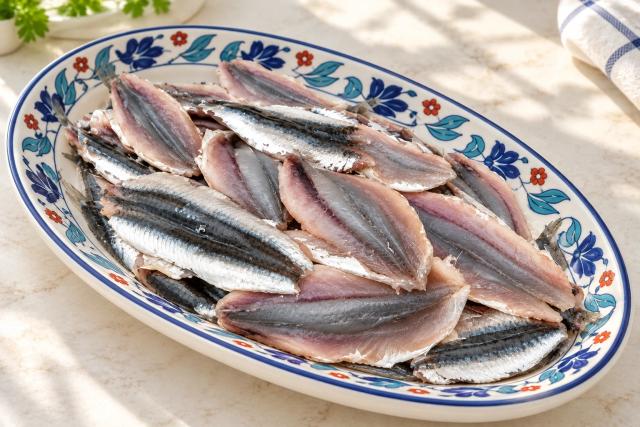
Raw anchovies, cleaned and butterflied, for frying or arranging around rice.
Hazelnut growing and trade are prominent in the province’s economic and cultural identity. That context belongs beside the finished nut, rather than being reduced to a claim that one visible shell proves a named variety. Copper working provides another material connection. The Ministry records locally associated copper objects and craft, reminding visitors that food culture includes the skills and vessels surrounding preparation as well as the meal itself.
Giresun’s hazelnuts go into sweets rather than savory dishes, from kadayıf and burma to hazelnut paste.
Kale, beans and cornmeal shape everyday cooking, from pancar soup to slow-cooked dible.
A good place to start exploring Giresun city is the castle in the city center, which looks down over the town from above. Inside are walls thought to belong to the Hellenistic period and the tomb of Topal Osman Ağa, a hero of the War of Independence. On the castle’s west side, facing the harbour, a small cave is estimated to have been enlarged and converted into a church in the fourth or fifth century CE. Just off the coast, Giresun Island is the only island in the Eastern Black Sea Region. It saw settlement in ancient and medieval times and holds medieval city walls and monastery ruins, while many legends, such as that of Jason and the Argonauts, are also attached to it.
Southeast of the castle lies Zeytinlik, where Greeks and Turks lived together for decades. Its houses were built with imported materials brought by ships carrying hazelnuts to Europe, Marseille tiles being the best known. According to inscriptions, the houses were positioned so that none blocked the light, view or air circulation of the others. The city’s museum occupies an Orthodox church from the mid-nineteenth century.


