


Muhlama
Corn flour and melted cheese
Corn flour roasted in butter, stirred with boiling water and topped with strands of kolot cheese, served hot.
Black Sea Region
In Rize, where wheat grows poorly, corn flour carries the kitchen. You meet it at its warmest in muhlama, where kolot cheese, known locally as koleti, pulls into long strands over corn flour roasted in butter. Hamsikoli is a bread that brings corn flour together with brined anchovies and plenty of greens such as leek, cabbage and chard. A second thread on the Rize table leads to the scented Isabella grape. The rings of Rize simidi, which carries no sesame, are dipped in this grape’s molasses before they go into the oven, while pepeçura is a sweet made from the juice of crushed Isabella grapes and served in bowls once it has cooled. Enişte lokumu, baked strips made with butter, flour, sugar and egg, has a story of its own: mothers-in-law send it to their sons-in-law. Alongside these dishes sit black tea, grown and processed in Rize, and honey from the high Anzer plateau, where bees feed on wildflower meadows. From a corn flour plate to a grape-molasses simit and on up to the Anzer plateau, the route invites you to taste Rize one step at a time.
Last updated:
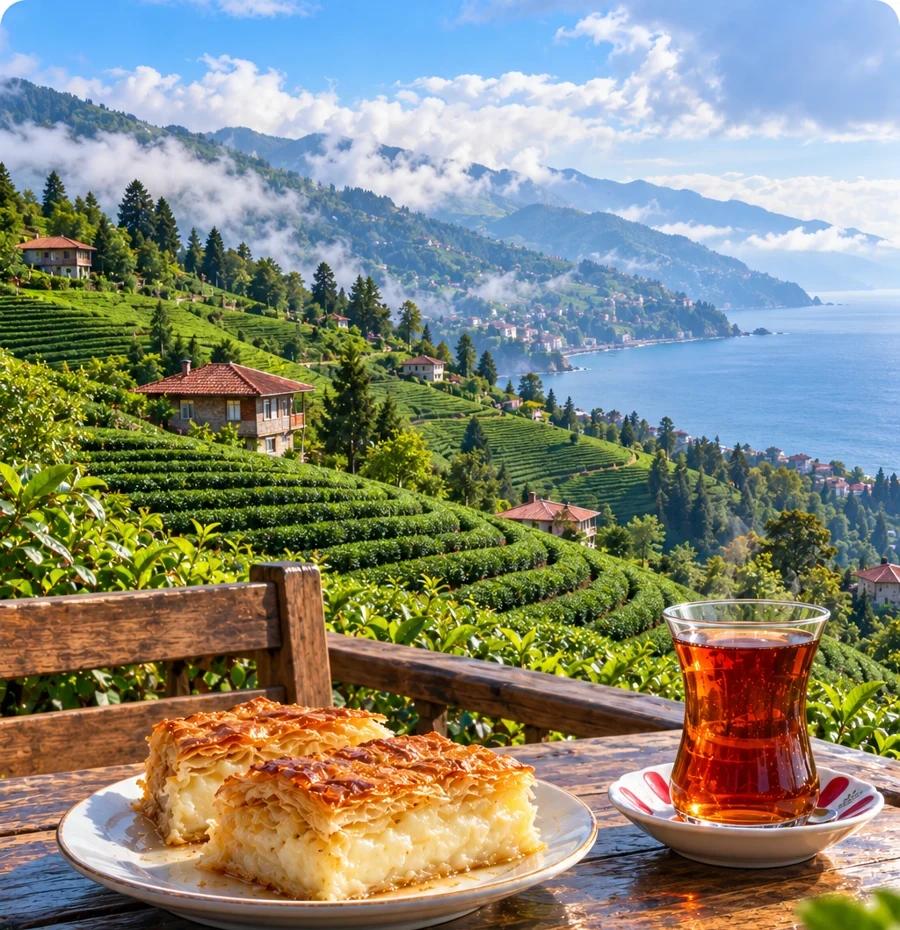
Tea terraces on steep green slopes above the Black Sea.
A glass of tea is a starting point. Explore the cornmeal, dairy, greens and fish that give the wider Rize table its range.
Corn flour and melted cheese
Corn flour roasted in butter, stirred with boiling water and topped with strands of kolot cheese, served hot.
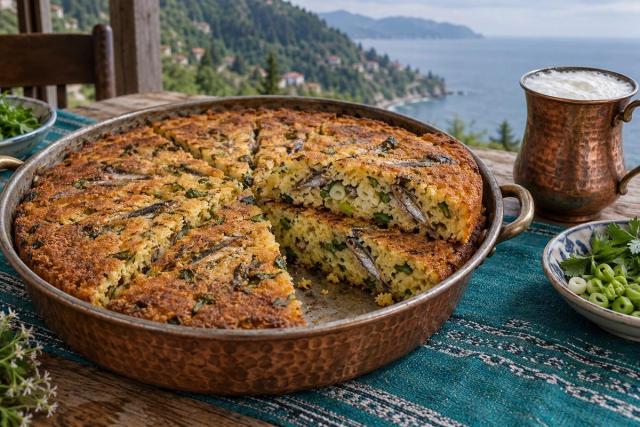
Dense savory cornmeal bread filled with anchovies, chard, spring onions and herbs.
Collard leaves with meat and rice
Boiled Rize collard leaves rolled around rice, beef or lamb, onion and paste, simmered in a tomato sauce and served hot with yogurt.
Stone-oven pide
Pide baked in stone ovens with unsalted butter, in versions with kolot cheese, minced meat or kavurma, and served uncut.
Molasses-glazed simit
Sesame-free rings of dough boiled briefly, dipped in Isabella grape molasses and baked.
Grape-juice pudding
Juice of crushed Isabella grapes thickened with wheat flour, corn flour and starch, sweetened and served cool in bowls.
Butter pastry for sons-in-law
Strips of dough made with butter, flour, sugar and egg, baked until golden; mothers-in-law traditionally send it to their sons-in-law.
Board-baked long loaf
Long hand-rolled loaves baked in groups on pine or chestnut boards called pasa.
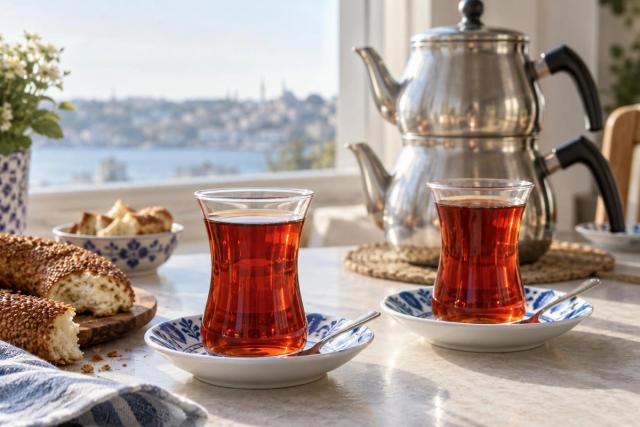
Loose black tea brewed in a double teapot and diluted to taste in small glasses.
Black tea grown and processed in Rize: withered, rolled, oxidised and dried.
Guide not written yetHoney from the high Anzer plateau, where bees feed on wildflower meadows.
Guide not written yet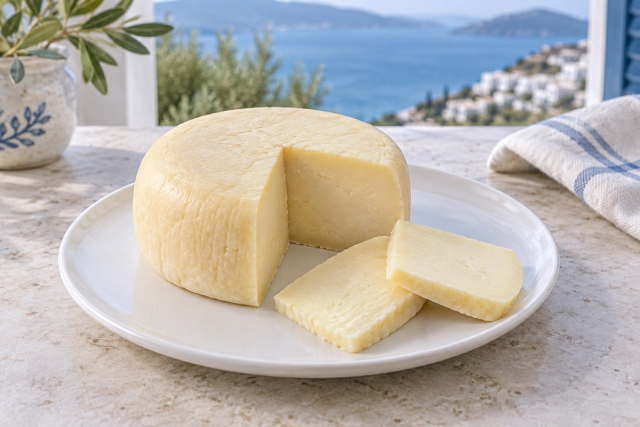
A pale, semihard cow-milk cheese of the Black Sea region, used for melting.
A round, blue-black Isabella-type grape, mostly turned into molasses, juice and pepeçura.
Guide not written yetBeef slow-cooked with tallow and salt in a wood-fired pan, drained and packed in its fat.
Guide not written yet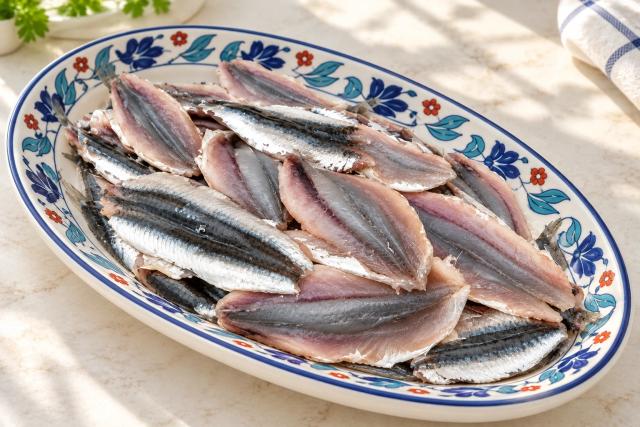
Raw anchovies, cleaned and butterflied, for frying or arranging around rice.
Tea links cultivation, preparation and hospitality. UNESCO’s 2022 inscription of tea culture concerns communities in Türkiye and Azerbaijan; it is not a designation exclusive to Rize. Farmers, tea makers and makers of serving vessels all participate in that wider practice. In Rize, this social story meets the tea-growing landscape. A shared pot and small glasses offer a way to approach the subject through daily life, alongside the labour that brings leaves to the table.
Where wheat grows poorly, corn flour goes into muhlama, hamsikoli and the everyday bread.
Isabella grapes become pepeçura, molasses and the glaze of Rize simidi.
To understand Rize, follow the water down the slopes of the Kaçkar Mountains facing the Black Sea. The Fırtına Stream, the best known of the province’s many streams, is formed by the cascading streams and creeks on those slopes. Higher up in the mountains lie many small lakes formed by glacial erosion and accumulation. On the western slopes of the Fırtına, Zil Castle, like Kale-i Bala, Ciha Castle and the Kız castles, guarded the region and the important medieval caravan route reaching İspir; it remained in use after the Ottoman conquest.
Southwest of the city center, Rize Castle consists of an inner and a lower castle. The inner castle is believed to date from the reign of Justinian I, while the lower castle, built in the 13th century, has walls that run from the inner castle down to the sea. Wood and stone are Rize’s traditional building materials. Arched bridges cross the river valleys; most have unknown construction dates and, affected by the climate, have been repaired often.


