


Gümüşhane kömesi
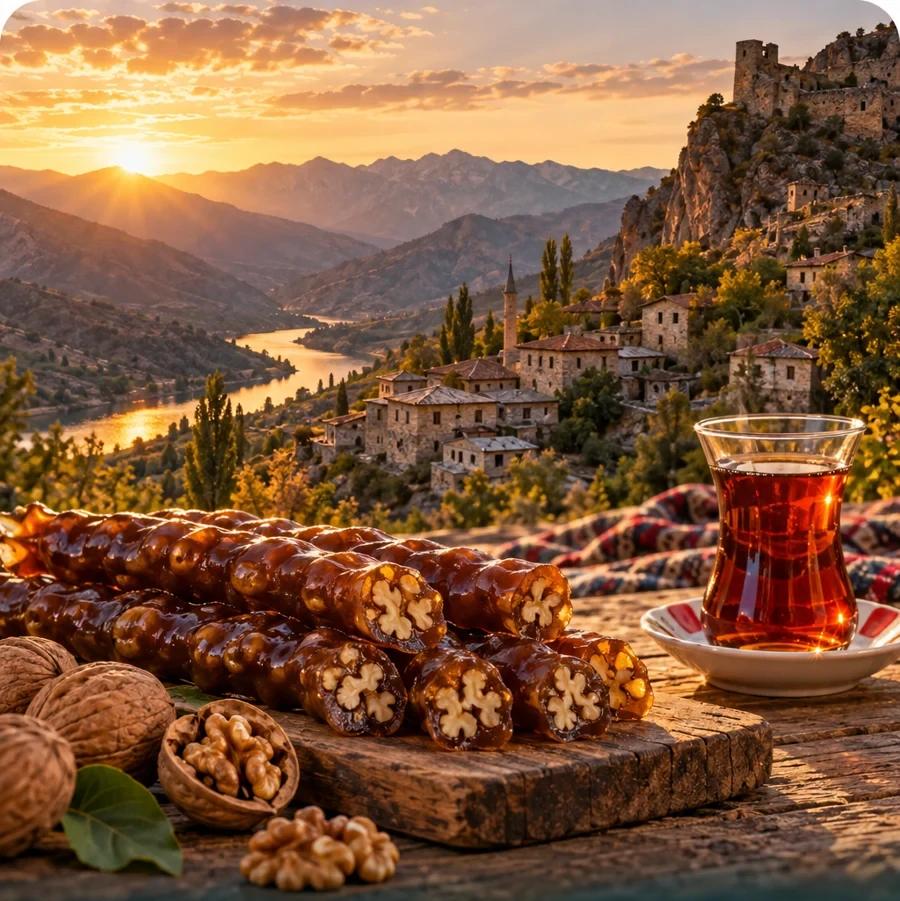
Nut strings in a sweet coating
Hazelnut or walnut kernels dipped into a sweet coating; with pestil, it has become a trade of its own in the province.
Black Sea Region
The best way into Gümüşhane is through the mulberry. Its juice is turned into thin sheets of pestil, while hazelnut or walnut kernels dipped into a sweet coating become köme, and together the two have grown into a trade of their own in the province. Sit down at the table and the textures change. Gümüşhane sironu, yufka partly cooked on a griddle, folded and cut into short pieces, arrives as a starter, warm or cold. Katıklı çorba brings corn, cracked bulgur and buttermilk together in a soup drunk cold, especially in summer. Gendirme pilavı pairs pearled wheat with lamb and dried beans, and borani sets lamb, spinach and chickpeas against strained yogurt: familiar faces of an everyday table built on wheat, bulgur and yogurt. After the pestil, there is still marmalade made from rosehip that grows naturally in forest villages, and deleme, a semi-hard cow's-milk cheese made without rennet. What begins with a mulberry keeps leading you further into Gümüşhane, one plate at a time.
Last updated:
Valley orchards, rosehip bushes and sheets of pestil.
Compare thin fruit leather with nut-filled strings before exploring rolled dough and dairy.
Nut strings in a sweet coating
Hazelnut or walnut kernels dipped into a sweet coating; with pestil, it has become a trade of its own in the province.
Folded yufka pieces
Yufka partly cooked on an iron griddle, folded several times and cut into short pieces; eaten as a warm or cold starter.
Cold buttermilk soup
Corn, cracked bulgur and buttermilk combined into a soup served cold, especially in summer.
Wheat pilaf with lamb and beans
Pearled wheat cooked with lamb and dried beans.
Beans with bulgur
Beans fried with onion and tomato paste, cooked slowly with bulgur on top and finished with basil and red pepper.
Lamb, spinach and yogurt
Lamb, spinach and chickpeas brought together with strained yogurt.
Greens and potato dish
Chard, spinach and potatoes blended with flour, curd cheese, parsley and butter.
Sweet fried noodles
Handmade noodles fried in butter and then soaked in syrup.
Recipes from this city are coming soon.
Sugar beans grown in and around the Kelkit district.
Guide not written yetRosehip growing naturally in forest villages, made into marmalade.
Guide not written yetA semi-hard cow’s-milk cheese made by kneading curd in hot milk, without rennet.
Guide not written yetA cheese kept in clay pots, known around Torul as çil peyniri.
Guide not written yetMulberries, dried or pressed for the juice used in pestil and molasses.
Guide not written yetThin sheets of fruit leather made from mulberry juice.
Guide not written yetSanta’s surviving built fabric should be read as evidence of communities and livelihoods, not simply picturesque ruins. The Ministry’s account links mining activity with the settlement’s growth and later changes. Preserving offers another way to understand the province’s material culture. Fruit reduced, spread, dried or used to coat nuts changes form through skilled work, creating pantry products with different textures and uses.
Mulberry juice becomes thin pestil sheets and nut-filled köme, the products most tied to the city.
Wheat, bulgur and yogurt carry everyday dishes such as katıklı soup, gendirme and borani.
A good place to begin exploring Gümüşhane’s past is the Süleymaniye neighbourhood, southwest of the city center. Known as Old Gümüşhane, the settlement never lost its importance through history, thanks to its rich silver and gold mines and its position on the historic Silk Road. It came under Turkish rule when Mehmed the Conqueror brought the Greek state of Trabzon to an end. The neighbourhood’s Sultan Süleyman Han Mosque was built on an order given by Suleiman the Lawgiver during his Baghdad campaign. Its minaret is the only part of the mosque that remains original.
In Dumanlı village, the ruins of Santa spread across two valleys and tell a different story. This old Greek settlement, whose first settlements date to the Middle Ages, reached its height in the 19th century, and some of its neighbourhoods had churches. Satala, in the Kelkit district, was founded around a Roman legionary camp and developed over time. Brick fragments bearing the coat of arms of Legio XV Apollinaris, found in the area, carry that military past into the present.


