


Daday etli ekmeği
Minced-meat flatbread
Thin dough spread with a minced-meat filling and baked in a stone oven.
Black Sea Region
In Kastamonu, the paths of dough and broth keep crossing. In Devrekani hindi banduması, dried yufka dipped in turkey broth meets turkey meat and walnuts, crisps underneath and is finished with butter. Daday etli ekmeği arrives from the stone oven as thin dough topped with a minced-meat filling. The most intriguing link in the story is Kastamonu simidi: it carries no sesame, and its rings are dipped in apple or grape molasses and baked crisp. The same simit then becomes something else entirely in simit tiridi, soaked in bone broth and topped with garlic yogurt, fried mince and butter. On the sweet side waits çekme helvası, where sugar pulled by hand through butter-roasted flour separates into fine threads. Taşköprü garlic, white-headed with pink clove skins, goes into the çemen coating of pastırma, while siyez bulgur, split in stone mills, finds its way into İhsangazi ekşili pilavı. Once you have followed one molasses-dipped simit all the way to tirit, it feels only natural to wonder what else Kastamonu does with dough.
Last updated:
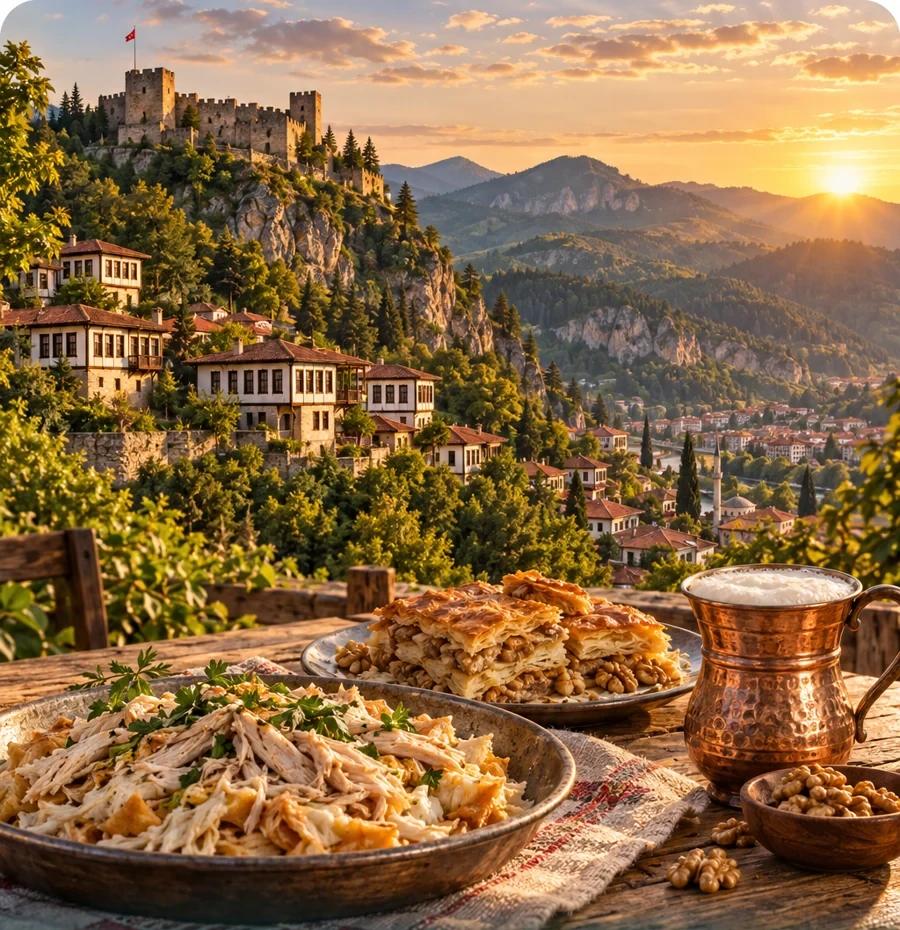
Hillside houses, forests and a table of banduma and helva.
Explore how garlic, dough, poultry broth and walnuts shape several different local dishes.
Minced-meat flatbread
Thin dough spread with a minced-meat filling and baked in a stone oven.
Turkey, yufka and walnuts
Dried yufka dipped in turkey broth, layered with turkey meat and walnuts, cooked until crisp underneath and finished with butter.
Pit-roasted lamb
Whole young lamb lowered into a hot pit oven and cooked by the heat of its bricks; also called biryan.
Simit with broth and yogurt
Pieces of Kastamonu simit soaked in bone broth and topped with garlic yogurt, fried mince and butter.
Sour siyez bulgur pilaf
Siyez bulgur cooked with onion, peppers, herbs and greens, soured with ayran or yogurt and topped with butter.
Pulled flour helva
Sugar boiled to a toffee and pulled by hand into flour roasted in butter until it turns to threads.
Sesame-free molasses simit
Rings of dough dipped in apple or grape molasses and baked crisp, without sesame.
Walnut and egg-white helva
Sugar, egg white and water cooked slowly with plenty of walnuts, taken on important visits and home after feast prayers.
Potato with garlic and yogurt
Mashed potato mixed with starch, yogurt and Taşköprü garlic, cooked on the stove or in the oven.
Rice and yogurt soup
Rice cooked slowly with whisked yogurt, flour and egg, topped with hot butter and mint.
Recipes from this city are coming soon.
Garlic with a white head, pink clove skins and cream-yellow flesh, ready from July.
Guide not written yetBulgur from siyez (einkorn) wheat, boiled, dried and split in stone mills.
Guide not written yetRice grown in a limited part of the Devrez valley, in local types such as Sarı Kılçık.
Guide not written yetBoneless beef back salted with rock salt, pressed, sun-dried and coated in çemen with Taşköprü garlic.
Guide not written yetAla plums peeled and dried.
Guide not written yetKasaba village’s Mahmut Bey Mosque is part of the Wooden Hypostyle Mosques of Medieval Anatolia World Heritage property, inscribed in 2023. Its timber columns, carved fittings and painted surfaces demonstrate skilled woodworking. Older tourism copy calling it only a tentative site is out of date. Woodworking and weaving also feature in Kastamonu’s ethnographic collections. Architecture and everyday craft provide cultural context without proving that a modern dish has medieval origins.
Taşköprü garlic seasons the çemen of pastırma and the yogurt of patates paçası.
Turkey broth soaks the yufka of banduma, and etli ekmek bakes on thin dough.
You can begin exploring Kastamonu’s past at the castle on the city’s highest point. Built in the 12th century by the Byzantine Komnenos dynasty on top of a central rock mass, it is one of the city’s symbols. The historic mansions below belong to a much later period, the late 19th and first half of the 20th century. Built close to one another for safety reasons and because of the city’s geography, they are reached through narrow streets and sometimes by stairs. The İsmail Bey Complex, meanwhile, stands on Şehinşah Rock, which holds two rock tombs from the 7th century BCE.
Beyond the city there is more to discover. In Kasaba village, on the road to Daday, the Mahmut Bey Mosque has rows of wooden columns supporting a flat wooden ceiling within its stone walls, and it is one of the Wooden Hypostyle Mosques of Medieval Anatolia on the UNESCO World Heritage List. On the coast, İnebolu is known for its houses with red ochre façades. The İstiklal Yolu, running along the İnebolu–Ankara line, was of great importance in winning the War of Independence.


