


Osmaniye bayram kömbesi
Spiced sesame holiday cookies
Small round cookies of dough with yogurt, milk and a spice mix including cinnamon, mahlep and mastic, topped with sesame and baked for the Ramadan feast.
Mediterranean Region
In Osmaniye, dough takes on many guises, from the feast-day table to sucuk tucked into bread. Bayram kömbesi, baked for the Ramadan feast, comes as small sesame-coated rounds kneaded with yogurt, milk, cinnamon, mahlep and mastic. Yoğurtlu kömbe is a round tray of spiced yogurt dough filled with strained yogurt, sugar or grape molasses and butter, then served in slices; its flour is preferably milled from local karakılçık wheat. Etli sac kömbesi, its minced-meat filling cooked in ash between two iron plates, is served with ayran, especially on holidays. Head to Kadirli and sucuk ekmek takes its own route: casing-free rounds of spiced beef sucuk are grilled over charcoal and tucked into bread with tomato and sumac onions. After weddings and on religious holidays, the bread is also dipped in the grill fat. Zorkun tava cooks lamb with tomatoes, red onion, peppers and garlic, using no oil and no paste. Peanuts grown across the province, eaten roasted and also turned into oil and peanut butter, open another trail for getting to know Osmaniye beyond its dough.
Last updated:
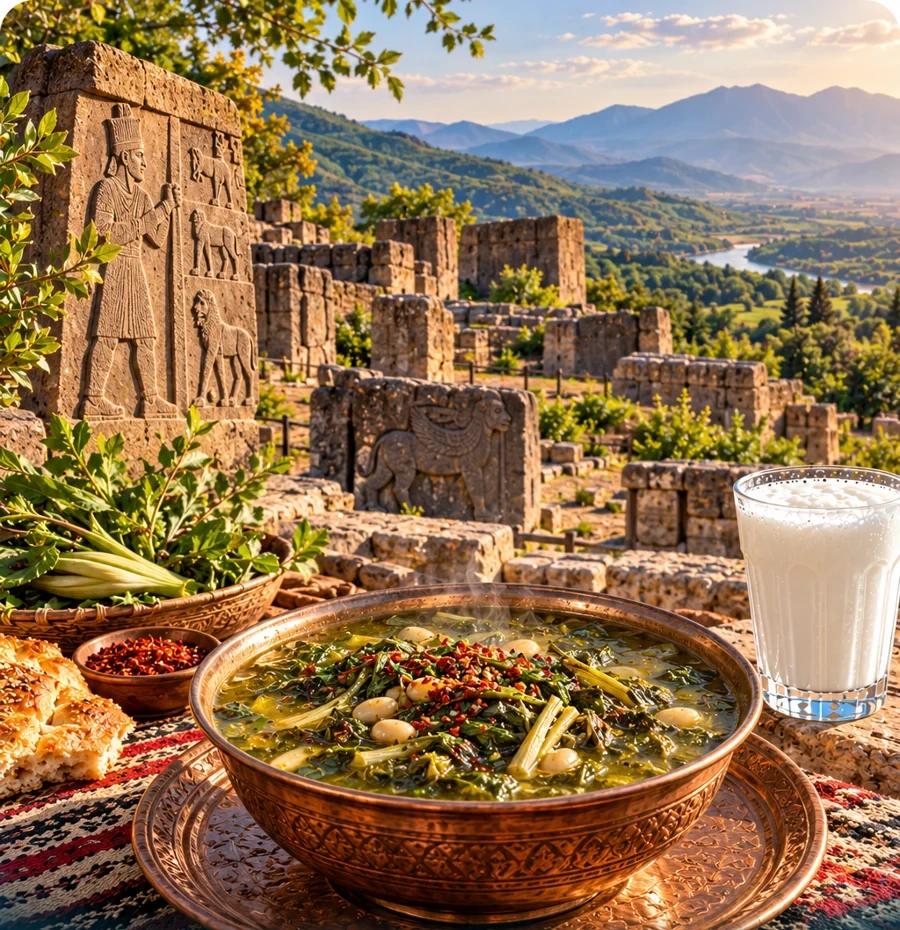
Peanut fields, olive groves and sesame-topped kömbe.
Distinguish sweet festival kömbe from savory meat pastry, then explore the pulse and grain pantry.
Spiced sesame holiday cookies
Small round cookies of dough with yogurt, milk and a spice mix including cinnamon, mahlep and mastic, topped with sesame and baked for the Ramadan feast.
Yogurt-filled kömbe
A spiced yogurt dough spread in a round tray and filled with strained yogurt, sugar or grape molasses, butter and starch, then baked and sliced.
Meat-filled pastry
A pastry filled with minced meat, cooked in ash between two iron plates and served with ayran, especially on holidays.
Grilled sucuk in bread
Casing-free rounds of spiced beef sucuk grilled over charcoal and served in bread with tomato and sumac onions.
Lamb with tomatoes and peppers
Lamb cooked with tomatoes, red onion, green and red peppers, garlic and ground red pepper, without oil or paste.
Wild beet soup
A soup of tırşık, a wild beet gathered from November to April, cooked in copper pots over a wood fire.
Thick sesame and molasses simit
Thick rings of dough dipped in molasses water and roasted sesame, eaten with şalgam.
Recipes from this city are coming soon.
Peanuts grown across the province, eaten roasted and made into oil and peanut butter.
Guide not written yetExtra virgin olive oil from Gemlik and Ayvalık olives grown in the province, pressed soon after harvest.
Guide not written yet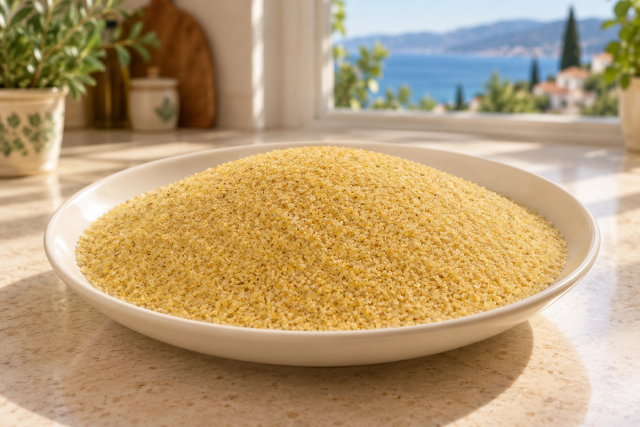
Wheat that is cooked, dried and cracked; fine for patties, coarser for pilaf.
A local wheat whose flour is preferred for yoğurtlu kömbe.
Guide not written yetBayram kömbesi connects sweet baking with festive occasions. Its sesame coating and shaped surface distinguish it visually from etli sac kömbe, a savory meat pastry cooked using metal plates. The Ministry of Culture’s local cuisine account places bulgur preparations, soups, sarma and sweets together. Peanuts add an agricultural association documented separately in the ministry’s product record; they are not a substitute name for pistachios.
Spiced, sesame-topped bayram kömbesi is baked for the Ramadan feast.
In Kadirli, grilled sucuk is served in bread dipped in the grill fat after weddings and on religious holidays.
Karatepe, east of Kadirli, is a revealing place to begin exploring Osmaniye’s ancient past, because it shows how much the region’s history turned on frontiers and routes. In the Late Hittite period it served as a frontier castle of Adanava, a city state, and its construction was ordered in the eighth century BCE by Azatiwada, the region’s sovereign, to defend against attacks from the north. Its bilingual inscriptions, written in the Phoenician alphabet and Luwian hieroglyphics, played a very important role in deciphering the Luwian language. The site lies within the national park bearing the same name, surrounded by natural scenery and the Aslantaş Dam.
Kastabala, known in antiquity as Hierapolis, was an important religious center in Roman and Byzantine times. Earthquakes caused it heavy damage, and after the Crusades it lost its importance as a settlement. In the center of Kadirli, Ala Cami was built as a Roman temple, converted into a church in the fifth century and has been used as a mosque since the Beylik of Dulkadir. Toprakkale Castle, built on a man-made hill at the junction of the Osmaniye-Adana and Hatay roads, recalls the province’s place on regional routes.


