


Ordu pancar çorbası
Kale, bean and corn soup
Finely shredded karalahana cooked with onion, beans and corn, thickened with corn flour and eaten hot with corn bread.
Black Sea Region
In Ordu, karalahana, a dark leafy kale known locally as pancar, is the base of Ordu pancar çorbası. Cooked with onion, beans and corn kernels and thickened with corn flour, this soup is eaten hot with corn bread. Next comes Ordu pidesi, a semi-open pide from a wood-fired stone oven, filled with minced meat, cheese or diced meat and brushed with butter. Ordu tostu goes its own way, with a thin layer of sucuk paste spread between two slices of bread. The young shoots of melocan, a wild climbing plant, are fried with onion, sometimes with an egg on top. When it is time for dessert, the hazelnut takes the stage. Fındıklı burma, thin dough rolled around chopped hazelnuts, baked with butter and soaked in syrup, is made for iftar, holidays and weddings. In the pantry waits taflan turşusu, cherry laurel fruit pickled in water and coarse salt without additives. Follow this table from a bowl of kale soup to hazelnut burma, and on to the sour bite of taflan.
Last updated:
Hazelnut slopes, kale soup and corn bread.
Explore the coast and inland pantry together, from a cornmeal loaf to hazelnut sweets.
Kale, bean and corn soup
Finely shredded karalahana cooked with onion, beans and corn, thickened with corn flour and eaten hot with corn bread.
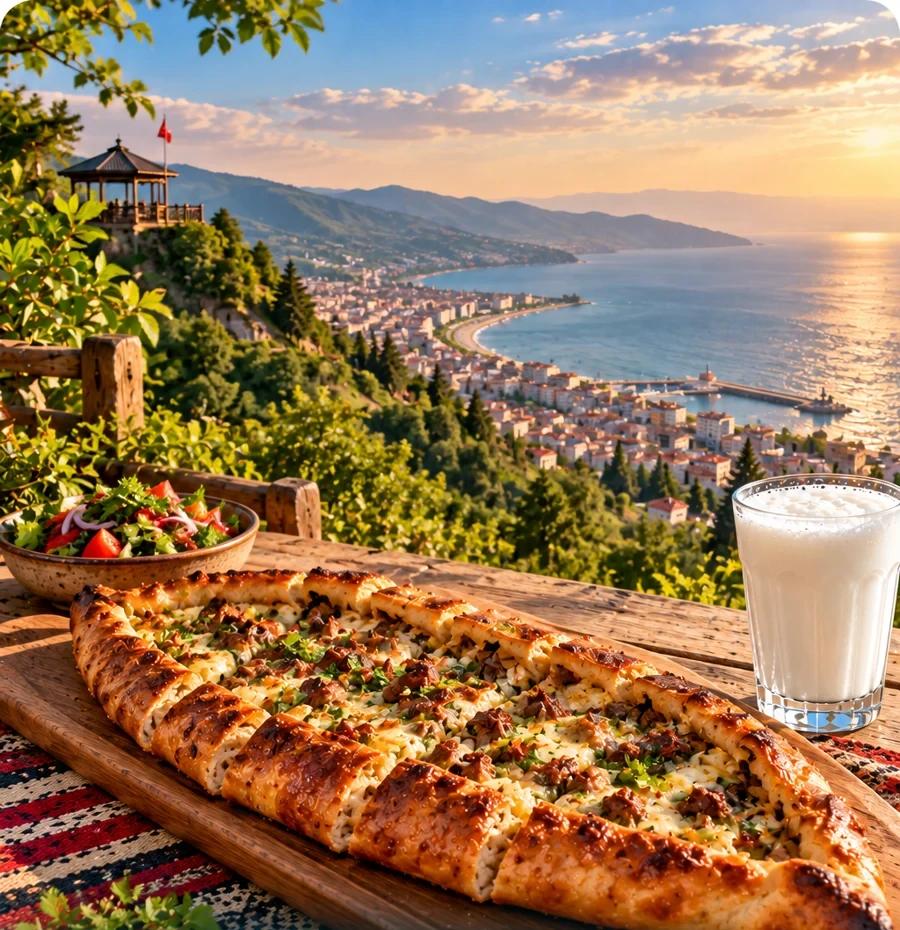
Semi-open filled pide
A semi-open pide filled with minced meat, cheese or diced meat, baked in a wood-fired stone oven and brushed with butter.
Fried beef köfte from Fatsa
Small oval köfte of minced beef and stale bread with spices and garlic, fried and served with an onion and tomato salad.
Toast with sucuk paste
Two slices of bread spread thinly with sucuk paste, buttered on the outside and grilled, with kaşar optional.
Wild shoots fried with onion
Young shoots of the wild climbing plant melocan, boiled, squeezed and fried with onion, sometimes with an egg on top.
Rolled hazelnut pastry in syrup
Thin sheets of dough rolled around chopped hazelnuts, baked with butter and soaked in syrup, made for iftar, holidays and weddings.
Anchovies baked over rice
Cleaned, boned anchovies laid to cover a pan and topped with a spiced rice filling.
Wild mushrooms with onion
Fındık tirmidi, a wild mushroom, squeezed of its water and cooked with onion in oil or butter.
Recipes from this city are coming soon.
Hazelnuts grown across the province, used in sweets such as fındıklı burma and pressed for oil.
Guide not written yetHayward kiwis with juicy, emerald-green flesh, picked by hand and kept in cold stores.
Guide not written yetDark leafy kale, called pancar locally, the base of Ordu’s soups and leaf wraps.
Guide not written yetCherry laurel fruit, known as taflan, pickled in water and coarse salt without additives.
Guide not written yetPaşaoğlu Mansion in Altınordu houses an ethnography museum. Its domestic rooms and furnishings bring household life into the story alongside castles and archaeological sites. Coastal and upland food settings also differ. Corn bread, greens, preserves and nuts connect everyday kitchens with agricultural work, while fish gives the coast another set of ingredients. These are overlapping traditions rather than a single menu followed across the province.
Karalahana, known locally as pancar, goes into a soup thickened with corn flour and eaten with corn bread.
Young melocan shoots are picked from spring and fried with onion, a dish made at spring festivals.
Boztepe is a natural starting point for Ordu. Houses are scattered across the slopes of this hill, one of the province’s old settlements, and from the top the city and the blue of the Black Sea come into view together. Back in the city center, in Taşbaşı, a basilica-like church built entirely of cut stone in the 19th century is now used as a cultural center. On Sıtkıcan Avenue and Menekşe Street in the same neighbourhood, historical houses built in the Ottoman period and since restored reflect features of Armenian, Greek and Ottoman architecture.
Kurul Castle, within the borders of Bayadı village, reaches much further back. Excavations there uncovered temple and castle walls, as well as a marble statue of Cybele dating to the Hellenistic period and found in its original place. In Fatsa district, at Bolaman, the wooden Hazinedaroğlu Mansion was built within the inner castle in the 18th century and is counted among the region’s important examples of civil architecture. Ordu is also one of the regions where the transhumance tradition continues, with plateaus such as Çambaşı carrying it on today.


