


Oltu cağ kebabı
Spit-roasted lamb on skewers
Meat from pasture-raised sheep cooked on a horizontal spit over a wood fire and served on small cağ skewers.
Eastern Anatolia
In Erzurum, tea is sipped through a piece of hard kıtlama sugar that dissolves slowly in the mouth, and that small piece of sugar is a fine place to start getting to know the city's table. For Oltu cağ kebabı, meat from pasture-raised sheep is cooked horizontally over a wood fire and arrives on small cağ skewers. Su böreği hides civil cheese and parsley between layers rich with butter. Civil deserves a stop of its own. Made from skimmed cow's milk, this stringy cheese is pressed into containers with lor and left to mold, and it then becomes what locals call göğermiş. Ayran aşı çorbası, a yogurt soup with boiled wheat and small meatballs, is finished with butter-fried onion and plenty of aşotu, or coriander leaves. Dessert offers two paths. One is kadayıf dolması, walnut-filled and soaked in cold syrup. The other is kaysefe, dried apricots cooked with sugar and butter and often topped with crushed walnuts. From stringy civil to syrup-soaked kadayıf, every plate here sends you after a different technique.
Last updated:
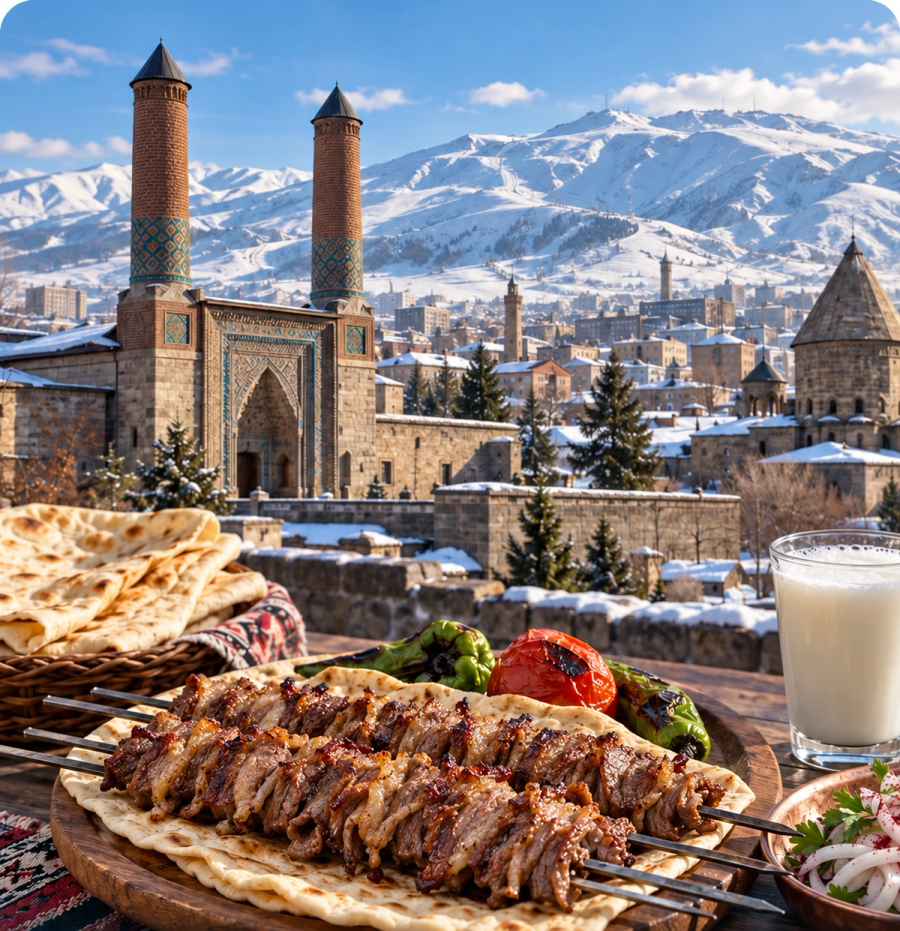
Snowy highlands, a cağ kebabı fire and glasses of tea.
Fine pastry strands, worked meat and stretched cheese make texture a useful route into this cuisine.
Spit-roasted lamb on skewers
Meat from pasture-raised sheep cooked on a horizontal spit over a wood fire and served on small cağ skewers.
Walnut-filled fried kadayıf
Shredded kadayıf wrapped around walnuts, dipped in egg, fried and soaked in cold syrup.
Boiled-pastry börek with cheese
Sheets of egg dough boiled and layered with plenty of butter around civil cheese and parsley, then browned.
Buttery pastry with roasted flour
Yeasted pastry brushed with butter, filled with flour roasted in butter and baked.
Boiled dough with yogurt and meat
Triangles of egg dough boiled and served with garlic yogurt, minced meat sauce and pepper butter.
Yogurt soup with tiny meatballs
Yogurt soup with boiled wheat and small meatballs, finished with butter-fried onion and plenty of aşotu.
Fried batter shapes in syrup
Batter fried on shaped irons, soaked in syrup and topped with crushed walnuts.
Stuffed meat and bulgur köfte
Round, slightly flattened köfte of twice-ground meat, bulgur and egg, filled with rice, dried fruit or mince.
Triangular meat dumplings
Squares of dough filled with minced meat and onion, folded into triangles, boiled and served with yogurt or butter sauce.
Dried apricots in butter
Dried apricots cooked with sugar and butter, often finished with crushed walnuts.
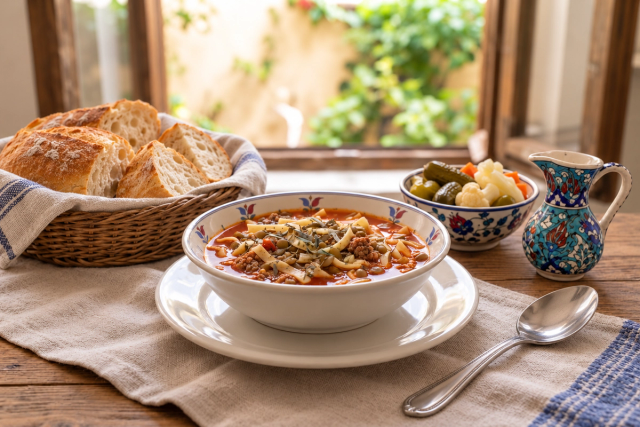
An Erzurum household soup of whole green lentils, hand-cut egg noodles and small beef meatballs, finished with onion and tarragon butter.
A low-fat cheese from skimmed cow’s milk that forms strings as it is made.
Guide not written yetCivil and lor cheese pressed into containers and left to mold; known locally as göğermiş.
Guide not written yetMulberry molasses from Karnavas.
Guide not written yetDried beans grown around İspir.
Guide not written yetFresh or salted coriander leaves used in soups, dishes and salads.
Guide not written yetButter from the cream of cows grazing high pastures.
Guide not written yetOltu stone is worked into beads, jewellery and other small objects. Ministry accounts connect the craft with Oltu and Olur and describe the material’s role in local making and trade. The craft can be appreciated without attaching medical properties to the stone. Tea offers another everyday cultural connection. Kıtlama refers to drinking tea while holding a piece of sugar in the mouth, a practice described in the regional food guide rather than a rule followed by everyone.
Tea is sipped through a piece of hard, slow-dissolving kıtlama sugar.
Civil cheese fills su böreği and, pressed with lor, ripens into göğermiş.
Erzurum’s historical identity is closely tied to its place on the historic Silk Road. Buildings from the Seljuk and Ottoman periods make that past easy to follow through the city. The Twin Minaret Madrasa, a Seljuk monument that became the symbol of Erzurum, is usually dated to the late 13th century. The Yakutiye Madrasa was built by Hoca Yakut Gazani during the reign of Sultan Olcayto, ruler of the İlhanlı. Taşhan, a caravanserai built in the 16th century during the Ottoman era, stood at the heart of the city’s commercial life. For centuries it hosted merchants, travellers and caravans.
Palandöken Mountain rises south of Erzurum. The Uzundere district offers a different kind of history and landscape. According to its inscription, Öşvank Monastery in Çamlıyamaç village was built in the 10th century, during the rule of the Bagratid dynasty of Georgia. A landslide on Kemerli Mountain blocked the flow of Tortum Creek and formed Lake Tortum. Where the lake overflows the landslide mass in the Tev Valley, it creates Tortum Waterfall.


