


Kaz eti ve bulgur pilavı
Goose with bulgur pilaf
Salted, air-dried goose cooked slowly and served with bulgur pilaf cooked in its fat, a winter dish.
Eastern Anatolia
The Kars table can be read through goose, dough and cheese. The story begins with the first snows. That is when native geese are slaughtered, then salted and air-dried in the open, and later cooked slowly. The meat reaches the table as a winter dish, served with bulgur pilaf cooked in the goose’s own fat. Follow the dough and other plates open up. Hengel pairs boiled squares of dough with garlic yogurt and onions fried in butter. Kars ketesi hides a roasted flour filling that may be salty, sweet or gingery. For piti, bone-in lamb and chickpeas cook slowly. The broth is eaten over bread first, and the meat follows. Beside these dishes stands Kars kaşarı, made from the milk of herds grazing the high plateaus. There are also large wheels of gravyer from villages such as Boğatepe. To know Kars, move from goose pilaf to the three fillings of kete, and on to the gravyer of Boğatepe.
Last updated:
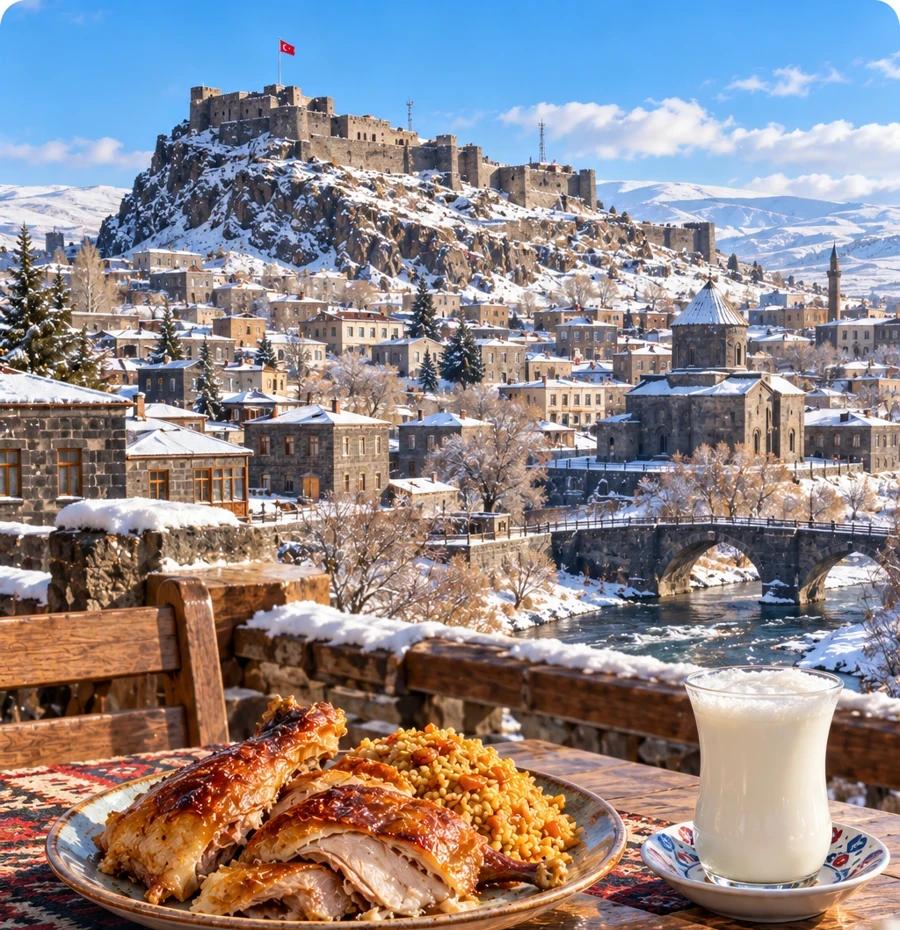
Snowy uplands, cheese cellars and a winter table of goose.
Compare distinct cheese forms before exploring honey, fruit and meat associations.
Goose with bulgur pilaf
Salted, air-dried goose cooked slowly and served with bulgur pilaf cooked in its fat, a winter dish.
Noodles with lentils and potatoes
Dried egg noodles and green lentils steamed over fried potato slices, then turned out with the potatoes on top.
Filled flaky bread
Yeasted milk dough rolled thin, brushed with oil and ghee, wrapped around a roasted flour filling and baked; the filling is salty, sweet or gingery.
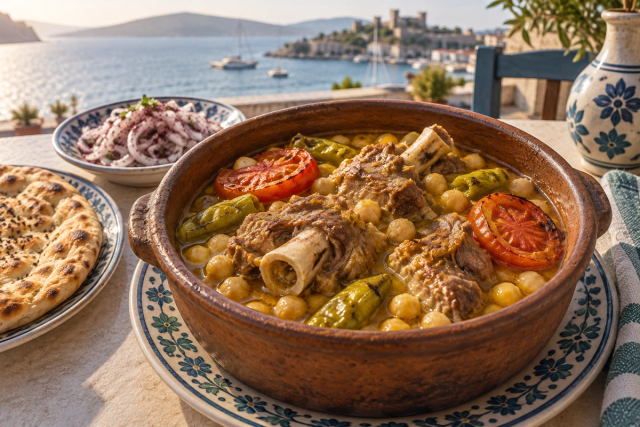
Lamb and chickpeas in turmeric broth, finished with tomato and green pepper in an earthenware casserole. This home adaptation follows the Kars lamb-and-chickpea preparation. It is distinct from other regional dishes also called piti. Use oven-safe cookware and protect the table from the hot casserole.
Plain dumplings with yogurt
Squares of thin dough boiled and served with garlic yogurt and onions fried in butter.
Dock leaf soup
A thick soup of dried evelik (dock) leaves with green lentils and bulgur.
Toasted flour-crumb helva
Flour rubbed with water into small crumbs and roasted slowly in butter.
A kaşar cheese made from the milk of herds grazing the high plateaus of Kars.
Guide not written yetLarge wheels of gravyer cheese, made in villages such as Boğatepe.
Guide not written yetFlower honey from the high plateaus of Kars.
Guide not written yetNative geese slaughtered with the first snows, then salted and air-dried in the open.
Guide not written yetA long, cylindrical winter apple picked in early October.
Guide not written yetA stringy cheese that pulls apart into fibers.
Guide not written yetCheese making offers a different route into provincial culture. Boğatepe’s cheese museum connects the finished products with knowledge and work in a village setting. It should not be used to invent a single starting date for all cheese production in Kars. Ani and the modern dairy landscape belong to different historical contexts. Bringing them into one guide is useful, but an ancient monument does not demonstrate an ancient origin for a present-day cheese.
Kaşar, gravyer and çeçil are made from the milk of herds on the high plateau.
Geese raised on summer pastures are salted and air-dried with the first snows.
The story of Kars begins at the foot of its basalt castle, built in the 12th century by order of Melik İzzeddin, a Saltuqid sultan connected to the Seljuks. South of the castle, in the Kale İçi neighbourhood, Kümbet Mosque originally served as one of the city’s Armenian churches of the Bagratid period and was converted into a mosque in the 11th century. The years of Russian rule left their own mark on the city: the settlements established in that era, covering today’s Yusufpaşa, Ortakapı and Cumhuriyet districts, stand out for their grid plan.
Ani lies outside the city, on a secluded triangular plateau overlooking a ravine that forms the natural border with Armenia. It flourished in the 10th and 11th centuries as a capital of the medieval Armenian kingdom of the Bagratids, profiting from control over one branch of the Silk Roads. Under later Byzantine, Seljuk and Georgian sovereignty it remained an important crossroads for merchant caravans. The Mongol invasion, a devastating earthquake in 1319 and a change in trade routes marked the beginning of its decline.


