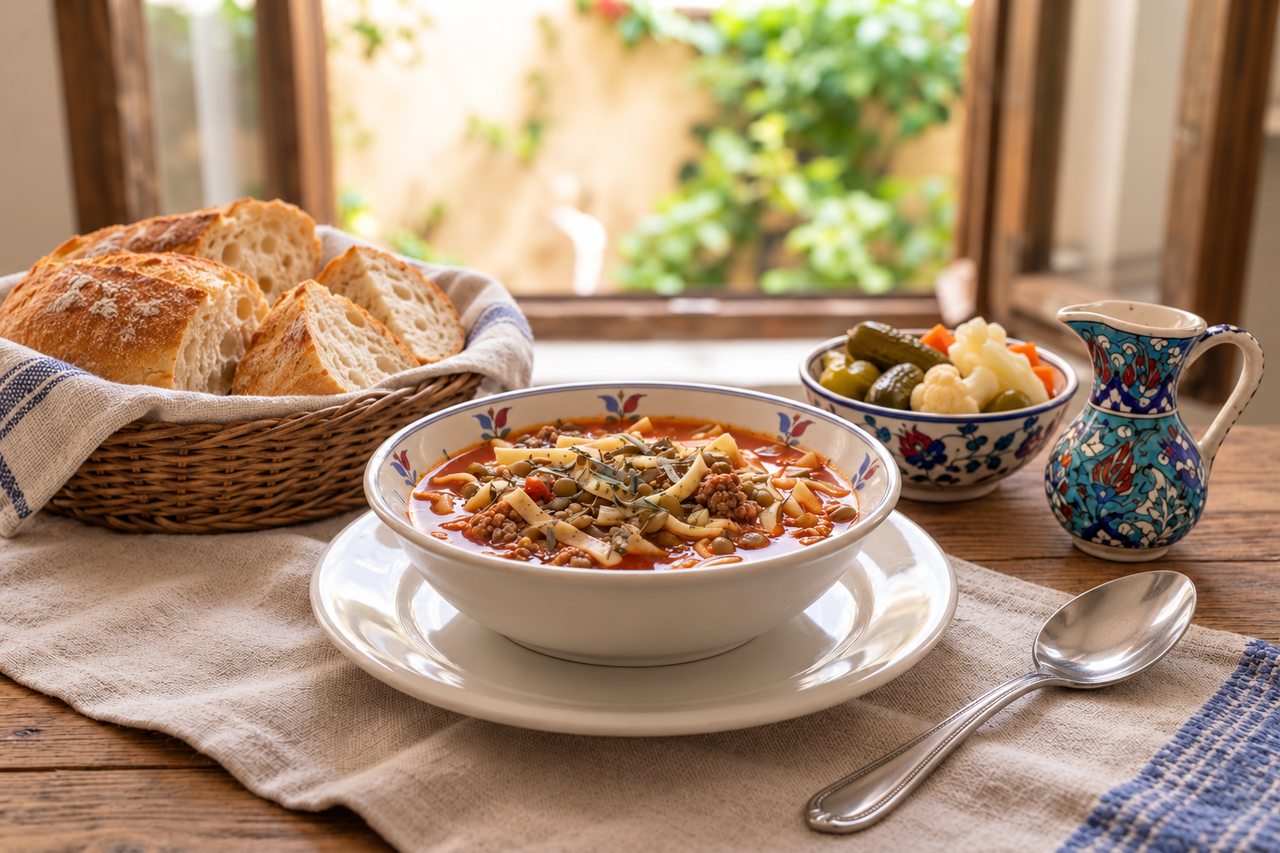
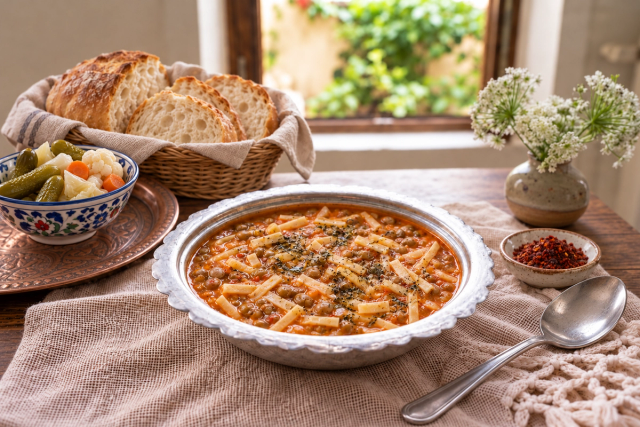
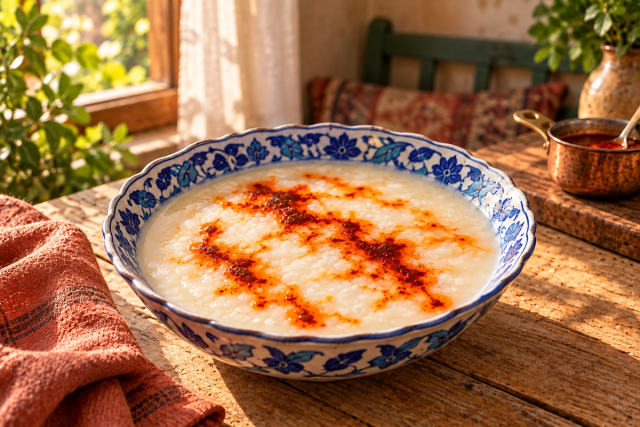
Rinse the lentils and soak in water for 30 minutes, then drain. Add fresh water and simmer until tender. While they cook, prepare the dough.
Combine the egg, dough water and dough salt, adding flour gradually until you have a firm dough. Keep some flour for rolling. On a floured surface, roll the dough with a rolling pin into a sheet as thick as the back of a knife blade, on the thicker side. Flour it well, fold or roll it up loosely and slice into narrow noodles. Spread on a floured tray.
Knead the ground beef lightly with its table salt. Shape into small, hazelnut-sized meatballs.
Add the measured hot soup water and soup salt to the lentil pot and bring to a boil. Add the noodles and meatballs and simmer until the noodles are tender and the meatballs are cooked through. Loosen with hot water if the soup is too thick.
Meanwhile, cook the chopped onions in the butter until golden. Add the dried tarragon and warm briefly. Stir in the paprika, remove from the heat and spoon over the soup. Serve hot.
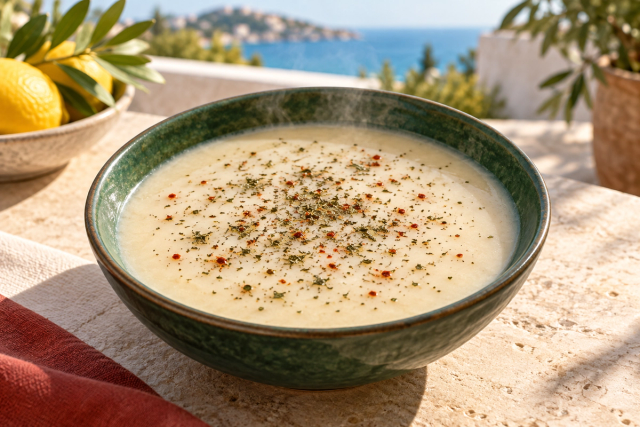
Slow-simmered beef-bone broth made silky with yogurt, egg yolk and lemon, with garlic and a light dried-mint finish. This terbiyeli version turns homemade beef-bone broth into a smooth, lightly tangy soup. A terbiye is the whisked yogurt, egg-yolk and lemon mixture added gradually to the hot broth; a little flour helps it hold together.
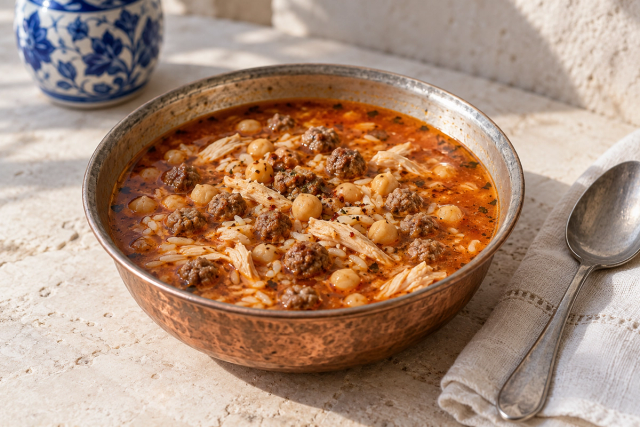
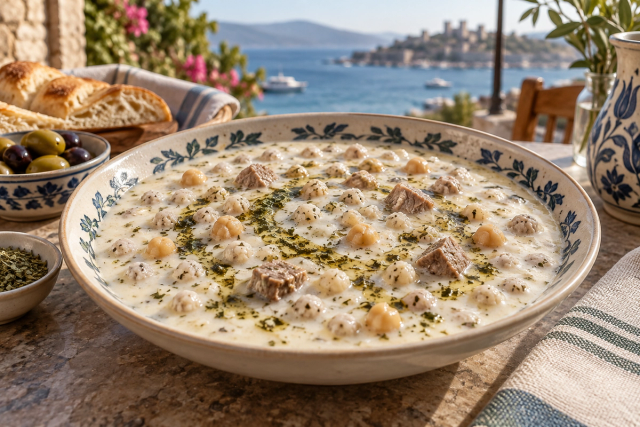
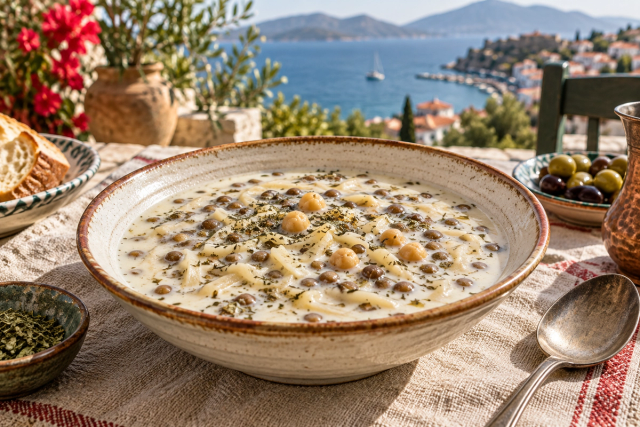
Tiny rice-and-lamb balls, chickpeas and tender lamb in a yogurt broth finished with mint butter. Gaziantep yuvalama is a substantial celebratory dish, often described locally as a meal rather than an everyday soup. This home adaptation uses rice flour for the small balls; traditional preparations may grind soaked rice with meat.
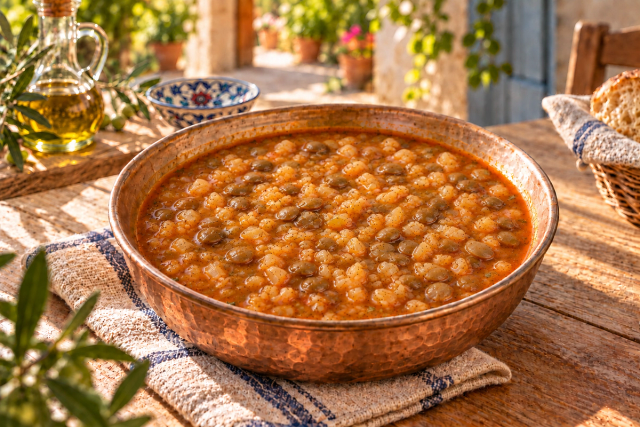
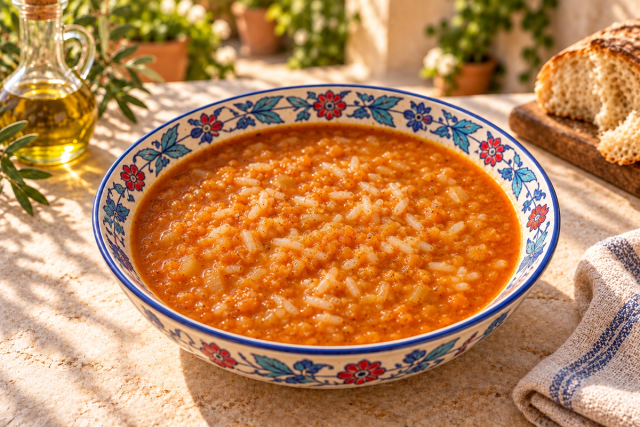
An Afyon soup of whole green lentils and thin dried erişte noodles, with onion, tomato paste and flour. A little mint butter can be spooned over each bowl.
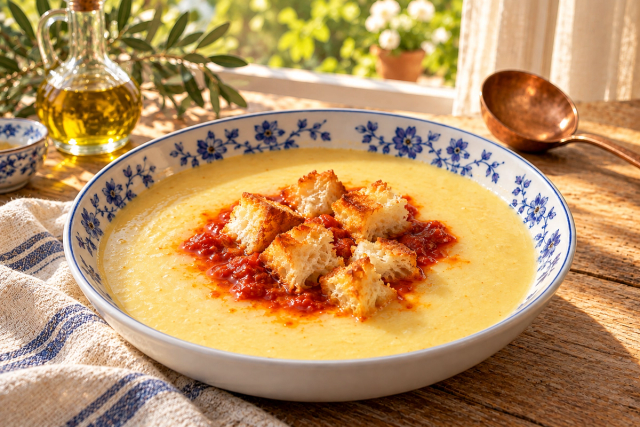
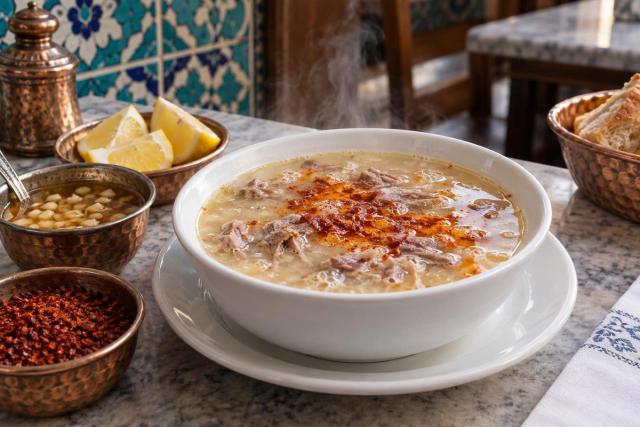
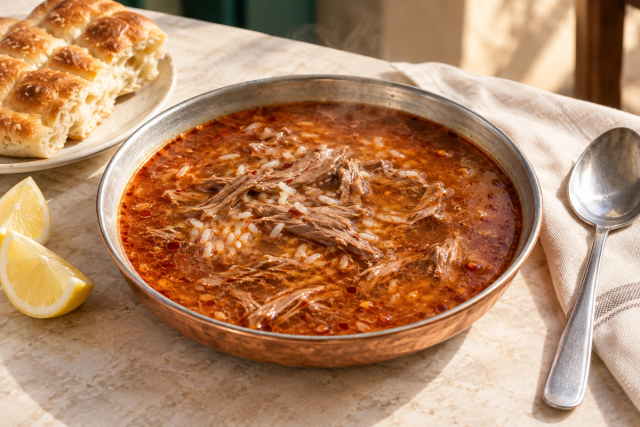
Shredded lamb and rice in a hot garlic-and-red-pepper broth inspired by Gaziantep’s cuisine. The home method uses a regular saucepan and avoids the dramatic flame of specialist beyran service. Longer professional cooking and individual copper-pan assembly give a different result.