


Malay
Corn flour dough with toppings
Corn and wheat flour cooked in salted water, shaped with spoons and topped with fried cream, fried keş or walnuts roasted in butter.
Black Sea Region
A good way into Zonguldak’s food is through a dough linked with the tables of the province’s miners. Malay, made from corn and wheat flour and shaped with two spoons, comes topped with fried cream, fried keş or walnuts roasted in butter. In April and May, the leaves and flowers of wild zılbıt are cooked with minced beef or pastırma and finished with eggs and red pepper flakes. Mancar sarması pairs rolled kale leaves with a tomato paste sauce. On the sweet side is Devrek beyaz baklavası, which takes its name from its color: thin sheets layered with crushed Devrek walnuts stay pale because the baklava is baked without browning before the syrup goes on. Two fruits stand out. One is the Ereğli Osmanlı çileği, a small, sweet, fragrant strawberry with pink-to-cream skin and white flesh, picked by hand from May. The other is sour Devrek kireni, made into syrups, marmalades and jams. Let the curiosity that starts with a plate of malay lead you on to Devrek’s walnuts and kiren and to Ereğli’s strawberries.
Last updated:
Green hills dropping to the western Black Sea coast.
Explore leaf rolls and cornmeal dishes alongside the province’s better-known sweet foods.
Corn flour dough with toppings
Corn and wheat flour cooked in salted water, shaped with spoons and topped with fried cream, fried keş or walnuts roasted in butter.
Wild greens with meat and egg
Leaves and flowers of wild zılbıt cooked with onion, garlic and minced beef or pastırma, finished with eggs and red pepper flakes.
Pale walnut baklava
Thin sheets layered with crushed walnuts, cut into diamonds, doused with hot clarified butter, baked without browning and finished with syrup.
Flour, milk and water soup
Soup of flour, water and milk, often finished with mint.
Corn flour soup
Corn flour soup, sometimes made with pastırma, minced meat or sucuk.
Kale rolls in tomato sauce
Kale leaves rolled around a filling and topped with a tomato paste sauce.
Closed minced-meat pide
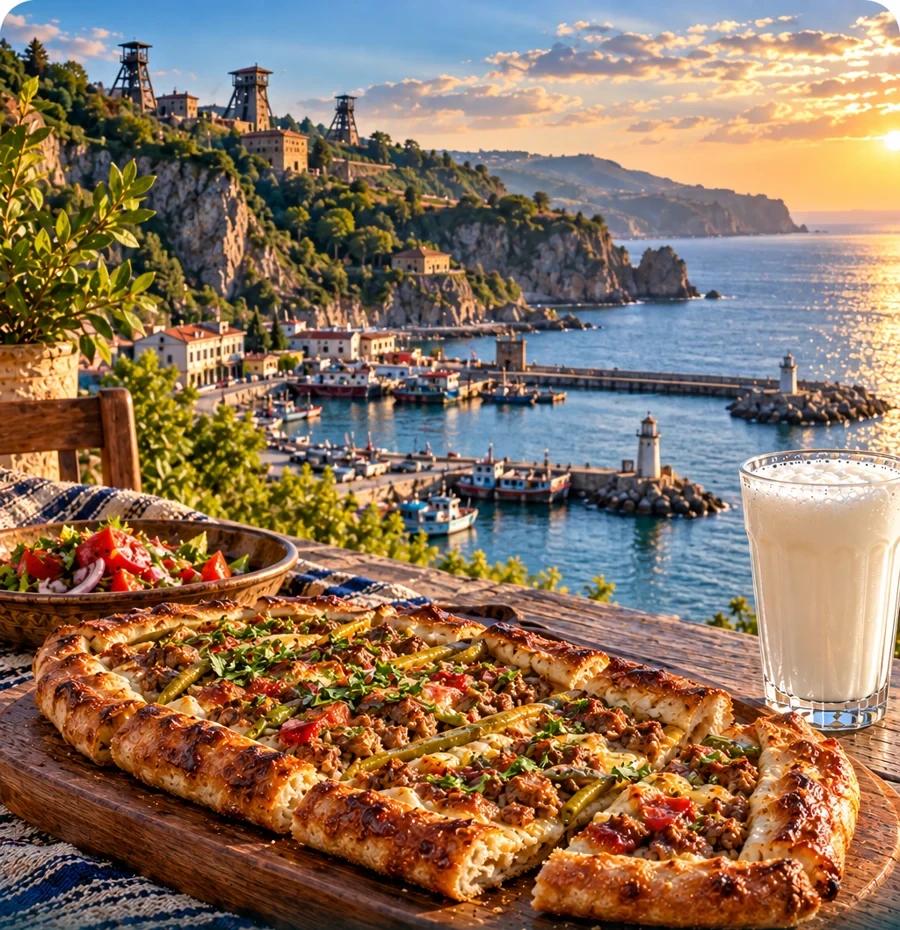
A closed pide from Karadeniz Ereğli with a generous spiced minced-meat filling, served with ayran.
Recipes from this city are coming soon.
Small, sweet, fragrant strawberry with pink-to-cream skin and white flesh, picked by hand from May.
Guide not written yetSour red fruit similar to cornelian cherry, used for syrups, marmalades and jams.
Guide not written yetWalnuts from around Devrek, used in Devrek beyaz baklavası.
Guide not written yetWild herb (Trachystemon orientalis) picked in April and May; its leaves and flowers are cooked, frozen or brined.
Guide not written yetIndustrial heritage belongs alongside domestic and maritime history in an account of Zonguldak. The provincial culture directorate documents the Mining Museum’s role in interpreting coal and its place in the city. Ereğli’s ethnographic collections add household objects and regional practices. Food provides another connection with everyday life: greens, cornmeal and fruit sit beside the public stories told through mines and ships.
Malay, a corn flour dough with savory or walnut toppings, is linked with the tables of Zonguldak’s miners.
Wild zılbıt leaves and flowers picked in spring are cooked with meat and eggs.
Zonguldak’s modern story was shaped by the coal beneath its ground, and mining in the area began in the 1880s. On the Zonguldak–Kozlu highway, the Uzun Mehmet Monument commemorates the man who first discovered hard coal in the region. The Mining Museum stands very close to the city center, in an area that is used today as a mining training center. Fener Mahallesi, also in the center, was built by the French who lived in the region about a hundred years ago. It is now a protected urban site.
Karadeniz Ereğli has a story of its own. Its museum occupies the Halil Paşa Mansion, built in the late 19th century during the rule of Sultan Abdülhamit II. The mansion was erected on the foundation of an old church and is decorated with spolia collected from Roman-era structures. Ereğli was also the scene of the War of Independence naval battle known as the Alemdar Incident. The Alemdar was rebuilt according to its original design. East of Ereğli, Yassıkaya is home to an Early Bronze Age settlement.


