


Mengen pilavı
Lamb pilaf with mushrooms and walnuts
Rice cooked with lamb, mushrooms, walnuts, tomatoes and dill.
Black Sea Region
Mengen is a good place to start any conversation about Bolu’s food, because this district lends its name to three separate plates. In Mengen pilavı, rice meets lamb, mushrooms, walnuts, tomatoes and dill in the same pot. Kaldırık dolması wraps the boiled leaves of kaldırık, also called hodan, around onion, garlic and corn flour. Mengen höşmerimi is a sweet of flour cooked with clotted cream, milk and butter and browned on both sides in a pan, then topped with sugar, honey, molasses or jam. After Mengen, curiosity moves out to the fields. Bolu kara kabağı, a thick-skinned squash with firm flesh, meets sugar inside yeast-free kabaklı gözleme, a flatbread served with sugared browned butter or cream. Small Bolu mountain hazelnuts are eaten as a snack, and in fındık şekeri they are coated in sugar syrup until they become hard sweets. Once you have tasted the plates that carry Mengen’s name, keep exploring Bolu through its black squash and its mountain hazelnuts, from a gözleme to a handful of fındık şekeri.
Last updated:
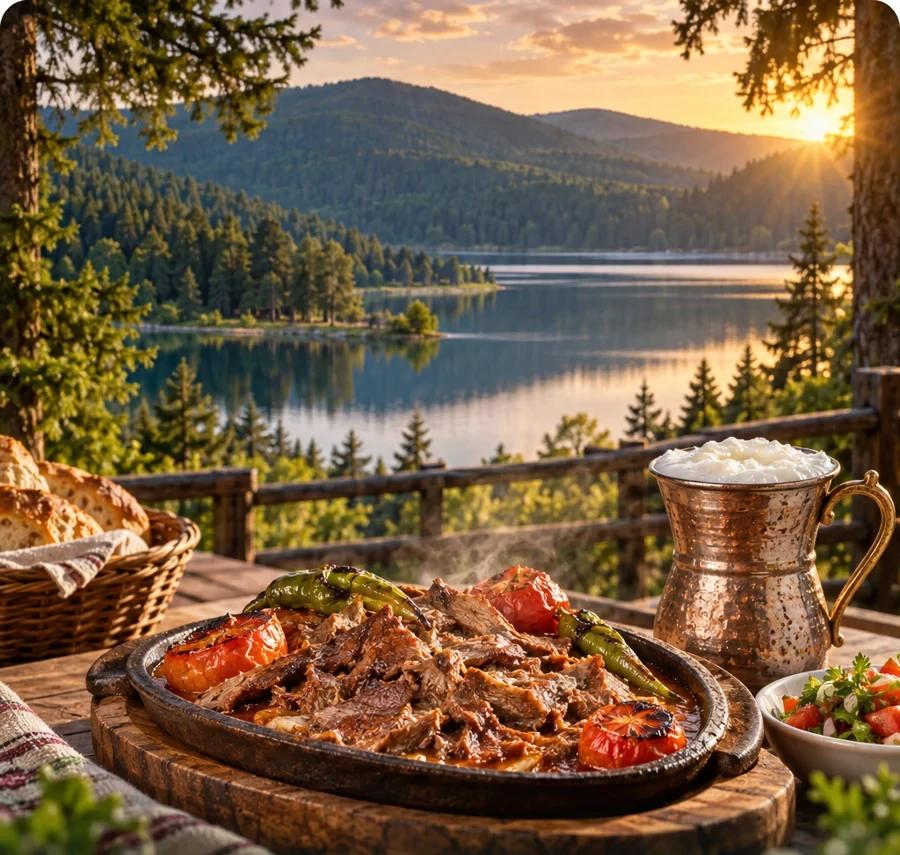
Wooded mountains, Abant lake and a table of pilaf and gözleme.
Mengen pilavı brings rice, meat, mushrooms and walnuts together. It is one starting point for a province whose food story also includes soups, breads and skilled cooks.
Lamb pilaf with mushrooms and walnuts
Rice cooked with lamb, mushrooms, walnuts, tomatoes and dill.
Stuffed grilled eggplant
Grilled eggplant filled with lamb, mushrooms, tomato, onion and pepper, roasted and topped with grated cheese.
Chickpea and dough-crumb soup
A winter soup of chickpeas, rubbed dough pieces or pasta, tomato paste and onion, sometimes with egg.
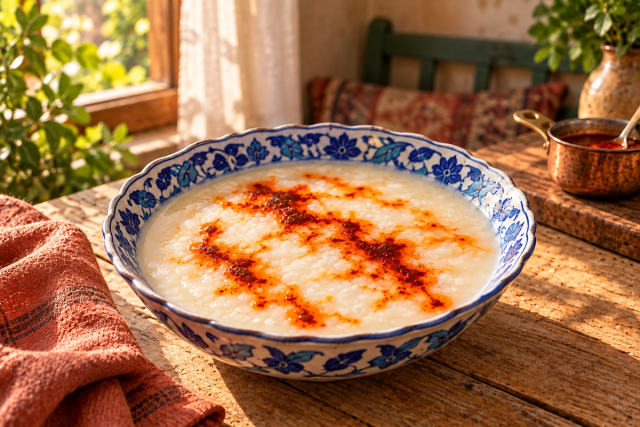
Rice simmered in milk, thickened with an egg-yolk mixture and finished with red-pepper butter.
Wild-leaf rolls with cornmeal
Boiled kaldırık (hodan) leaves wrapped around onion, garlic and corn flour.
Sweet squash flatbread
Yeast-free flatbread filled with roasted grated black squash and sugar, served with sugared browned butter or cream.
Squash yufka in milk syrup
Thin dough sheets layered with a squash and onion filling, baked on a clay griddle, soaked in sweet milk syrup and rolled.
Pan-fried cream dough
Flour cooked with clotted cream, milk and butter, browned on both sides in a pan and topped with sugar, honey, molasses or jam.
Sugar-coated hazelnuts
Small hazelnut kernels coated in sugar syrup into hard sweets.
Small mountain hazelnuts eaten as a snack and used in hazelnut sugar and chocolate.
Guide not written yetStrained yogurt pressed, salted and air-dried into a firm curd.
Guide not written yetClotted cream from the milk of water buffalo raised in Bolu, eaten at breakfast and in desserts.
Guide not written yetOrange wild mushrooms gathered under fir trees after autumn rain.
Guide not written yetYellow-fleshed potatoes from the Bolu plain that hold their shape when cooked.
Guide not written yetA thick-skinned, firm squash grown in Bolu’s fields and used in gözleme.
Guide not written yetMengen’s professional cooking tradition is central to Bolu’s culinary identity. The governorate describes cooking as an inherited occupation and records the opening of a vocational cookery school in 1985. Training and the movement of cooks into hospitality kitchens help explain why a district’s name travels well beyond its own table. The same account describes spacious household kitchens used for both cooking and gathering, and village bread ovens built from brick and earth. These are documented local practices, not a description of every present-day Bolu home.
Mengen gives its name to a lamb pilaf, kaldırık dolma and höşmerim.
Black squash and buffalo cream go into gözleme, yufka desserts and breakfast.
In Bolu, nature and history often share the same view. Lake Abant was formed by a landslide and is surrounded by fir and pine trees. In Seven Lakes National Park, seven lakes lie along a line running from north to south. Inside the park, ruins dating to the New Byzantine Period in the village of Köyyeri indicate that this wooded area was also a settlement in antiquity.
The province’s Ottoman heritage is easiest to follow in its district towns. Göynük is a typical Ottoman town, built in valleys and at the foot of high hills. Its advantageous location between Anatolia and Istanbul, together with the saffron trade of the 14th century, helped it develop economically. In the courtyard of the mosque built by Gazi Süleyman Paşa, son of Orhan Gazi, stands the tomb of Akşemseddin. Akşemseddin had been the tutor of Fatih Sultan Mehmet, and Fatih himself had the tomb built. Mudurnu, by contrast, is known for the Ahi tradition it has preserved for centuries. The Yıldırım Bayezit Mosque in the town center is an important work of early Ottoman architecture.


