


Bartın pirinçli mantısı
Rice and meat mantı
Squares of thin dough wrapped around minced meat and rice, browned in a tray, cooked in stock and finished with melted butter.
Black Sea Region
Bartın’s table begins with savory plates but saves the final word for its sweets. First comes pirinçli mantı, thin dough wrapped around minced meat and rice, browned in a tray, cooked in stock and finished with melted butter. In Amasra, fish meals open with Amasra salatası, a plate of many vegetables and herbs dressed with olive oil, vinegar and pomegranate syrup, and turbot is eaten in season, especially in Amasra. Then the sweets begin to arrive. Beyaz baklava, filled with walnuts and starch, is baked slowly so it stays pale before meeting cold syrup; it is a wedding sweet. Ağda tatlısı owes its white color and paste-like body to çöven root. İncir donduması brings softened dried figs together with warm buffalo or cow’s milk. Stretching from a tray of mantı to a sweet of figs and milk, this table is a good place to start getting to know Bartın through its sweets. Follow the line from çöven-white ağda all the way to incir donduması.
Last updated:
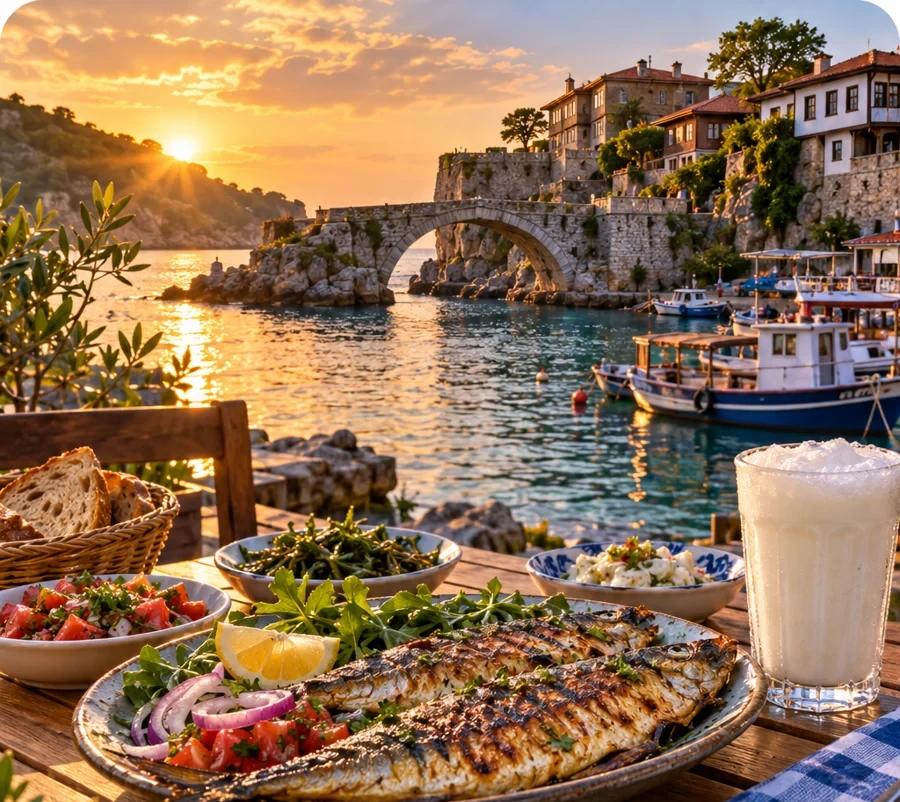
Amasra’s harbour and a table of fish, salad and sweets.
Explore a colorful coastal salad, a warming grain-based soup and a market tradition shaped by local produce.
Rice and meat mantı
Squares of thin dough wrapped around minced meat and rice, browned in a tray, cooked in stock and finished with melted butter.
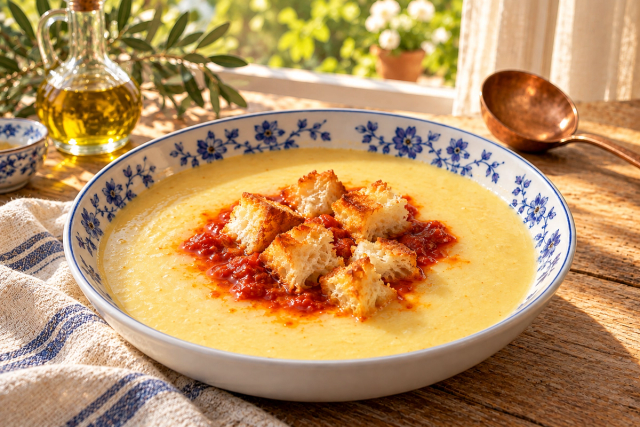
A smooth cornmeal and milk soup served with tomato-paste sauce and butter-toasted bread cubes.
Isput greens with eggs
Isput greens boiled, squeezed and sautéed with onion, then cooked with eggs.
Many-vegetable salad
A salad of many chopped vegetables and herbs dressed with olive oil, vinegar and pomegranate syrup, served before fish.
Basil-milk gözleme
Plain gözleme cooked on a stone griddle over a wood fire, then moistened with milk boiled with basil, oil and black pepper.
Coiled squash pastry
Yufka spread with grated squash, crushed walnuts and sugar, twisted into rolls, coiled in a tray, baked and soaked in syrup.
Pale walnut baklava
Walnut and starch baklava baked slowly so it stays pale, then soaked in cold syrup; a wedding sweet.
Çöven root sweet
A white, paste-like sweet made from çöven root, sugar, citric acid and water.
Set fig and milk dessert
Dried figs softened and mashed with warm buffalo or cow’s milk, left to set and chilled.
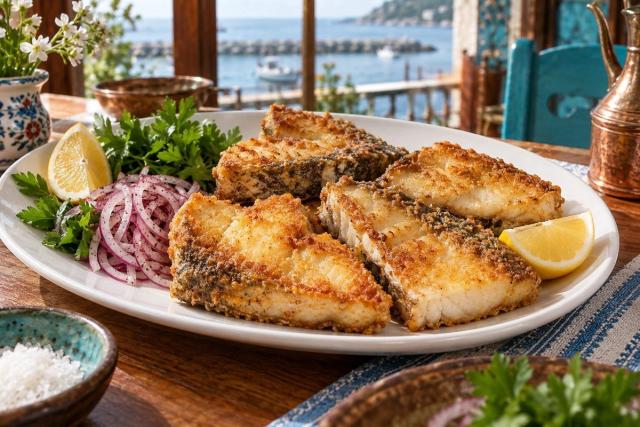
Lightly floured turbot steaks fried until golden, with sumac onions and lemon.
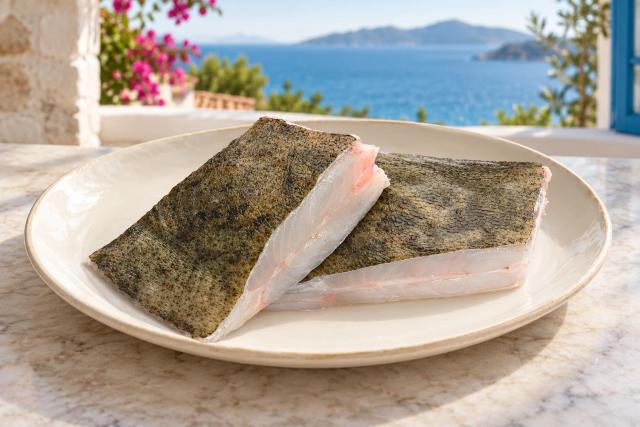
Raw European turbot cut into bone-in steaks for frying.
A leafy green cooked with eggs in yumurtalı ısput.
Guide not written yetThe root that gives ağda tatlısı its white color and paste-like body.
Guide not written yetTel kırma uses fine metal thread worked into fabric with a specialized needle. The provincial culture directorate documents its motifs and uses in shawls and household textiles. The name refers to breaking the wire during the work rather than cutting it with scissors. Amasra also has a wood-carving tradition, including small serving and household objects. These crafts place materials and makers alongside food, giving the guide a broader view of daily culture.
White baklava, squash burma, ağda and fig donduma all carry Bartın’s name.
In Amasra, fish meals open with a salad of many chopped vegetables and herbs.
In Bartın, history shows first in the façades of its wooden houses. These examples of Ottoman-period civic architecture stand in gardens enclosed by tree fences known as “Daraba”, and the Art Nouveau and Baroque patterns on their fronts reflect the woodworking art of the region.
On the coast, Amasra tells a story bound up with the sea. Named after Queen Amastris, the town has a castle built in the Byzantine period and seriously repaired under the Genoese and the Ottomans. It consists of two main parts, Sormagir Castle on Boztepe and Zindan Castle, joined by the single-arched Kemere Bridge, which also dates from the Byzantine period. The Genoese who ruled Amasra, then called Samastro, appointed consuls from Genoa, and emblems from that era appear on the castle walls. When Sultan Mehmet the Conqueror took the town in 1460, an old Byzantine church within the castle was converted into a mosque.


