


Van kahvaltısı
Spread of local breakfast foods
A breakfast spread of Van otlu peyniri, murtuğa, kavut, kaymak, butter, honey, rose jam, cacık and eggs.
Eastern Anatolia
In Van, breakfast becomes a spread that carries the city’s name. A Van breakfast brings together herb cheese, murtuğa, kavut, kaymak, butter, honey, rose jam, cacık and eggs. Murtuğa, where butter, flour and eggs meet over high heat, sits beside kavut, made from wheat roasted in butter and then ground. Van otlu peyniri, a semi-hard cheese made mainly from sheep’s milk with wild herbs such as sirmo and thyme, ripens underground in pots. Rose jam, made by cooking rose petals slowly with sugar, is usually prepared in autumn. Beyond breakfast, keledoş is waiting: lamb, chickpeas, lentils and wheat cooked with kurut and the wild herb akpancar, then finished with a butter sauce. If your route takes you to Lake Van, look for its pearl mullet, coated in batter, hung by the tail and baked in the tandır. In a kitchen where the cheese ripens in the earth and the fish comes from the lake, every plate invites you to trace where its ingredients come from.
Last updated:
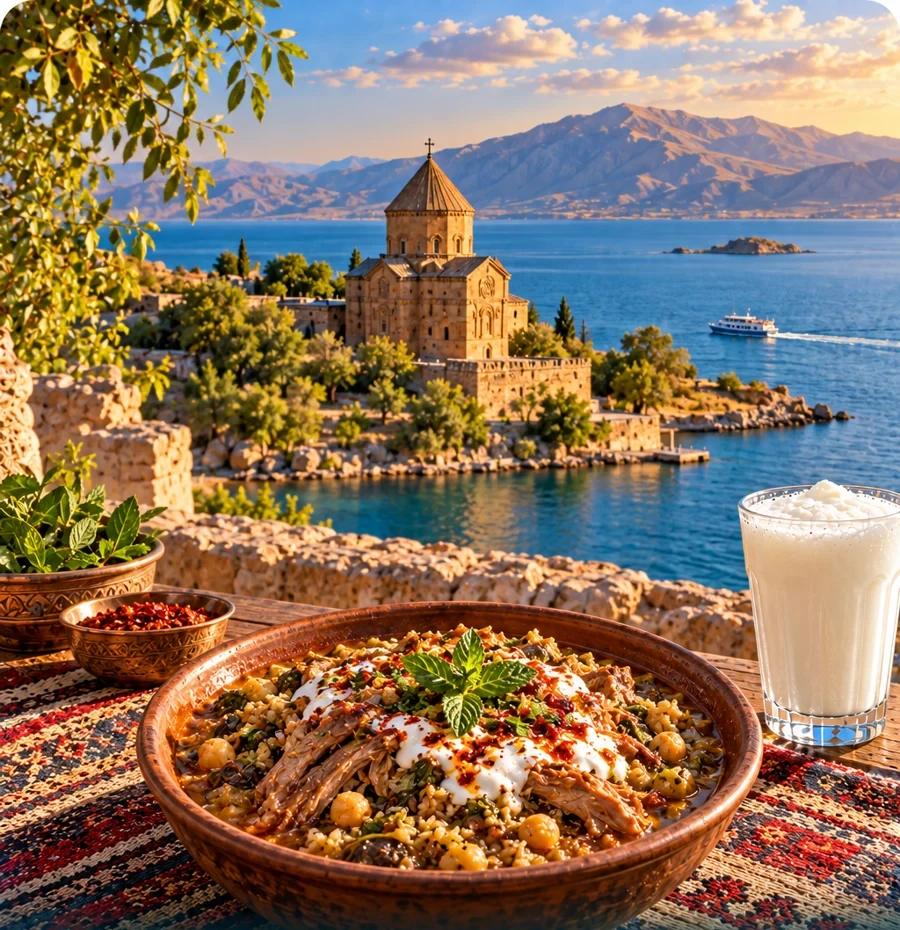
Lake Van with mountains rising behind.
Start with a few breakfast dishes, then follow the city’s connections to dairy, grain cooking and the fish known locally as inci kefali.
Spread of local breakfast foods
A breakfast spread of Van otlu peyniri, murtuğa, kavut, kaymak, butter, honey, rose jam, cacık and eggs.
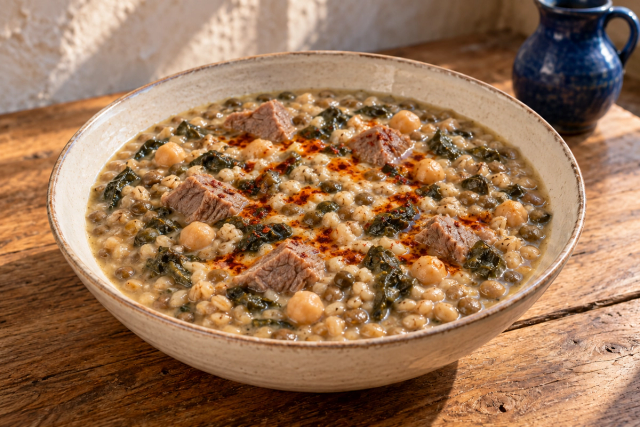
A Van-style pressure-cooker stew of lamb, green lentils, wheat, cooked chickpeas and chard, finished with strained yogurt, garlic and red pepper butter.
Tandır-baked pearl mullet
Pearl mullet salted, drained, coated in a flour and water batter and baked in the tandır, hung by the tail.
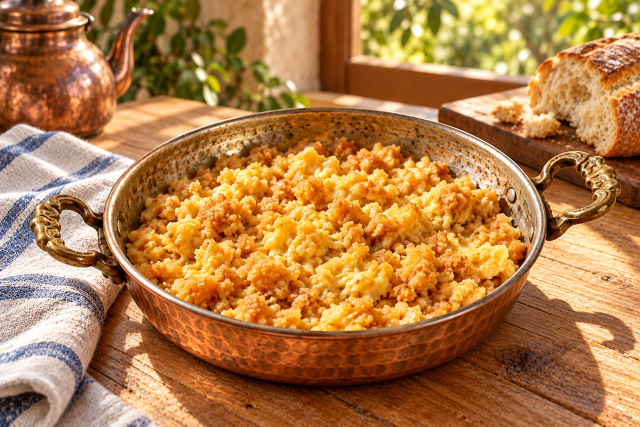
A rich Van breakfast dish in which beaten eggs bind flour toasted in butter.
Roasted ground wheat
Wheat roasted in butter and ground, eaten at breakfast.
Meat, rice and egg köfte
Köfte of minced meat, boiled eggs, crushed chickpeas, rice, fine bulgur, potato, tomato paste, onion, basil and zeytirun spice, made for Ramadan and special occasions.
Yogurt soup with greens
Diluted yogurt cooked with egg and flour, with zucchini, evelik and coriander added.
Semi-hard cheese, mainly of sheep’s milk, with wild herbs such as sirmo and thyme, ripened underground in pots.
Guide not written yetHoney from Çatak and Bahçesaray, including karakovan honey.
Guide not written yetJam of rose petals cooked slowly with sugar, usually made in autumn.
Guide not written yetPearl mullet, the fish of Lake Van, also called Van balığı.
Guide not written yetSmall-berried grapes from Erciş, picked from late September to early November.
Guide not written yetVan breakfast is best understood as a selection shared at the table. The official destination guide lists cheeses, cream, butter, honey, bread and tea alongside preparations such as murtuğa and kavut. The variety is an invitation to explore, not a fixed menu that every household follows. The same source connects honey production with the provincial districts of Çatak and Bahçesaray. These rural connections help explain why a city breakfast is also a story about producers beyond the urban center.
A Van breakfast brings together herb cheese, murtuğa, kavut, kaymak, butter, honey and rose jam.
Pearl mullet from Lake Van is salted, coated in batter and baked in the tandır.
Van’s story begins on a rocky height in the Lake Van basin. On it stood Tushpa, capital of the Urartian kingdom, which was centered on the Lake Van Basin between the ninth and sixth centuries BC. Sardurburç, at the western tip of the fortress, is considered the citadel’s earliest building, and here the Urartian king Sarduri I proclaimed his founding of the capital in an Assyrian inscription. On the rock’s southern face, multi-chambered rock-cut tombs from the Urartian period open into the cliff.
The story does not end at the citadel. Just to the north lies a mound that preserves some five thousand years of settlement culture. To the south, the Old City of Van was enclosed by walls with the Tebriz Gate on the east, the Middle Gate on the south and the Harbour Gate on the west. With its mosques, churches and single- or two-storey houses, it was lived in from the thirteenth century until the Russian invasion of 1915. Water was part of the capital’s design as well: the Urartian king Minua built the Shamram Canal to bring water to the vineyards and gardens along its course and to Tushpa itself.


