


Hakkâri kıris
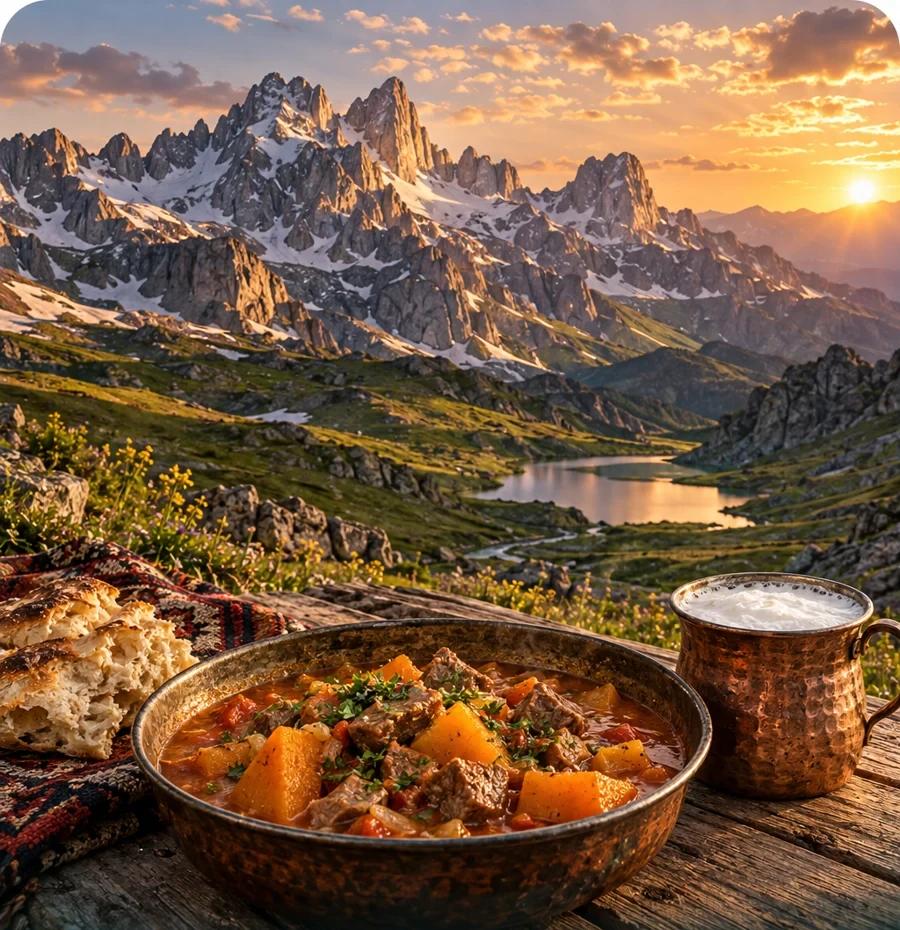
Meat stew with raisins and walnuts
Bone-in mutton, tiny bulgur meatballs, rice, chickpeas, raisins and walnuts cooked with onion and tomato paste and soured with sumac berries; made for weddings and honoured guests.
Eastern Anatolia
In Hakkari, yogurt, wheat and butter are the shared language of everyday cooking, and following those three ingredients leads you from one pot to the next, each with its own character. Doğaba brings pearled wheat together with yogurt thinned to the consistency of ayran, bone-in meat and small meatballs, and it is finished with butter, thyme and chilli. Gulol thickens that same yogurt with rice and is known for the butter in its center and the roasted flour scattered around it. Keledoş gathers cracked wheat, bone-in meat, chickpeas, beans and wild mountain herbs. Kıris, made for weddings and honoured guests, combines bone-in mutton with tiny bulgur meatballs, raisins, walnuts and sumac berries. Two local products sit beside these pots. One is Çukurca tahini, a deep brown paste of sesame roasted over an oak-wood fire and ground in stone mills. The other is Yüksekova çirek peyniri, a sheep’s-milk cheese known for its spiral shape. Get to know Hakkari through a table that starts with a bowl of yogurt and carries on to Çukurca’s tahini and Yüksekova’s cheese.
Last updated:
High mountains, summer pastures and a table of herb cheese.
Explore wheat, yogurt and lamb alongside distinct district dairy and sesame products.
Meat stew with raisins and walnuts
Bone-in mutton, tiny bulgur meatballs, rice, chickpeas, raisins and walnuts cooked with onion and tomato paste and soured with sumac berries; made for weddings and honoured guests.
Wheat and yogurt stew
Pearled wheat cooked in yogurt thinned to ayran, with bone-in meat and small meatballs, finished with thyme and chilli butter.
Meat stew with dried fruit
Roasted meat cooked with dried fruit, walnuts, rice and chickpeas, made for festivals, weddings and guests.
Yogurt and rice dish
Yogurt thinned to ayran and boiled with rice until thick, then served with butter in the center and roasted flour around it.
Tripe and minced meat dish
A dish of intestine, tripe and minced meat.
Syrup-soaked dough rings
Doughnut-like pastries of butter, yogurt, egg and milk dough, soaked in syrup and topped with ground walnut; sold in bakeries especially during Ramadan.
Wheat and wild herb stew
Cracked wheat, bone-in meat, chickpeas, beans, potatoes, garlic and wild mountain herbs, with sizzling butter poured into the center.
Pumpkin with tiny meatballs
Pumpkin cooked with tiny hand-rolled meatballs, broken rice, onion, basil and spices.
Herbed fried meatballs
Minced meat kneaded with mint, wild thyme, parsley, dill and garlic, shaped into small köfte, fried and served with fried potatoes and peppers.
Recipes from this city are coming soon.
Sesame roasted over an oak-wood fire and ground in stone mills into a deep brown, thick tahini.
Guide not written yetSheep’s-milk curd boiled, stretched thin, spread with curd and rolled into a spiral; made in spring and summer.
Guide not written yetCheese made with milk and wild mountain herbs, eaten especially at breakfast.
Guide not written yetHoney produced in the Şemdinli district.
Guide not written yet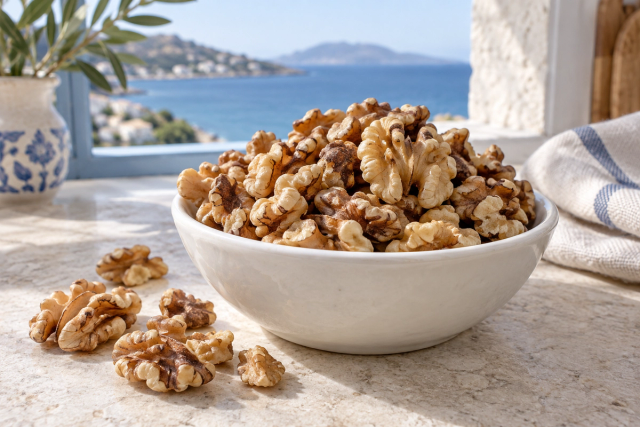
Raw shelled walnut kernels that give body to sauces.
Kilim weaving provides a material route into Hakkari’s cultural life. The Ministry describes geometric compositions arranged in different directions, with names and motifs referring to plants, animals and communities. Wool and dye work are part of the craft’s documented practice. The province’s heritage includes different communities and ways of life. Textile making, pastoral work and food preparation can be introduced together without claiming that one tradition represents every household.
Kıris and girara huluga combine meat with rice, chickpeas, walnuts and dried fruit for weddings and guests.
Yogurt, wheat and butter run through daily cooking, from doğaba to gulol.
A good way into Hakkari’s geography is to follow the Zab. The largest river in the province, it crosses Hakkari roughly from north to south before carrying its water to the Tigris south of Mosul. The surrounding mountains were formed within the Alpine-Himalayan folding system, which gives this part of the Southeast Taurus range its uneven, broken relief. In Cilo-Sat Mountains National Park, in Yüksekova district, there are glaciers and glacial lakes. In summer, local people move up to plateaus such as Berçelan to feed their animals, living in traditional black tents.
In the city center, the standing stelae on the northwest slope of Çölemerik Castle are covered with engraved figures of people, animals and weapons, and who made them is still a mystery. In a valley at Konak (Koçanis) village stands a church that once served as the patriarchate of the Assyrians; it fell out of use when it was left behind as Assyrians migrated away from Hakkari. The Meydan Madrasa, meanwhile, is one of Hakkari’s important monumental buildings from the Ottoman period.

