


Denizli kebabı
Wood-oven lamb kebab
Lamb roasted slowly beside a wood fire in a purpose-built oven and eaten without cutlery.
Aegean Region
Two things stand out on the Denizli table: wood fire and vegetables. Denizli kebabı is lamb roasted slowly beside a wood fire in a purpose-built oven, eaten without cutlery. In Tavas, the fire reaches dessert: Tavas baklavası, its thin sheets rolled from wheat, wholemeal and barley flour and layered with walnuts, is baked in a copper tray over oak and soaked in syrup. The same district's içli dışlı, spread with tahini, comes to the table hot with honey poured over it. On the vegetable side, the star is the Kale pepper grown in the Akçay basin. In biber tatarı, dried Kale peppers are laid with fried potatoes over garlic yogurt and served cold, while kuş üzümlü kuru patlıcan dolması fills dried eggplant shells with rice, mince, herbs and currants and cooks them in a garlic and tomato-paste sauce. The pantry also holds Denizli leblebisi, roasted chickpeas made in Serinhisar through roasting, tempering and resting. Follow the Kale pepper, eaten fresh, fried, dried or as paste, and you will meet Denizli in all its forms.
Last updated:

Travertine terraces, pepper fields and a wood-fired kebab oven.
Explore tahini-topped bread, roasted meat and the district pantry of inland Aegean Türkiye.
Wood-oven lamb kebab
Lamb roasted slowly beside a wood fire in a purpose-built oven and eaten without cutlery.
Wheat and meat porridge
Boiled mutton or goat meat mixed with boiled, pounded wheat and served with butter, especially in Babadağ.
Walnut baklava from Tavas
Thin sheets rolled with wheat, wholemeal and barley flour, layered with walnuts, baked in a copper tray over oak and soaked in syrup.
Honey and tahini pide
Yeast dough rolled by hand, spread with tahini, baked over a wood fire and served hot with honey.
Fried peppers on yogurt
Dried Kale peppers boiled and fried, then laid with fried potatoes over garlic yogurt and served cold.
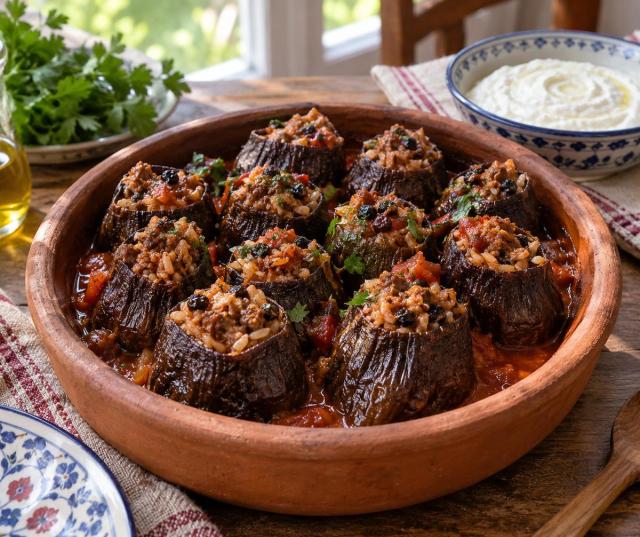
Dried eggplant shells filled with beef, rice and currants, gently cooked in a tomato-and-pepper sauce. Currant-filled dried eggplant is associated with Denizli. This home version uses onion, herbs and mixed tomato and pepper pastes; local variations exist.
A pepper from the Akçay basin around Kale, eaten fresh, fried, dried or as paste.
Guide not written yetRoasted chickpeas made in Serinhisar by roasting, tempering and resting.
Guide not written yetBeans grown from local seed in the Çameli highlands, known for cooking quickly.
Guide not written yetThyme grown in Gözler, in the Pamukkale district.
Guide not written yetTrout raised in the cold, spring-fed waters of Çameli.
Guide not written yetWeaving remains an important route into Denizli’s cultural identity. The Ministry documents handloom traditions in Buldan and Kızılcabölük in the Tavas district, producing both clothing and household textiles. Cloth belongs beside food in a study of daily life: material, technique and use all matter. The district names also show why Denizli’s cultural story extends beyond its best-known visitor landscape.
Vegetable dishes lead the table: dried eggplant is stuffed and Kale peppers are fried and laid on yogurt.
Kebab, Tavas baklava and honeyed tahini pide all cook over wood fire.
Denizli’s past unfolds in a valley shaped by hot water. The ancient city of Hierapolis sits above the white travertines of Pamukkale. Founded in the 2nd century BCE by Eumenes II, King of Pergamon, the city grew thanks to its hot springs. Excavations here uncovered the Plutonion, a sanctuary built around a cave from which carbon dioxide escaped, gas deadly to living beings that came close. Hierapolis also holds a place in Christian history as the city where Saint Philip was killed.
In the middle of the Lykos (Çürüksu) Valley, south of the Lykos River, lies Laodikeia. The Seleucid king Antiochus II founded it in the name of his wife, Queen Laodike. Tripolis, on the banks of the Büyük Menderes within today’s Buldan district, took its name from the people of three regions who settled there. In Buldan, weaving shaped the houses themselves: in the Ottoman period, their ground floors held weavers’ workshops and looms.


