


Manisa kebabı
Kebab on pide with butter
Minced beef and lamb grilled on skewers over charcoal, laid on toasted pide and finished with melted butter and sumac, with grilled tomato and pepper.
Aegean Region
Manisa’s table can be told through butter poured over a kebab or through a casserole left in the oven all night. Manisa kebabı brings minced beef and lamb, grilled on skewers over charcoal, onto toasted pide with melted butter and sumac, while grilled tomato and pepper come alongside. Alaşehir kapaması is known for small dough pouches of minced meat, soaked in bone broth and clarified butter and served hot with yogurt. In Kula güveci, meat cooks slowly overnight in an earthenware pot. Sura goes into an earth oven on the first evening of Kurban Bayramı and is eaten at breakfast the next morning. Mesir macunu, a sweet paste of sugar and many ground herbs and spices, has its own place on the city’s calendar: every 21 March, the Mesir Festival brings people together at the Sultan Mosque, where the paste is said to have first been handed out. Kırkağaç kavunu, meanwhile, is known by its yellow rind striped dark green. Discover Manisa district by district, starting at the Sultan Mosque on a 21 March and carrying on to Kula’s güveç and Alaşehir’s kapama.
Last updated:
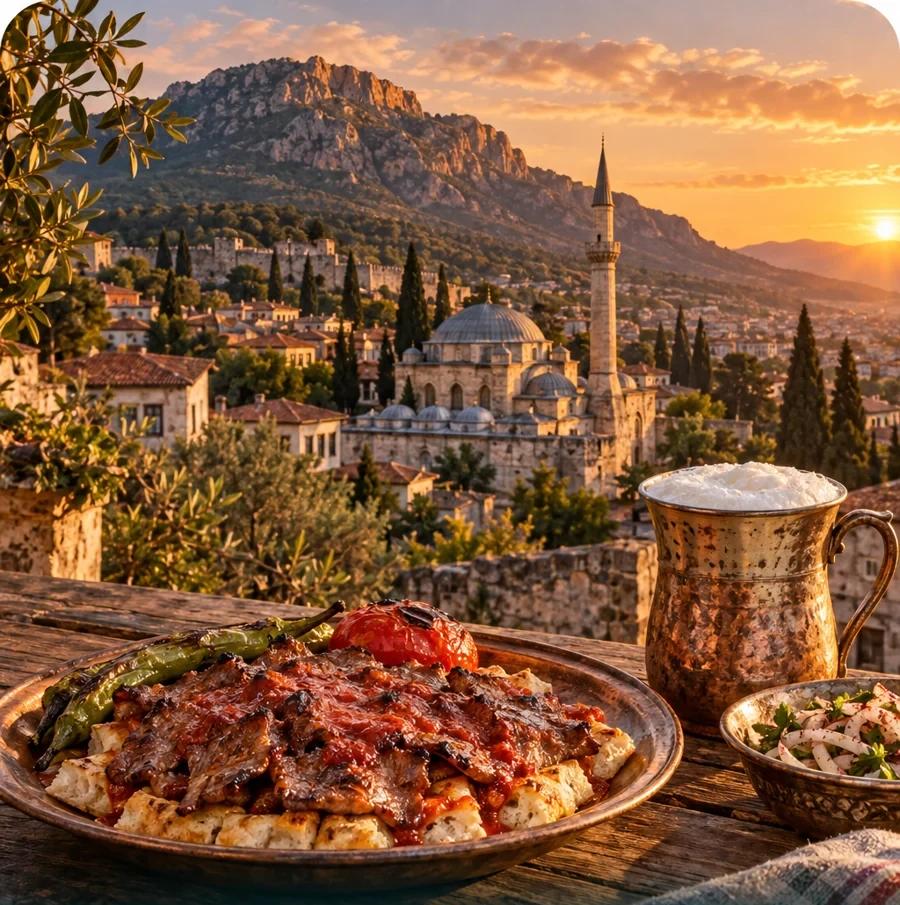
Vineyards and a plate of Manisa kebab on pide.
Follow grapes and olives across district kitchens, then explore a sweet linked to a city festival.
Kebab on pide with butter
Minced beef and lamb grilled on skewers over charcoal, laid on toasted pide and finished with melted butter and sumac, with grilled tomato and pepper.
Fried meat dumplings in broth
Small pouches of thin dough filled with minced beef and lamb, fried, then soaked in bone broth and clarified butter and served hot with yogurt.
Slow-baked meat casserole
Meat cooked slowly overnight in an earthenware güveç in the oven.
Holiday meat from the earth oven
Meat cooked in an earth oven on the first evening of Kurban Bayramı and eaten at breakfast the next morning.
Walnut-filled yeasted pastry
A pastry from Demirci made from yeasted dough filled with walnuts.
Recipes from this city are coming soon.
A thin-skinned, seedless grape eaten fresh and dried into raisins.
Guide not written yetA round melon with a yellow rind striped dark green and firm, sweet, pale flesh.
Guide not written yetRoasted chickpeas made in Kula.
Guide not written yetOlive oil from the groves around Akhisar.
Guide not written yetCherries from the Salihli area.
Guide not written yetA sweet paste of sugar cooked with a blend of many ground herbs and spices, made as hand-rolled sticks or as a liquid in jars.
Guide not written yetThe Mesir Macunu festival is recognised by UNESCO as intangible cultural heritage. Its shared preparation and distribution of spiced paste make celebration and participation central to the tradition. The remembered healing story is cultural narrative, not medical evidence. The Kula–Salihli landscape adds a geological dimension to the province. Architectural heritage, orchards and festival life offer several different ways to understand Manisa beyond a single famous dish.
Every 21 March the Mesir Festival gathers people at the Sultan Mosque, where the paste is said to have first been handed out.
Seedless sultana grapes from around Alaşehir are eaten fresh and dried, and Akhisar is known for its olives and olive oil.
The mountain that frames Manisa city is Spil. A limestone mass rising as a separate block at the northwest end of the Bozdağ range in the Gediz Basin, it carries the ruins of Manisa Castle on its northern slope, south of the city center. The castle’s inner section, also known as Sandıkkale, was renewed during the Byzantine period and enclosed by an outer wall. On the same mountain, the Taş Suret relief sits in a niche high on a granite cliff face overlooking the city.
The province’s ancient cities, by contrast, are spread across different districts. Sardes was the capital of the Lydian Kingdom in the 6th century BCE, and the Pactolus river, known for its gold deposits, was the source of the Lydian King Croesus’s wealth. Among the most important buildings uncovered by excavations there is a synagogue built in the 3rd century CE. Thyatira, in Akhisar district, was a weaving center at the junction of several roads, and inscriptions relating to a guild of dyers were found among its ruins. Most of ancient Philadelphia, meanwhile, lies beneath the modern settlement of Alaşehir.


