


Büryan kebabı
Pit-roasted lamb
Lamb or kid hung in a deep pit heated with wood embers, the mouth sealed with mud, and slow-cooked.
Southeastern Anatolia
In Siirt, some dishes cook out of sight. For büryan kebabı, lamb or kid is hung in a deep pit heated with wood embers. The mouth of the pit is sealed with mud, and the meat cooks slowly inside. Perde pilavı also keeps its contents hidden. This pilaf, wrapped in a thin pastry shell and baked, is made for honoured guests and for brides at weddings. Sumac carries its sourness across more than one plate. Kışlık dolma is cooked in strained sumac water, and pırtike çorbası, a soup of spinach and rice, is soured with sumac as well. Kitel, fried in hot oil, comes to the table warm with a basil and sumac salad. The province’s orchards and high pastures join the meal too. There are large Siirt pistachios, roasted and mostly eaten as a snack. There are thin-skinned, fragrant pomegranates gathered in autumn around Zivzik village. And there is light-colored honey made in Pervari in black hives and woven baskets. After the sumac-soured plates, you have every reason to point your route toward Zivzik or Pervari.
Last updated:
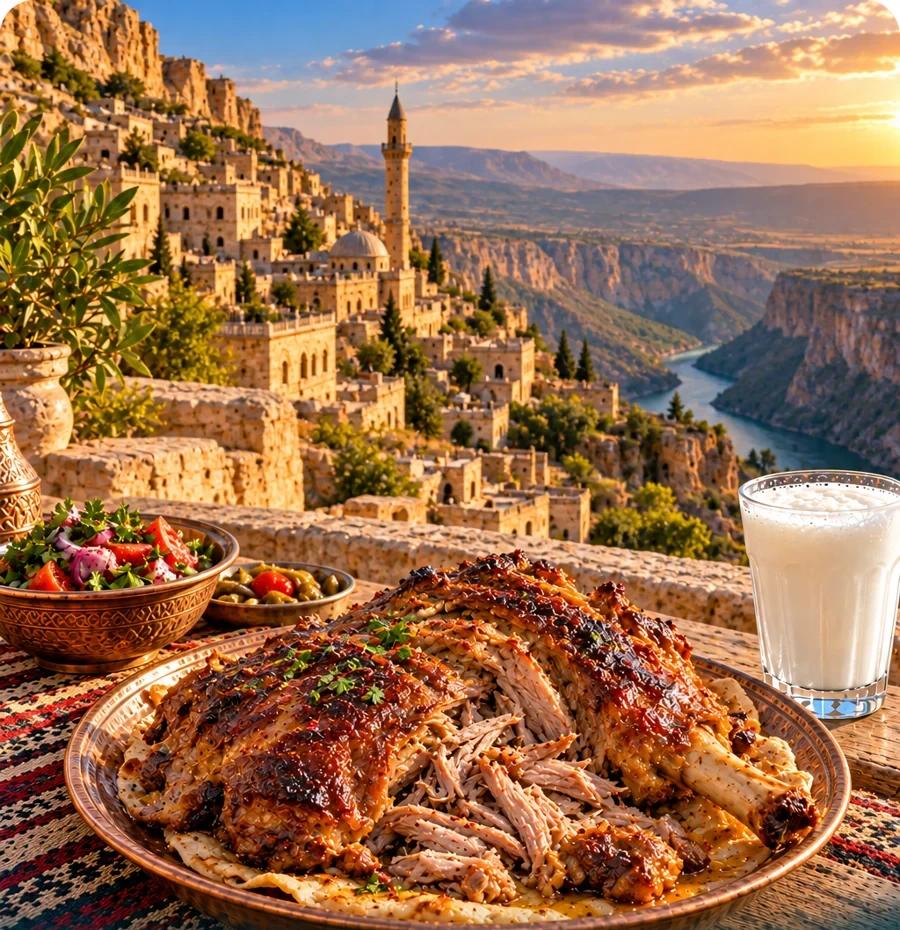
Pistachio orchards, highland pastures and a table of büryan and pilaf.
Explore nuts and fruit alongside pit-roasted meat and elaborate rice dishes.
Pit-roasted lamb
Lamb or kid hung in a deep pit heated with wood embers, the mouth sealed with mud, and slow-cooked.
Pilaf baked in pastry
Pilaf enclosed in a thin pastry shell and baked, made for honoured guests and for brides at weddings.
Stuffed lamb intestines
Lamb intestines stuffed with rice, minced meat and spices and cooked slowly.
Fried köfte
Köfte rolled out into rounds or ovals, fried in hot oil and served warm with basil and sumac salad.
Winter stuffed vegetables
Stuffed vegetables cooked with strained sumac water, then left to rest before serving.
Spinach and rice soup
Spinach and rice simmered with onion and tomato paste, then soured with soaked, strained sumac.
Recipes from this city are coming soon.
Large Siirt pistachios, hulled, dried, cracked and roasted, mostly eaten as a snack.
Guide not written yetLight-colored honey from black hives and woven baskets in Pervari.
Guide not written yetThin-skinned, fragrant pomegranate harvested in autumn around Zivzik village.
Guide not written yetButter, locally called semen or run, from sheep and goats grazing the high pastures of Pervari and Şirvan.
Guide not written yetCheese made with wild sirik herb from Pervari, salted and stored underground for winter.
Guide not written yetPlump Tayfi grapes grown around Siirt.
Guide not written yetSiirt blanket weaving brings mohair spinning and loom work into the provincial craft story. The local culture directorate also documents jirkan kilims, showing a textile tradition alongside the better-known food associations. Orchards and beekeeping add district-specific livelihoods. Pervari honey, Zivzik pomegranate and Tayfi grapes are named connections, not a reason to generalise every product’s production method or certification.
Büryan is lamb or kid slow-cooked in a deep pit oven sealed with mud.
Siirt pistachios, Zivzik pomegranates and Pervari honey and butter come from the province’s orchards and high pastures.
Siirt province’s geography is seen most clearly in the Botan Valley. The Botan River, which rises in the foothills of the high mountains south of Bitlis, forms this deep valley. Passing between Doğruyol and Mount Kapılı, the valley extends south towards Siirt and reaches the Tigris Valley. Remains of human settlement from the Neolithic Era have been found in this rugged terrain. Many of the area’s historical roads date from the era of the Assyrian Trade Colonies and were laid as stone-paved routes that followed the shape of the land; some were repaired and kept in use during the Roman Period.
In Tillo district, history is told through a student’s devotion to his teacher. İbrahim Hakkı created a light refraction mechanism to illuminate the tomb of his teacher, İsmail Fakirullah. The tomb’s inscription asks: “What shall I do with the sun that does not rise for my master?” On the days of the equinox, the first light of the sun strikes a reflector set into the tomb’s tower, and a mechanism there directs the light onto İsmail Fakirullah’s cenotaph.


