


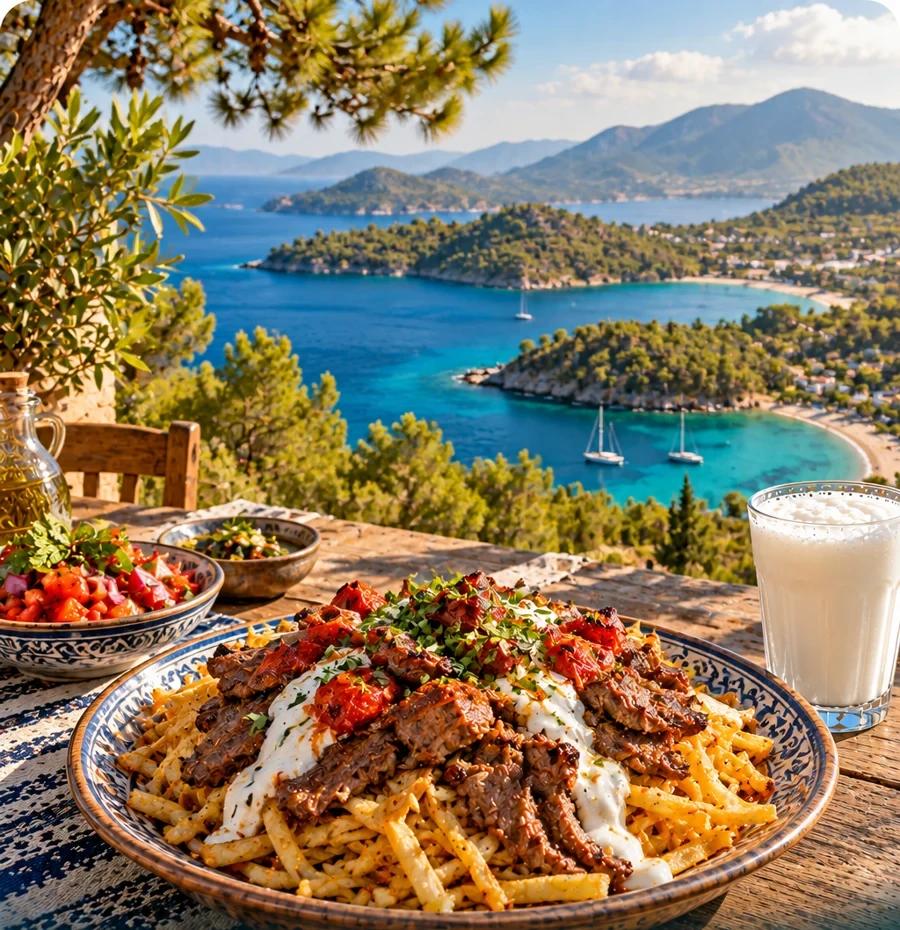
Muğla köftesi
Grilled beef patties
Beef rib meat minced twice with suet and kneaded only with salt, grilled and served with onion, parsley, grilled tomato and fried bread.
Aegean Region
On Muğla's table, slow cooking sits beside the grill. Muğla sulu kebabı, bone-in kid cooked for hours until tender, is eaten hot with black pepper, lemon and pide, often at breakfast. Over on the grill side, Muğla köftesi is made from beef rib meat minced twice with suet and seasoned only with salt, and it comes with onion, parsley, grilled tomato and fried bread. Milas köftesi cooks over wood or olive-pit charcoal beneath a split pide and is served with sumac onions. Milas ekşili köfte, soured with lemon and garlic in a tomato sauce with chickpeas, is offered at weddings and mevlits. Saraylı, a coiled, syrup-soaked pastry of coarsely ground walnuts, is taken to the bride's house at engagements and weddings. As you follow these plates, tasting the dark, resinous pine honey made from the honeydew of red pine forests and the olive oil pressed from Milas's Memecik olives is the natural next step in getting to know Muğla.
Last updated:
A pine-covered coast and a tray of walnut saraylı.
Keep Bodrum, Milas and the provincial capital in view as distinct food settings.
Grilled beef patties
Beef rib meat minced twice with suet and kneaded only with salt, grilled and served with onion, parsley, grilled tomato and fried bread.
Slow-cooked kid in broth
Bone-in kid browned with fat and then cooked for hours in water until tender, eaten hot with black pepper, lemon and pide, often at breakfast.
Walnut pastry in syrup
Thin yufka rolled around coarsely ground walnuts, coiled in a round tray, baked with clarified butter and soaked in syrup.
Grilled beef patties with bread
Lean minced beef kneaded with soaked bread and salt, grilled over wood or olive-pit charcoal under a split pide and served with sumac onions and peppers.
Meatballs with chickpeas and lemon
Small fried beef meatballs simmered with chickpeas in a tomato sauce and soured with lemon and garlic, served at weddings and mevlits.
Recipes from this city are coming soon.
Dark honey that bees make from the honeydew of red pine forests, with a woody, resinous aroma.
Guide not written yetExtra virgin olive oil pressed from Memecik olives grown in Milas.
Guide not written yetTarhana made from cracked wheat, tarhana herb and strained yogurt, often shaped into rings and cooked as a soup.
Guide not written yetFragrant mandarins from Bodrum.
Guide not written yetThe city’s culture house and museum interpret domestic life and crafts, including weaving and woodworking. The architectural record also reflects the histories of Turkish and Greek communities; it should not be reduced to a timeless resort scene. Markets and district kitchens provide a living counterpart to those buildings. Herbs, vegetables and local bakery foods vary across the province, making the district name useful when exploring a menu or market stall.
Bees in Muğla’s red pine forests make a dark, resinous honey that is harvested from late summer into autumn.
Walnut saraylı is traditionally taken to the bride’s house at engagements and weddings.
The history of Muğla city can be traced along the caravan road that once ran through it. The only link between the city and the outside world was the İzmir–Aydın–Çine and Tavas–Denizli route. Camel caravans using it entered along today’s Sekibaşı Street, reached the center and stayed at Yağcılar Inn and the Kocahan, which no longer exists. The trade guilds of the Arasta gave their names to the places where they gathered, and the Demirciler and Bakırcılar arastas, the blacksmiths’ and coppersmiths’ rows, are still called by those names today.
The square in Saburhane, the district through which the caravans left the city, takes its name from the prison that once stood there. It is a settlement where two cultures, Turkish and Greek, Muslim and Christian, lived together. What most distinguishes Muğla’s houses from others in the region is their chimneys, covered at the top and given a rectangular shape to block wind and rain. On the coast, the district of Bodrum has a different past: Bodrum Castle was built in 1406 by the Knights of St John, whose headquarters was Rhodes, using stones left from the destroyed Mausoleion.


