


Burdur şiş köftesi
Charcoal-grilled skewered mince
Goat or beef rib meat minced with salt only, grilled on skewers over charcoal and served on thin pide with roasted green peppers.
Mediterranean Region
In Burdur, meat meets three different fires and becomes three different dishes. Şiş köfte is goat or beef rib meat seasoned with nothing but salt, grilled on skewers over charcoal and served on thin pide with roasted green peppers. In Gölhisar the fire changes to a griddle over juniper and oak wood: Gölhisar kavurması is thin slices of beef thigh cooked with their own fat and salt. For Çavdır kebabı, lamb or young goat goes into a clay oven. When it comes to dessert, walnuts take the lead. Ceviz ezmesi binds sugar, semolina and crushed walnuts with syrup before a dusting of powdered sugar, while haşhaş helvası brings grape molasses, walnuts, yellow poppy seeds and flour together and is cut into cubes or slices. In Bucak, orchid tubers are dried and stone-ground into salep, which goes into hot drinks and ice cream. A route from the griddles of Gölhisar to the clay ovens of Çavdır and the salep of Bucak shows how this cuisine changes from one district to the next.
Last updated:
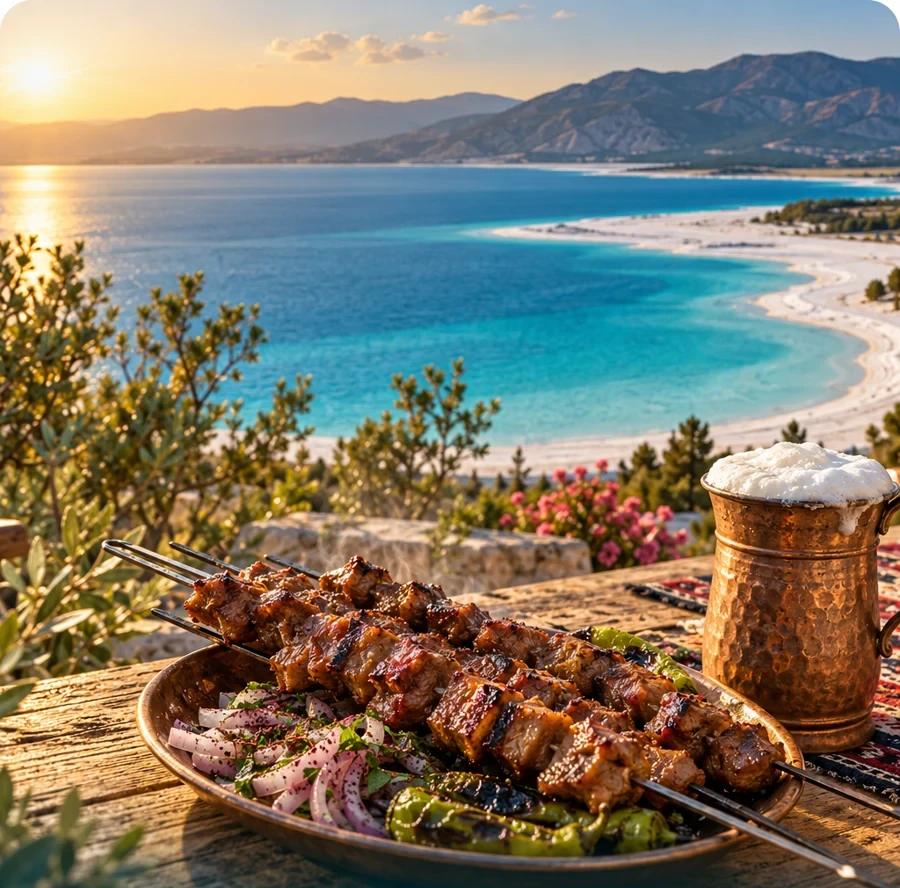
Lake shores and a table of şiş köfte and walnut paste.
Compare the fine texture of ceviz ezmesi with the simplicity of grilled şiş.
Charcoal-grilled skewered mince
Goat or beef rib meat minced with salt only, grilled on skewers over charcoal and served on thin pide with roasted green peppers.
Walnut and semolina sweet
Equal measures of sugar, semolina and crushed walnuts bound with sugar syrup, cut and dusted with powdered sugar.
Griddle-cooked beef
Thin slices of beef thigh cooked with their own fat and salt on a griddle over juniper and oak wood.
Squash and almond sweet
Grated squash cooked with sugar and topped with almonds.
Poppy-seed halva
Grape molasses, walnuts, yellow poppy seeds and flour, cut into cubes or slices.
Clay-oven lamb
Lamb or young goat roasted in a clay oven.
Minced-meat toast
Toasted bread topped with minced beef cooked with parsley, onion and red pepper, served with fried dried peppers.
Hemp-seed halva
Roasted hemp seeds cooked with sugar and molasses, mixed with walnuts and left to set on a copper tray.
Recipes from this city are coming soon.
Dried orchid tubers from Bucak, stone-ground into salep powder for hot drinks and ice cream.
Guide not written yetCoriander seed grown in Karamanlı and harvested once dry.
Guide not written yetDried fennel seed grown in Tefenni.
Guide not written yet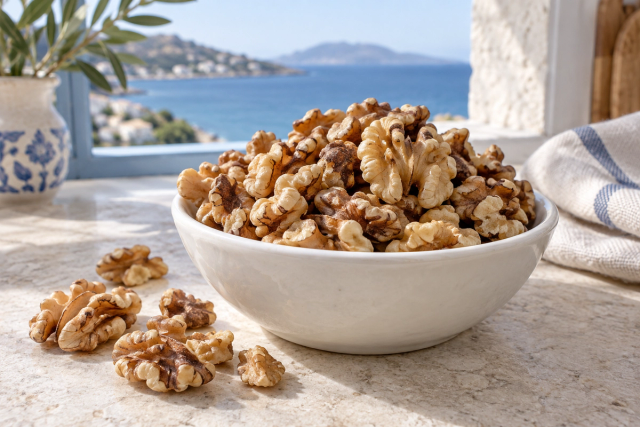
Raw shelled walnut kernels that give body to sauces.
Burdur participates in the broader Teke musical culture. The Ministry’s account describes instruments including sipsi, cura and kabak kemane, alongside vocal forms such as gurbet havası. These traditions connect several neighbouring provinces rather than stopping at administrative borders. The small sipsi is especially useful for thinking about skilled making and performance together. Music offers a living cultural route through the region alongside archaeology and food.
Walnuts and poppy seeds go into ceviz ezmesi, haşhaş helvası and crisp haşhaş gevreği.
Şiş köfte cooks over charcoal, Gölhisar kavurma on the griddle and Çavdır kebab in the clay oven.
Burdur lies in the western part of the Mediterranean Region, at a gateway between the Aegean and Central Anatolia. The city is part of ancient Pisidia, where remains from the Neolithic age and from Greek and Roman civilizations have been found. Sagalassos, a mountaintop city in the Ağlasun district, was an important city of Pisidia during the Roman Imperial period, and most of the buildings seen there today date from that era. In the Bucak district, Kremna was founded on a hill overlooking the Aksu Valley. Its name comes from the Greek word for “cliff,” in keeping with the terrain on which it stands.
The city has its own history worth seeking out. Set on a high hill in the center, the Ulu Mosque was built by Hamitoğlu Dündar Bey and carries the characteristics of the grand mosques of the Seljuk and principalities periods. Lake Burdur, which shares the city’s name, is a tectonic, closed-basin lake. It is also an important habitat for the endangered white-headed duck.


